

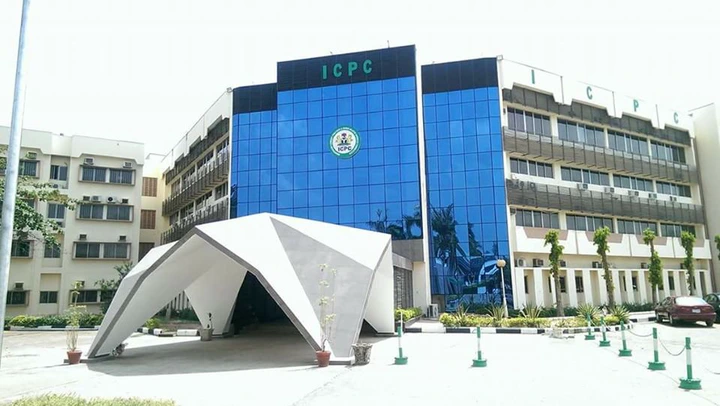
The Independent Corrupt Practices and Other Related Offences Commission (ICPC) has closed its case against Umar Abubakar, who is standing trial over an alleged job racketeering scheme before the Adamawa State High Court sitting in Yola.
This was disclosed in a statement by the spokesperson of the Commission made available to The News Chronicle on Wednesday.
Abubakar is being prosecuted in suit No. HC/ADSY/127C/2022 Federal Government vs. Umar Abubakar before the Chief Judge of Adamawa State, Justice Hafsat Abdulrahman.
At the resumed hearing on March 2, 2026, prosecution counsel, Lorngee Terkuma Solomon, presented the Commission’s final witness, Isah Abdullahi Gaude, an ICPC investigator and member of the investigative team.
Gaude told the court that Abubakar was arrested during a sting operation in April 2022 in Jimeta, Yola, following a petition alleging he demanded N1 million from one Kabiru Musa with a promise to secure him employment in the ICPC.
The witness said the defendant was apprehended with a purported temporary ICPC appointment letter and N100,000 part of the marked money supplied for the operation.
He further revealed that a subsequent search of the defendant’s residence, backed by a warrant, uncovered additional incriminating documents, including alleged fake appointment letters and forged letterheads of the Federal Medical Centre, Yola, and the Federal Medical Centre, Jalingo.
With the testimony of its final witness, the prosecution formally closed its case.
Defence counsel, A.U. Sangere, after cross-examining the witness, applied to file a no-case submission, arguing that the prosecution had failed to establish a prima facie case against his client.
Justice Abdulrahman adjourned the matter to March 30, 2026, for the adoption of written addresses on the no-case submission.
Abubakar faces a three-count charge bordering on obtaining by false pretence, forgery, and corruptly obtaining financial benefits under the Advance Fee Fraud and Other Related Offences Act, the Penal Code Law of Adamawa State, and the Corrupt Practices and Other Related Offences Act, 2000.


