

The Federal Government of Nigeria has laid out its schedule for an external loan of $21.5 billion as it moves to stimulate nationwide growth and fill its humongous infrastructural deficit.
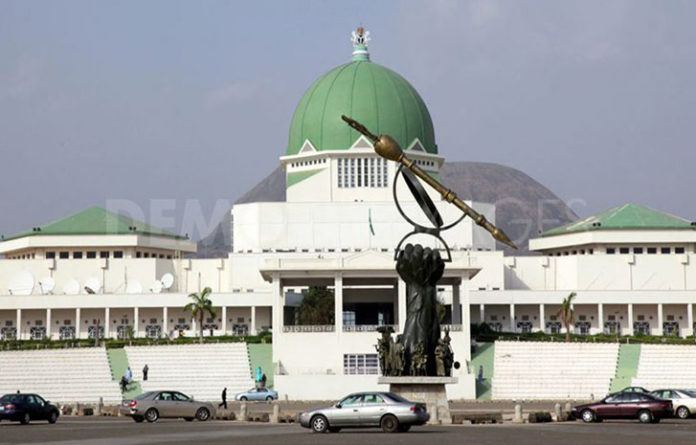
President Bola Ahmed Tinubu will send the request for the loan to the National Assembly under the government’s Debt Rolling Plan 2025 to 2026.
The Finance Ministry, in a statement by its Director of Public and Information Relations, Mohammed Manga, reaffirmed that the borrowing policy was not an ad hoc rise in borrowing but a sound fiscal policy to guide federal and subnational borrowing for the two-year horizon.
The ministry again quotes that the Debt Rolling Plan enables Nigeria to move from an unmethodical borrowing culture to a systematic and proactive fiscal planning stage. It promotes increased fiscal discipline, optimization of borrowed funds streams, and synchronization with long-term national development objectives.
Of particular note, the government continues to highlight that the majority of the foreign borrowings will be from Nigeria’s reputable development partners including the World Bank, African Development Bank (AfDB), European Investment Bank, French Development Agency, JICA (Japan International Cooperation Agency), China EximBank, and Islamic Development Bank. They grant low-interest and long-term concessional loans, arguably better than those of the emerging economies.
Tinubu’s government stood firm that the borrowing agreement funds a deficit far less than an agreement more focused on funding high-impact investments. As stated, the finance ministry had already prioritized the transport, energy, agriculture, and high-level infrastructure sectors as top priority of the funds, the sectors being most critical in unleashing Nigeria’s economic potential and private sector investment.
It reaffirmed yet again its focus on practicing fiscal prudence by spending borrowed funds on projects whose economic impacts can be measured. It claimed that Nigeria’s strategy is wealth creation, sustainability, and efficient borrowing.
President Tinubu had already signed a formal letter to the Senate requesting that the Senate authenticate this foreign borrowing facility. The package also includes another application for another 15 billion Japanese Yen loan and a further 51 million Euros grant to finance other national development programs. The president explained that the loans and grants would be used to stimulate entrepreneurship, poverty reduction, skills acquisition, agricultural production, and job opportunities in all 36 36 states of the federation.
Consistent with the rationale for the necessity of foreign funding, the administration has recognized that declining domestic revenues have compelled responsible foreign borrowing. The need increases, as does the country’s infrastructure deficit, and thus, an astronomical amount of financial investment needs to be incurred to steer the economy onto a sound path of growth.
Nigeria also refinanced its $3.4 billion International Monetary Fund (IMF) borrowing in 2020 to settle the economic cost of the COVID-19 pandemic. Nigeria’s foreign debt stood at $44.9 billion as of December 2024. Foreign creditors of Nigeria are the sellers of Eurobonds ($17.32 billion), followed by World Bank International Development Association ($16.56 billion), Export-Import Bank of China ($5.06 billion), African Development Bank ($2.10 billion), and International Bank for Reconstruction and Development ($1.24 billion).


