

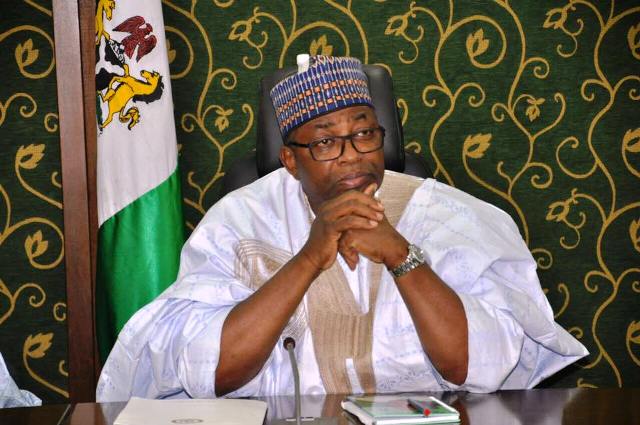
The Holy Qur’an teaches that power belongs to Almighty Allah alone, and that He gives authority to whom He wills and withdraws it from whom He wills. This belief shaped the response of Mohammed Abdullahi Abubakar, SAN, former Governor of Bauchi State, to the events of 2019, and continues to guide his outlook as he prepares to return to the gubernatorial race in 2027 under the All Progressives Congress, a development that has rekindled conversations about power, destiny, and the role of divine will in politics.
Over the years, Nigerian politics too often slips into personal attacks, name-calling, and campaigns of calumny by losers or their proxies. In Bauchi, no figure has endured more sustained personality assaults than former Governor Mohammed Abdullahi Abubakar, SAN, now the APC gubernatorial candidate. Yet the record shows he has consistently chosen maturity over retaliation, even under harsh political conditions.
The APC gubernatorial primaries in Bauchi followed a structured meeting convened under the leadership of the National Chairman, Professor Nentawe Yelwada Gwoshe, on Friday 22nd May 2026. In attendance were all the aspirants: HE. Mohammed Abdullahi Abubakar, SAN; Dr. Nura Manu Soro; Hon. Yusuf Maitama Tuggar; Dr. Bala Maijama’a Wunti; Dr. Yakubu Abdullahi; Arch. Kabir Baba Ma’aji; and Hon. Baba Abubakar Sulaiman. The purpose was not to diminish ambition but to align everyone with the party’s strategic objective of retaining Bauchi State and strengthening the APC ahead of the next election.
At the meeting, the National Chairman conveyed the position of the President and Commander-in-Chief, His Excellency Bola Ahmed Tinubu, GCFR, who serves as the National Leader of the party. After extensive consultations with stakeholders and security agencies, the President announced that Former Governor Mohammed Abdullahi Abubakar, SAN, was the aspirant around whom the party should align. This outcome was not imposed; it reflected a consensus reached among the aspirants prior to the process, when they all agreed to accept whoever the President would announce after due consultation.
By that agreement, the aspirants—Abubakar, Soro, Tuggar, Wunti, Abdullahi, Ma’aji, and Sulaiman demonstrated commitment to party hierarchy and internal cohesion. The decision affirmed that all were eminently qualified to fly the APC flag, but that unity and discipline required subordination of personal ambition to the collective interest. For a party that has built Bauchi into a stronghold since inception, that act of statesmanship protects the structure and keeps the focus on mobilization rather than division.
Those making noise now are the ones who feel otherwise, but the APC remains strong and united against these peddled narratives. The conduct of the aspirants shows maturity, and the party leadership is determined to ensure sentiment does not override facts or emotion replace strategy. With inclusivity as the guiding principle, every zone, ward, and local government will be carried along as the APC moves together to retain Bauchi State under the direction of President Bola Ahmed Tinubu, GCFR.
For 7 to 8 years, Abubakar has taken the path of non-response to direct personal attacks and has directed his supporters not to engage in them. That discipline has kept the APC’s internal space calmer than it would otherwise be. It also denied opponents the spectacle of infighting, allowing the party to focus on message rather than mud.
The just-concluded APC gubernatorial primaries in Bauchi underscored that point. While rhetoric escalated around him, Abubakar’s non-confrontational posture gave him an edge within the party. Delegates and stakeholders saw a candidate who could absorb pressure without fracturing the structure a quality that matters in a general election.
President Bola Ahmed Tinubu, GCFR, as National Leader of the APC, was clear and concise: all aspirants are eminently qualified to fly the party’s flag and lead at the highest level, but Abubakar stood out. After wide consultation with party stakeholders and security agencies, the President identified him as his preferred choice. That is not a social-media verdict; it is the product of structured engagement.
Elections are won by pulling boots on the ground, not by trending hashtags. The continued rhetoric against Abubakar overlooks this reality. Bauchi voters respond to record, organization, and coalition-building. Abubakar’s history of governance, combined with his restraint, positions him to mobilize the ward-to-state structure the APC needs to retain the state.
Surprisingly, some “cleric-entrepreneurs” have joined the smear campaign, aligning with candidates who lost out in the primaries. Comparing Bauchi’s scenario to Gombe or Rivers is the highest injustice—it ignores Bauchi’s distinct political demography, party base, and Abubakar’s personal standing. Imported narratives do not fit Bauchi’s facts.
The repeated targeting of Abubakar points to something unique in his character: a combination of experience, legal training, and restraint that unsettles opponents. He does not feed the outrage cycle. In a state where stability and continuity matter, that temperament becomes a political asset.
Abubakar’s return brings back a network of governance experience, grassroots relationships, and institutional knowledge. He understands Bauchi’s zones, the expectations of local governments, and the party hierarchy. That makes him a coalition-builder rather than a disruptor—critical for retaining Bauchi for the APC.
By refusing to escalate personal attacks and by restraining his supporters, Abubakar protects the APC’s brand in Bauchi. Voters weary of toxicity see a candidate focused on governance. Party executives see a flag-bearer who will not jeopardize the structure for ego. That discipline reduces the risk of post-primary fragmentation.
Taken together—consultative endorsement from the President, proven restraint under fire, organizational reach, and a record of governance—M.A. Abubakar, SAN, is the sure bet. He is the winning ticket because he converts party unity into votes, experience into credibility, and discipline into electoral advantage. In Bauchi’s 2026 contest, those are the facts that matter more than the fiction.
The electoral record is the most stubborn fact in this debate. In both the 2015 and 2019 election cycles, over one million voters in Bauchi cast their ballots for M. A. Abubakar, SAN. In 2015 he pulled close to 600,000 votes, and even in the politically charged 2019 contest despite conspiracy, manipulation, and last-minute maneuvering he still secured over 500,000 votes and lost by fewer than 10,000. That scale of support is not manufactured on social media; it reflects real traction across zones, wards, and local governments.
The current rhetoric flying around is nothing but distorted facts and deliberate fiction aimed at deceiving the general public. Narratives that reduce Abubakar’s standing to speculation ignore the hard numbers and the structure behind them. Politics thrives on perception, but elections are settled by turnout, coalitions, and credibility—all areas where Abubakar’s track record speaks louder than the noise.
Comparisons to other aspirants only highlight the gap. It is certain that his distractors cannot match that feat of voter mobilization and statewide appeal. The claim that Abubakar could not win the primaries has already collapsed. Now that he has emerged as the APC candidate, the pivot to blackmail and name-calling is predictable—but it is also futile, because he has consistently ignored provocations and kept the focus on the party and the people.
We must not be swayed by those who have turned enmity into a political pastime. Their strategy depends on distraction, not organization. Abubakar’s contest has never been, and is not now, a do-or-die affair. It is about service, continuity, and delivering governance under the APC banner. That posture denies opponents the chaos they seek and preserves the party’s ability to campaign on issues.
Just as they were wrong when they said he would not win the primaries, they will be wrong again in the secondary elections. With the same discipline, the same grassroots reach, and the backing of a united APC structure, Abubakar and the party will win convincingly. The task now is to mobilize, not to be distracted and the numbers show Bauchi is ready to respond.
The electoral record is the most stubborn fact in this debate. In both the 2015 and 2019 election cycles, over one million voters in Bauchi cast their ballots for M. A. Abubakar, SAN. In 2015 he pulled close to 600,000 votes, and even in the politically charged 2019 contest—despite conspiracy, manipulation, and last-minute maneuvering—he still secured over 500,000 votes and lost by fewer than 10,000. That scale of support is not manufactured on social media; it reflects real traction across zones, wards, and local governments.
The current rhetoric flying around is nothing but distorted facts and deliberate fiction aimed at deceiving the general public. Narratives that reduce Abubakar’s standing to speculation ignore the hard numbers and the structure behind them. Politics thrives on perception, but elections are settled by turnout, coalitions, and credibility—all areas where Abubakar’s track record speaks louder than the noise.
Making unnecessary Comparisons with others aspirants only highlight the growing political missteps.None among the noise and naysayers can match that feat of voter mobilization and statewide appeal of M. A AbubakarSAN. The claim that Abubakar could not win the primaries has already collapsed. Now that he has emerged as the APC candidate, the pivot to blackmail and name-calling is predictable but it is also futile, because he has consistently ignored provocations and kept the focus on the party and the people.
We must not be swayed by those who have turned enmity into a political pastime. Their strategy depends on distraction, not organization. Abubakar’s contest has never been, and is not now, a do-or-die affair. It is about service, continuity, and delivering governance under the APC banner. That posture denies opponents the chaos they seek and preserves the party’s ability to campaign on issues.
Just as they were wrong when they said he would not win the primaries, they will be wrong again in the secondary elections. With the same discipline, the same grassroots reach, and the backing of a united APC structure, Abubakar and the party will win convincingly. The task now is to mobilize, not to be distracted and the numbers show Bauchi is ready to respond.
Again, and most importantly, Abubakar is a party loyalist who has consistently remained in the APC despite political headwinds, internal conspiracies, and the temptation to seek shortcuts elsewhere. That loyalty is not rhetorical. It is tested in moments when opportunism pays faster, and in those moments he has chosen the party over personal gain. For Bauchi APC, that steadiness matters—it preserves structure, keeps cadres engaged, and signals to voters that the party can be trusted with continuity.
Many describe him as a rare politician of this generation who has never prioritized personal ambition over the citizens of Bauchi State. In an era of instant gratification and noisy politics, Abubakar has shown restraint, listened more than he has spoken, and absorbed attacks without passing them down the chain. That record cannot be eroded by smear or speculation because it is anchored in conduct over time, not in slogans.
The core problem in Bauchi APC is repeated self-sabotage by members who put personal gain ahead of the party. After the 2019 primaries produced former Governor M.A Abubakar SAN, internal rifts went public and weakened the APC. The same thing happened in 2023 when former Chief of Air Staff Air Marshal Sadique Baba Abubakar emerged as candidate, and the party lost again because of those divisions.
The same playbook is surfacing now. After the President, as National Leader, settled the dispute and backed the return of former Governor Mohammed Abdullahi Abubakar SAN, six other aspirants who met with the National Chairman in Abuja have stayed silent. None have publicly backed or opposed the President’s choice, and that silence is keeping the party unsettled.
The President’s move through National Chairman Professor Nentawe Yilwatda Goshwe was aimed at strengthening the APC in Bauchi and improving its chances of winning. It is not the party’s position that is undermining success, it is selfish individuals refusing to fall in line. For the APC to win, those members must drop personal agendas and rally behind the decision instead of holding the party hostage.
President Bola Ahmed Tinubu GCFR and the National leadership of the APC need to bring the key stakeholders in Bauchi to the table without delay. Direct engagement, clear communication, and firm reassurance from the President and the National Chairman will settle the lingering tensions and keep the party focused on the task ahead of the 2027 election.
The APC must survive the personal attacks and misguided sentiments of members who put themselves above the party. By standing together behind M.A Abubakar SAN and President Tinubu, the APC in Bauchi can restore unity, strengthen its structure, and return to winning ways in 2027.
Danaudi, Public Affairs Analyst Writes From Bauchi Via danaudicomrade@gmail.com


