

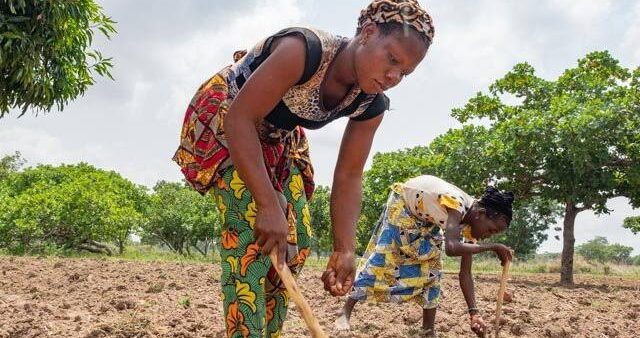
Farmers across Northern Nigeria are lamenting the severe impact of insecurity on this year’s harvesting season, as fear of bandits and Boko Haram terrorists keeps many away from their farmlands.
Crops are reportedly rotting in the fields, while criminal groups impose levies on those who attempt to harvest or cultivate their produce.
In many rural communities, particularly in the North West and North East regions, the situation has reached alarming levels. Farmers now face not only the risk of losing their livelihoods but also the danger of being attacked, kidnapped, or killed while working on their farms.
In an interview with The News Chronicle on Thursday, Mohammed Lawan Umara, a former lecturer based in Maiduguri, expressed deep concern over the worsening insecurity and its devastating impact on agriculture.
He noted that while bandits dominate parts of the North West, Boko Haram terrorists continue to terrorize communities in the North East, preventing normal farming activities.
“Bandits are doing whatever they want, especially in the North West, while Boko Haram is still disturbing farmers in the North East,” Umara said.
“Now, Nigerians have lost faith in the government when it comes to security and social amenities. People engage in farming only to survive, but even the little they have, these groups will not allow them to harvest.”
He explained that the situation has forced many farmers into poverty and bankruptcy, particularly those who took loans from the federal government or agricultural banks in hopes of improving their productivity. With rising insecurity, most cannot repay their debts or sustain their families.
“Some farmers have become poor and bankrupt because of loans and the insecurity situation,” Umara added.
“You can see how insecurity is now threatening Nigeria and other Sahel countries. It is worrisome, and ECOWAS and the African Union need to pay attention instead of shifting blame.”
Umara also dismissed claims that the violence in Nigeria targets only certain religious groups. He referenced a statement allegedly made by former U.S. President Donald Trump, who said that only Christians were being killed. “That is not true,” Umara said. “The issue of insecurity is affecting everyone, regardless of religion. Muslims, Christians, and even traditional worshippers are all victims.”
Agriculture, which employs a large portion of Nigeria’s population, continues to suffer major setbacks due to the persistent insecurity.
In many states such as Zamfara, Katsina, Niger, Borno, and Yobe, farming communities are being displaced, and farmlands are left unattended.
Experts warn that if the situation continues, Nigeria may face a severe food shortage, as both production and distribution are being disrupted by violence.
Already, food prices have soared nationwide due to limited supply and high transportation costs caused by insecurity on major highways.
As the government continues to deploy security forces to troubled areas, many farmers are pleading for stronger and more coordinated actions to restore peace and allow them to return to their farms safely. Until then, they say, the future of food security in Nigeria remains uncertain.


