

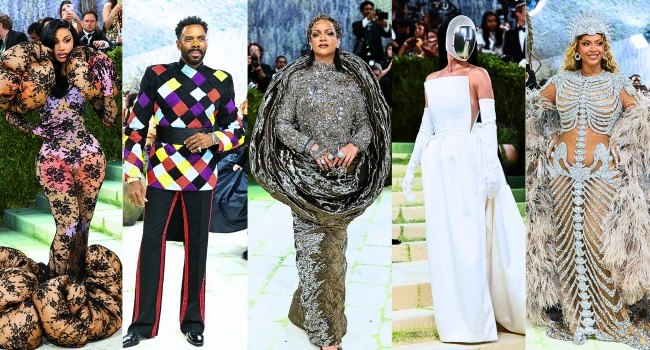
People like to call the Met Gala the Oscars of fashion, but that comparison is too clean for what it really is. The Oscars reward performance. The Met Gala rewards permission. Who gets in. Who gets seen. Who gets dressed by power and who gets left outside it.
It held its most recent edition just yesterday, taking over the Metropolitan Museum of Art in New York City, as it does every first Monday in May. But it did not begin as anything like what it has become. In 1948, Eleanor Lambert started it as a modest midnight supper. Tickets were $50. The purpose was direct. Raise money for the Costume Institute. Nothing more complicated than that. A cultural institution trying to fund itself through a gathering of people who cared enough to show up.
That simplicity did not survive contact with ambition.
The shift came in the 1970s, when Diana Vreeland stepped in and changed the atmosphere of the entire idea. She introduced themes. She invited celebrities. She understood something that changed everything that followed. If people are going to give money, give them something to look at while they do it. From that moment, fashion stopped being quiet presentation and became performance. The gala stopped being a fundraiser and became a stage that the entire world would eventually be invited to watch but never enter.
Today, it looks like entertainment built for social media, but underneath that surface is a very deliberate structure. It remains one of the primary funding engines for the Costume Institute, yet access to it has become its own kind of currency. A single ticket is about $75,000. Tables rise beyond $350,000. Fashion houses do not simply attend. They purchase presence. Then they assign meaning to it by deciding which faces will carry their designs into the public imagination.
This is where the discomfort begins, even if it is rarely said out loud.
Because $75,000 is not just a price. It is a filter. It decides who can participate in a conversation about culture and who can only observe it from a distance. And in a world where visibility already determines value, that filter matters more than the gowns themselves.
We are told this is about wearable art. And sometimes it is. Some of it is extraordinary. Some of it is genuinely creative in a way that pushes fashion forward. But it is also branding. It is also calculation. These looks are not only designed to be admired. They are designed to circulate. To dominate attention. To survive in a world where being seen is the entire point and being forgotten is the fastest form of failure.
Even the structure of the event reinforces that logic. Anna Wintour controls the guest list. Every name passes through her approval. That is not a detail. That is the architecture of the night. Inside, there is a no phone policy meant to preserve intimacy and mystery, yet it creates its own contradiction. In an era where everything is documented, the most powerful space becomes the one that temporarily removes documentation. Control does not disappear. It just changes form.
And still, the Met Gala works.
For one night, fashion stretches itself beyond its usual limits. Designers take risks they would never take in commercial spaces. They build pieces that are sculptural, theatrical, sometimes excessive, sometimes unforgettable. It becomes one of the rare moments where fashion insists on being treated as art rather than industry.
But even that ambition is wrapped in something heavier.
Because the Met Gala does not just display clothing. It displays access. It displays hierarchy without having to explain it. It shows you who sits close to influence and who is positioned far enough away to only interpret it later through images and commentary.
There is a staircase at the center of it all. People walk up it slowly, deliberately, as cameras capture every angle. It looks like arrival. It looks like celebration. But it is also selection made visible. A moving list of names that tells you, without saying it directly, who is currently allowed to represent culture.
And that is the part that lingers after the dresses are forgotten.
Not the fabric. Not the themes. Not even the creativity.
But the quiet realization that this is not just an event about fashion at all.
It is a room where culture is assigned, access is measured, and visibility is distributed like currency.
And once you see that, it becomes difficult to unsee anything else.
The Met Gala is a machine that converts culture into capital and capital into culture.
Stephanie Shaakaa
08034861434


