spot_img
spot_imgspot_img
October 7, 2026 - 6:55 PM

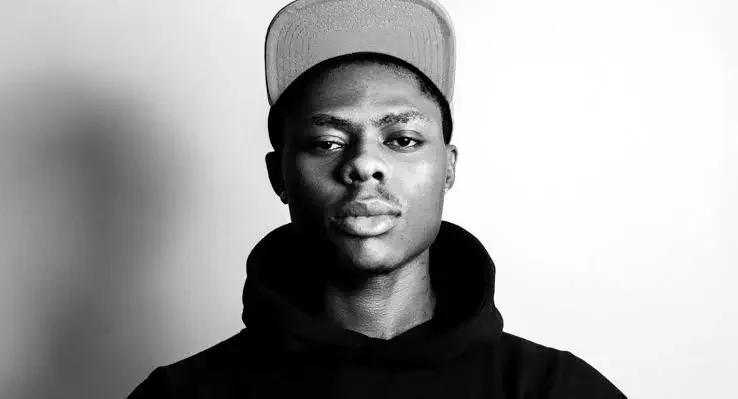
Will Mohbad Ever Get A Befitting Burial?

—

When news broke on September 12, 2023, that Ilerioluwa Oladimeji Aloba—popularly known as Mohbad—had died under unclear circumstances, the entire nation, especially his fans were shocked. What was most shocking, however, was the shoddy, dehumanising and hurried burial he was given just 24 hours after his death. It was a death like no other which triggered spontaneous reactions globally, with many wondering why a bright star, dimmed without warning, was lowered into the ground with no autopsy. There was no official explanation, and no chance for dignity as his head was bent in order to fit into the makeshift coffin. To many, the circumstances surrounding his death and burial were suspicious.

Also, given verbal reports and petitions by the deceased to the police on alleged threats and bullying by one Sam Larry and other roughnecks, Nigerians responded with a rare unity of grief and outrage by demanding the exhumation of his corpse for an autopsy. The call was heeded, and his body was exhumed on September 21, 2023. Some public-spirited individuals, led by Nollywood actresses Iyabo Ojo and Tonto Dike, made strident calls for an autopsy and even bought a luxury casket for the late artiste in order to give him a befitting burial. Nearly two years later, Mohbad’s corpse is still in limbo at LASUTH while investigations keep dragging on. The tragedy of Mohbad’s death has transformed into a symbol of institutional failure in Nigeria.

Mohbad’s death is no longer just a personal tragedy; it has become a national indictment. For months, Nigerians were told that an unknown illness—and possibly medical malpractice—led to his demise. The police identified an assistant nurse as the prime suspect for administering injections without proper qualification or prescription, triggering fatal allergic reactions. Meanwhile, MohBad’s former label boss, Abdulazeez Fashola, aka Naira Marley, and SamLarry, figures named in MohBad’s June 2023 petition alleging assault and death threats, remain central to public discourse, though direct links to the cause of death remain unproven.

In February this year, the Lagos State Directorate of Public Prosecutions claimed Mohbad formally withdrew the assault complaints lodged against Naira Marley at the Ilasan Police Station in the Lekki area of the state over an assault incident on October 8, 2022. They claimed this formed part of the decision that led to Naira Marley’s acquittal by the Magistrates’ Court over allegations linking him to Mohbad’s death. The dead can’t speak, so it will be difficult to confirm the authenticity of the claim.

The Lagos coroner court has concluded the autopsy, and toxicology testing was outsourced to the US to ensure independence, according to Lagos state authorities. But MohBad’s body still lies unclaimed, the family, especially the father, controlling release—a stark reminder that justice, even in death, remains out of reach. This case lays bare several deep fractures in our system. Many questions are begging for answers – did the police do a thorough, professional job in unravelling the mystery surrounding his death? What has been achieved with the investigation so far? Ultimately, will Mohbad ever get a befitting burial?.

Mohbad’s passing should have sparked a sober national conversation about artist welfare, mental health, toxic record label contracts, and institutional accountability. Instead, it became, for many, a convenient talking point. Politicians, influencers, and power players have increasingly used his name as a tool to score points, gain relevance, or distract from more pressing governance failures. Instead of focusing on pressing issues, we are inundated with talks about paying N20m to hack WhatsApp group chats, DNA test controversy and so on.

Some lawmakers seized the moment to move motions in parliament—not necessarily out of genuine concern, but to tap into the youth sentiment surrounding the case. Others showed up at the family’s home with cameras in tow, issuing soundbites that felt more like campaign slogans than words of comfort. Hashtags trended. Speeches were made. But behind the optics, very little has changed. Even Mohbad’s father took undue advantage of the situation and used his son’s death to become an ’emergency celebrity’.

This is the very essence of playing politics with a person’s death—when tragedy is reduced to a spectacle, stripped of its human context and converted into capital.

Even worse, conspiracy theories, unverified claims, and social media performativity began to overshadow the core issues. Who was truly responsible? What did the state’s investigation uncover? Where are the reforms that should follow such a high-profile loss? These questions faded from the headlines as soon as the outrage cycle moved on. Justice, once demanded so loudly, now exists mostly in memory.

Let’s be clear: Mohbad deserved better in life, and he deserves better in death. Using his name for political branding, social clout, or agenda-setting without backing it up with meaningful action is not only exploitative—it is dishonourable.

Instead of politicising Mohbad’s death, leaders—both in government and the entertainment industry—should have taken bold steps. They should have initiated reforms around artiste protection, enforced proper contract regulation, and provided mental health resources for creatives. The police and relevant authorities should have been more transparent in their investigations. The silence that followed initial arrests and reports was deafening, yet nothing has come out of it.

Nigeria’s young people are watching. They are not fooled by hollow gestures or PR stunts. What they demand—and deserve—is substance, not symbolism.

Mohbad’s death was a national moment of reckoning. It revealed the rot in systems meant to protect, the power imbalance in our creative industries, and the ease with which pain can be commodified. We dishonour him every time we use his name without purpose, every time we let the momentum for justice fade, and every time we let politics drown out the truth.

Let Mohbad rest, but let the movement for justice, accountability and reform continue—free from exploitation, performative grief and political theatre. Above all, let Mohbad be given a befitting burial. With the manner the investigation has turned out, keeping his corpse in the mortuary nearly two years after his death doesn’t make any sense.


Akinsuyi, former group politics editor of the Daily Independent, writes from Abuja. He can be reached at shabydayo@gmail.com.

0 0 votes
Article Rating
Subscribe
Notify of
0 Comments
Oldest
Newest Most Voted

Share post:

Subscribe

Latest News

More like this
Related

Improve welfare of Nigerian Teachers 

I was and I am a teacher. I was a Parents Teachers Association hired teacher at Oba Akinbiyi High School (II), Mokola, Ibadan in 1997. Apart from that stint, I also taught briefly at a private secondary school during my National Youth Service at Asaba, Delta State as well as at another private secondary school at Akowonjo area of Lagos state around 2001 / 2002. My late father, Deacon Isaac Oyeniyi Ojo taught for about 40 years across several primary schools in Oyo and Osun sates and retired as a headmaster in 1995. At present, I don’t just teach but train people across various democratic institutions namely election management bodies (INEC and SIECs), political parties, media, national and state legislative assemblies, police, and civil society organisations. Information gleaned from the website of UNESCO says “World Teachers’ Day is held annually on 5 October to celebrate all teachers around the globe. It commemorates the anniversary of the adoption of the 1966 ILO/UNESCO Recommendation concerning the Status of Teachers, which sets benchmarks regarding the rights and responsibilities of teachers, and standards for their initial preparation and further education, recruitment, employment, and teaching and learning conditions. In 2026, the Day marks the 60th anniversary of the Recommendation concerning the Status of Teachers.” In Nigeria, this year's celebration focused on five interconnected pillars: innovation, mobility, Artificial Intelligence, inclusion, and professional excellence. The Minister of State for Education, Prof. Suwaiba Ahmad, announced that the selection process for the 2026 World Teachers' Day awards was digitised to promote transparency, accountability, and efficiency. The celebration includes a symposium, a march-past featuring state flags and cultural attire, and the recognition of 14 awardees, including the first, second, and third best teachers receiving prestigious car gifts, while the best Federal Unity College received a bus. Other prizes include laptops. In commemoration of the World Teachers Day, Dr. Akin Ayeni and I were guests on a breakfast programme on Ekiti 91.5 FM, Ado Ekiti last Monday where we dissected the plights of Nigerian teachers and proffered solutions to them. The host was Ademola Adeleke. I enumerated some of the plights of Nigerian teachers to include: Low wages, insecurity, quackery, inadequate classrooms, lecture theatres, libraries and laboratories, high turnover of staff especially in private schools, high workloads, disrespects from parents, students and even government. I made a proverb on the programme. Elo ni teacher ngba, ti o ntuto s’owo ka’wo osu (meaning, how much does a teacher earn that he or she needs to use saliva to count salary). This was a random joke even among teachers when they used to collect their salary in cash. This day, they receive their wages via online money transfer. The proverb however is meant to drive home the paltry nature of the salaries and wages of teachers cum lecturers. I recall the sticker produced by Academic Staff Union of Universities many years ago which has the inscription “My take home pay cannot take me home”. That’s very instructive. On issue of insecurity, according to Daily Trust of October 1, 2022, “The registrar of the Teachers Registration Council of Nigeria, Professor Josiah Ajiboye, said attacks on schools by insurgents have claimed the lives of more than 2,295 teachers in the North East between 2009 and 2022.” The PUNCH in its June 5, 2026 online edition reported that “An estimated 603 students and teachers have been kidnapped in seven mass abductions across schools in Nigeria between March 2024 and May 2026 under President Bola Tinubu, despite the N145bn Safe Schools Initiative.” Recall that on May 15, 2026, a total of 46 persons – seven teachers and 39 students – were abducted from Community High School Ahoro-Esinele and Yawota Baptist Nursery and Primary School in Oriire Local Government Area of Oyo State. Thankfully, most of them were rescued though two teachers were murdered by the bandits.  Michael Oyedokun, was reportedly beheaded, while John Olaleye, was shot dead during the attack. It is noteworthy that some university lecturers have also been abducted in the past. The heavy workloads and low wages have resulted into brain drain and high turnover of teaching staff across our academic institutions. Many education graduates don’t want to teach. The lecturers in tertiary institutions are leaving in droves for greener pasters abroad. Many teachers today take the job as a last resort when better options are not available. Many of the private schools recruit untrained teachers. They side step the federal government policy of having every teacher certified by Teachers Registration Council of Nigeria. Recall that the TRCN regulates the teaching profession in Nigeria by setting standards, accrediting teacher education programmes, registering qualified teachers, and enforcing professional ethics.  It establishes national minimum standards for teacher education and monitors teacher training institutions, including Colleges of Education, university faculties, polytechnic schools of education, and the National Teachers Institute. Unlike in the 20th century when teachers in Nigeria were widely respected and seen as mini-God, in contemporary times, there have been situation where pupils and students openly abuse teachers, bully them and even beat them up. Some irresponsible parents have even gone to school to harass and molest teachers for caning or meting out corporal punishments to their wards and children. Thus, many teachers now work in an atmosphere of fear. Mrs. Comfort Fasunwon is a multiple award-winning teacher in Ondo State, here is an excerpt from what she wrote on her Facebook wall in commemoration of the 2026 World Teachers Day “To my fellow teachers, today.  Teaching is not always easy. There are days when the workload is heavy, resources may be limited, and the results of our efforts may not be immediately visible. Yet we continue to show up, teach, encourage, correct, inspire and believe in our students. Sometimes, the greatest reward of a teacher is not a certificate or trophy. It is seeing a child who once struggled begin to understand. It is watching a student grow in confidence. It is meeting a former student years later and hearing the words, “Ma or sir, you made a difference in my life.” My plead to government at all level as well as private schools’ owners is to ensure that their schools are well resourced and staff welfare is made paramount. Professionalism should be their watchwords. Teachers’ rewards shouldn’t be in heaven; a foretaste of that should be here on earth. Best wishes to fellow teachers and nation builders. Remember the popular song that says “Anyone who hates teachers will homeschool his or her  child” I.G: @jideojong  

Over 22,000 Arms Recovered Across Nigeria in 10 Years – NCCSALW

The National Centre for the Control of Small Arms...

NBA Calls for End to Torture, Deaths in Nigeria’s Detention Centres

The Nigerian Bar Association (NBA) has called for tougher...

Kari, Tinubu – APC and Nigeria’s Years of Devaluation

Whenever I think about 2015, I remember two births....
Join us on
For more updates, columns, opinions, etc.
WhatsApp
0
Would love your thoughts, please comment.x
()
x