

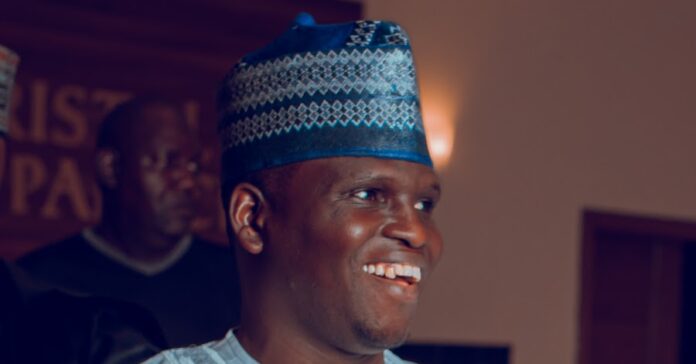
Dauda Kahutu Rarara’s story begins on the dusty streets of a small town in northern Nigeria, where he spent his early years as an almajiri. Like many children in that tradition, he left home to study the Qur’an under a local malam, living a life of modest means and daily lessons. The experience taught him resilience, discipline, and a deep connection to his cultural roots qualities that would later shape his artistic voice. Though the streets were challenging, they also gave him a keen ear for the rhythms of everyday life, the jokes, the prayers, and the collective yearning for hope that would become the backbone of his music.
As he grew older, Rarara found himself drawn to the power of song to move people. He began composing simple verses that blended traditional Hausa melodies with contemporary beats, performing at local gatherings, weddings, and religious festivals. His natural charisma and ability to weave stories about everyday struggles resonated with listeners, and word of his talent spread beyond his hometown. Soon, he was invited to perform at larger events, where his music caught the attention of more established artists and political figures who recognized its potential to influence public opinion.
The turning point came when Rarara was approached to write and perform campaign songs for a major political party. His lyrics, steeped in the language of the common man yet crafted with persuasive flair, quickly became anthems at rallies and on radio stations across the north. His political messaging through his songs not only amplified his reach but also positioned him as a voice that could bridge the gap between grassroots concerns and national discourse. This partnership elevated his profile from a regional performer to a household name throughout Nigeria.
With his newfound prominence, Rarara expanded his creative endeavors beyond solo performances. He founded a music production company that mentors young talent from his community, providing them with studio access, training, and opportunities to record professionally. He also established a youth group that organizes cultural events, workshops, and charitable activities, reinforcing his commitment to giving back to the society that shaped him. These initiatives have helped nurture a new generation of artists who carry forward his blend of tradition and modernity.
Today, Dauda Kahutu Rarara is recognized not only as a prolific musician but also as a cultural ambassador who has taken the sounds of the almajiri streets to national and international stages. He continues to tour, collaborate with artists from different genres, and use his platform to address social issues, from education to health awareness. While his journey from the streets to the spotlight is remarkable, he remains grounded, often reminding his fans that the rhythm of the streets still beats in his heart, guiding every note he creates.
Dauda Kahutu Rarara’s name still echoes in the north whenever “Hannun Karba” plays, a song he recorded for Senator Rabi’u Musa Kwankwaso when the politician returned to the governorship race in 2011 after a bruising defeat to then‑Governor Shekarau in 2003. The lyrics cleverly reminded listeners that the same hand that had once taken the seat was now handing it back, turning a personal political setback into a rallying anthem that resonated across the region. The track quickly became a soundtrack for Kwankwaso’s comeback, illustrating how Rarara’s music could frame a political narrative in a way that felt both poetic and immediate.
Beyond that single campaign, Rarara has been a constant musical force in the rise of Nigeria’s recent presidents. He lent his voice to the 2015 and 2019 campaigns of late President Muhammadu Buhari, crafting songs that blended traditional Hausa rhythms with modern beats to energize supporters and convey messages of change and continuity.
In 2023, his collaboration on President Bola Ahmad Tinubu’s “Omo Logo” turned the tune into a nationwide sensation, prompting the president, his deputy, the Senate President and the Speaker of the House of Representatives to join in the dance at a high‑profile public function. The moment underscored how Rarara’s music can bridge the gap between political leadership and popular culture.
Rarara’s influence isn’t limited to presidential races; he has become a pillar for the All Progressives Congress (APC) across the northern states. Time and again, he has written and performed campaign anthems for governors, senators, and members of the National Assembly, using his lyrical skill to amplify the party’s agenda and connect candidates with grassroots voters. His ability to tailor songs to local languages and dialects has made him a sought‑after composer for politicians who want their messages to resonate authentically with diverse constituencies.
What sets Rarara apart is his linguistic versatility. While his roots are firmly planted in Hausa music, he has recorded tracks in other Nigerian languages, expanding his reach and cementing his status as a pan‑Nigerian artist. The viral success of “Omo Logo” demonstrated that his appeal can transcend regional boundaries, drawing attention from national leaders and ordinary fans alike. As he continues to blend tradition with contemporary flair, Rarara remains a dynamic cultural broker, turning political moments into memorable melodies that live on long after the campaigns end.
Dauda Kahutu Rarara’s name still echoes in the north whenever “Hannun Karba” plays, a song he recorded for Senator Rabi’u Musa Kwankwaso when the politician returned as elected governorship seat in 2011 after a bruising defeat to then‑Governor Shekarau in 2003. The lyrics cleverly reminded listeners that the same hand that had once taken the seat was now handing it back, turning a personal political setback into a rallying anthem that resonated across the region. The track quickly became a soundtrack for Kwankwaso’s comeback, illustrating how Rarara’s music could frame a political narrative in a way that felt both poetic and immediate.
Beyond that single campaign, Rarara has been a constant musical force in the rise of Nigeria’s recent presidents. He lent his voice to the 2015 and 2019 campaigns of late President Muhammadu Buhari, crafting songs that blended traditional Hausa rhythms with modern beats to energize supporters and convey messages of change and continuity. In 2023 he actively supported President Bola Ahmad Tinubu’s northern campaign, providing a series of campaign anthems that helped rally APC supporters across the region. While “Omo Logo” was released later, it was a celebratory follow‑up rather than a 2023 campaign song.
Rarara’s influence isn’t limited to presidential races; he has become a pillar for the All Progressives Congress (APC) across the northern states. Time and again, he has written and performed campaign anthems for governors, senators, and members of the National Assembly, using his lyrical skill to amplify the party’s agenda and connect candidates with grassroots voters. His ability to tailor songs to local languages and dialects has made him a sought‑after composer for politicians who want their messages to resonate authentically with diverse constituencies.
What sets Rarara apart is his linguistic versatility. While his roots are firmly planted in Hausa music, he has recorded tracks in other Nigerian languages, expanding his reach and cementing his status as a pan‑Nigerian artist. The viral success of “Omo Logo” demonstrated that his appeal can transcend regional boundaries, drawing attention from national leaders and ordinary fans alike. As he continues to blend tradition with contemporary flair, Rarara remains a dynamic cultural broker, turning political moments into memorable melodies that live on long after the campaigns end.
Rarara’s recent philanthropic drive has taken a remarkable turn, underscoring his commitment to community upliftment. In a heartfelt ceremony, he married off nearly ten of his dedicated mentees, a gesture that not only celebrates personal milestones but also symbolizes his role as a mentor and protector within the Kahutu community of Katsina State. Among the newlyweds, Abbany Rarara stood out, drawing attention to the personal ties that bind the artist to those he has guided.
The marriage event was more than a celebration of love; it served as a platform for Rarara to reinforce his message of empowerment. He pr providing financial support, guidance, and a sense of belonging to his mentees, he has helped them embark on new chapters with confidence and stability. The ceremony was attended by family, friends, and local leaders, all of whom lauded Rarara’s generosity and the positive ripple effect it creates across the region.
Beyond the wedding, Rarara’s philanthropic footprint extends to thousands of community members in Kahutu and beyond. He has funded educational initiatives, supplied essential supplies, and facilitated small‑business grants, aiming to alleviate poverty and foster self‑reliance. His efforts have touched both rural residents and those working within the broader entertainment industry, illustrating a holistic approach to giving.
These actions reflect a strategic step in Rarara’s broader vision of social responsibility. He has invested in the welfare of his mentees and the wider Kahutu populace, he not only strengthens his personal legacy but also cultivates a culture of reciprocity and goodwill that can inspire other public figures to follow suit. The community’s gratitude underscores the lasting impact of his goodwill initiatives.
The journey of Dauda Kahutu Rarara is more than a tale of fame; it is a mirror that reflects the humility we all need as young people. Seeing a man who rose from humble beginnings yet never let his success erase the memory of his roots reminds us that greatness is not measured by the applause of crowds but by the kindness we extend to those who walk beside us. His story urges us to pause, to look inward, and to let gratitude shape the choices we make each day.
Rarara’s life teaches us that resilience is not a flash of bravery but a steady flame that refuses to be snuffed out by setbacks. When obstacles appeared, he chose perseverance over despair, turning every challenge into a stepping stone rather than a stumbling block. This quiet determination whispers to our hearts: hold fast to hope, even when the path seems dim, and let your resolve be stronger than any fear of failure.
Beyond the melodies that now echo across Nigeria’s airwaves, Rarara has become a beacon of hope for countless youths who see in him a reminder that they, too, can shape their destinies without losing their essence. He has turned the spotlight into a platform for giving, proving that a successful man can still remember where he comes from and lift others along the way. His impact ripples through the villages of Katsina, the bustling streets of Lagos, and every corner where a dream is whispered.
Dauda Kahutu Rarara has never been without enemies. The fallout from the 2023 presidential and gubernatorial elections saw him lose much of his property in Kano to thugs aligned with rival political actors who view him through a hostile lens.
Yet his destiny kept expanding, and he emerged from the ordeal even more accomplished. The episode reminds us that no human force can thwart what Allah has ordained for a man.
Rarara has also become a convenient scapegoat for the failures of governments at all levels, especially President Bola Ahmad Tinubu. Northern clerics frequently call on him to speak for the region, underscoring how his fame has risen from the streets to the national stage, making him a true celebrity across Nigeria.
As we close this chapter, let Rarara’s legacy ignite a fire within us an unwavering commitment to pursue our goals with humility, to stand resilient when hope wanes, and to never let desperation dictate our steps. May his story be the compass that guides our conscience, urging us to rise, to give, and to keep moving forward, no matter how rugged the road may become.
Seeing a picture of Dauda Kahutu Rarara as a young Almajiri on social media struck a chord deep within me; tears welled up as I imagined the hardships he must have faced, the hunger, the endless search for knowledge in the shadows of the streets. Yet, as I traced the lines of his determined eyes, I was reminded that destiny is not a fixed path but a canvas we paint with resilience, hard work, and unwavering dedication. His journey from those humble beginnings to becoming a beacon of hope for countless youths shows that no circumstance is too great to overcome when we refuse to surrender.
That single image became a mirror for my own aspirations, a reminder that the road to our destiny is paved with perseverance and the willingness to keep moving forward despite setbacks. Rarara’s story teaches us that while fate may hand us challenges, it is our tenacity that ultimately writes the narrative of our lives. May we all draw strength from his example, turning every tear into fuel for the fire of our ambitions, and never forgetting that with dedication, we can shape the destiny we desire.
Danaudi, writes from Bauchi via danaudicomrade@gmail.com


