

Nigeria’s Federal Government has officially included virtual currencies in its new tax framework, marking a major shift in how digital assets such as cryptocurrencies will be treated under the country’s fiscal laws.
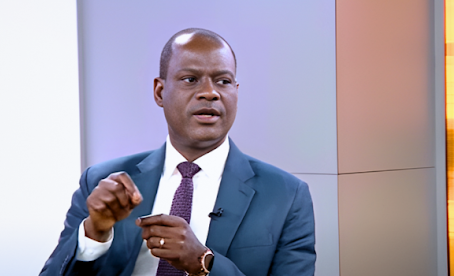
The announcement was made by the Chairman of the Presidential Fiscal Policy and Tax Reforms Committee, Taiwo Oyedele, during an online public lecture hosted by the Capital Market Academics of Nigeria on Wednesday.
Oyedele explained that the updated reform law clearly places tax obligations on virtual currencies. At the same time, he noted that gains made within the regulated capital market remain fully exempt, a policy he believes should encourage young Nigerians to look toward formal investment channels rather than speculative digital assets.
He said the exemption on capital market gains offers a safer and more structured investment path, especially at a time when misinformation has pushed many young people away from regulated financial spaces. He stressed that a significant number of Nigerians still wrongly assume that capital gains are taxed at 30 percent, a misconception he described as harmful to investor decision-making.
The News Chronicle gathered that the committee has been consulting widely to correct public misconceptions and guide investors toward an accurate understanding of the country’s new fiscal direction, especially in areas where digital assets intersect with traditional finance.
Oyedele noted that narratives and social sentiments often shape economic behaviour, warning that misinformation can lead citizens to make costly financial mistakes. He emphasised that the reforms were designed not only to widen the tax net but also to protect investors and direct them towards more transparent financial platforms.
As part of the broader accountability measures, he revealed that the new law requires the government to set aside a dedicated pool of funds strictly for tax refunds. This, he said, will prevent indiscriminate sharing of revenues and ensure that legitimate claims are honoured promptly, thereby restoring confidence in the tax administration system.
The move signals Nigeria’s push to modernise its tax regime while providing clearer rules for digital asset activities across the country.


