


The Minister of Information and National Orientation, Mohammed Idris, says the administration of President Bola Tinubu took difficult and politically unpopular decisions to address longstanding economic distortions after assuming office.
Idris made this known on Thursday in Abuja during a ministerial briefing on Nigeria’s 66th Independence anniversary.
He said the administration chose to confront structural challenges rather than defer them, adding that Nigerians had borne some of the costs of the reforms.
“About three years ago, President Bola Tinubu assumed office amid some very significant and structural challenges, and physical challenges,” Idris said.
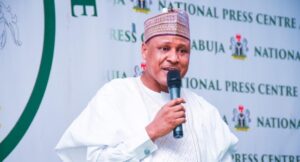
“His administration chose to confront the long-standing distortions rather than postpone them, and those decisions were indeed very difficult and were not politically convenient. And because of those decisions, Nigerians have borne some real costs.”
According to the minister, Nigeria was now moving from the reform and stabilisation phase towards what he described as a new phase of growth and shared prosperity.
He cited recent economic indicators, including real Gross Domestic Product growth and an increase in the country’s foreign exchange reserves.
“Nigeria’s real Gross Domestic Product grew by 4.43 percent as against the preceding year, which was 4.23 percent. Our foreign reserves have risen, our domestic refining capacity has expanded, investment and productive activity are gaining momentum,” he said.
Idris also referenced the recent disclosure by the Central Bank of Nigeria Governor, Olayemi Cardoso, that the country’s gross external reserves had crossed $55 billion, their highest level in more than 18 years.
He said the development reflected progress in the government’s ongoing economic reform efforts.


