

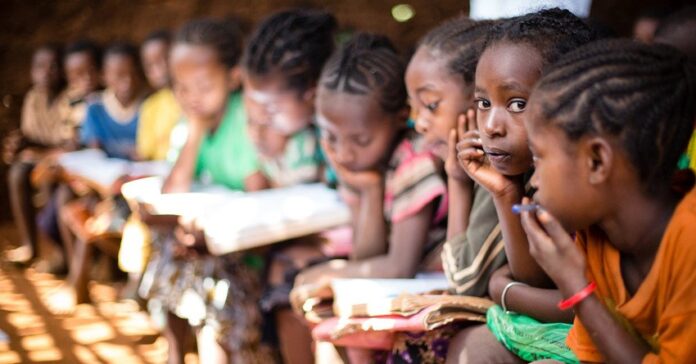
For many Nigerians the classroom once a place of promise and possibility now sits uneasy between two threats the slow rot of a fragile education system and the sudden violence that snatches children from dormitories and assembly halls. In the north, where generations have relied on schools to lift families from poverty, the system is fraying. Tens of millions of children remain out of school. Across states and seasons, stories of abductions and closures have become depressingly familiar, planting a deep public fear about what school attendance now costs.
Nigeria carries a disproportionate share of the world’s out-of-school children. UNICEF reports that roughly 10.5 million children aged five to fourteen are not in school a staggering figure that makes Nigeria home to one in five of the worlds out of school children. That figure reflects problems ranging from poverty and child labour to school closures driven by insecurity. Other international monitoring shows even larger estimates with UNESCO analyses placing the number of children and youth out of school in Nigeria in the tens of millions a crisis that predates the most visible outbreaks of violence and has been amplified by them.
Northern Nigeria’s education infrastructure has long been built on limited budgets, uneven teacher deployment, and competing cultural norms. In many rural communities, long distances to school, dilapidated classrooms, and a shortage of female teachers discourage regular attendance, especially for girls. The problem is compounded by the Almajiri and nomadic systems of learning which in their present forms often leave children outside formal schooling. Efforts to integrate nomadic populations and Almajiri children into formal schooling have produced pilots and policy papers, including UNESCO-supported models, but scaling these systems requires political will, targeted financing, and adaptation to mobile livelihoods.
If systemic weakness makes northern education fragile criminal violence and insurgency have become the accelerant. Since Boko Haram’s 2014 abduction of 276 schoolgirls in Chibok, Nigeria, has witnessed a string of mass kidnappings and numerous smaller raids that together have eroded public confidence in schools as safe spaces. The Dapchi abduction in 2018 which involved about 110 girls the Kankara incident in December 2020 where over 300 boys were seized and the March 2024 Kuriga Kaduna abductions illustrate the persistence of this crisis. Recent reporting shows new large-scale attacks in 2025. These headline cases represent only a fraction of the danger. Humanitarian agencies estimate that well over a thousand schoolchildren have been abducted since the crisis began in the mid-2010s, with hundreds more affected in the past two years. Kidnapping for ransom now attributed to both bandit groups and insurgent factions has forced the closure of hundreds of schools shattered community trust and driven some parents to keep their children at home rather than risk sending them to day or boarding schools. Returned students often face trauma disrupted learning and families burdened by ransom payments.
The nomadic and Almajiri school models offer some hope where formal education systems struggle to reach mobile pastoralists seasonal farmers and itinerant communities. Flexible school calendars mobile teachers radio based lessons and culturally sensitive curricula allow learning to move with livelihoods. UNESCO and other practitioners have documented programmes that blend modern literacy and basic numeracy with vocational and religious instruction in ways that gain community acceptance. When properly resourced and supported by traditional and local leaders these models can reduce the number of children left out of mainstream schooling. However they are not permanent solutions without stable funding teacher training and security guarantees for schools and educators especially where movement crosses conflict zones.
Designing a workable education model for Nigeria in a period of insecurity requires practicality protection and community involvement. Community-based schooling with local security structures, early warning networks, and reduced reliance on large boarding schools may help lower vulnerability to attacks. Mobile classrooms, radio instruction SMS SMS-based lessons, and tablet supported self learning packages can support children in conflict-affected or mobile communities. Secure boarding schools where absolutely necessary must operate with strong welfare systems psychosocial support and clear protection protocols. Targeted cash transfers can help families overcome the economic obstacles that keep children out of school especially girls. Improved teacher incentives housing allowances and safety guarantees can keep qualified teachers in high risk communities and ensure continuity in schooling. National coordination sustained financing and political will are crucial if Nigeria is to scale what works and rebuild its fragile education architecture.
The fear that parents express today is deep and understandable. Sending a child to school no longer feels like a routine duty but a risk assessment shaped by the memory of Chibok, Dapchi, Kankara, Kuriga, and other tragic kidnappings. Reports by UNICEF Save the Children and international media show how this wave of abductions has reversed educational progress and pushed more children to the margins. If Nigeria does not stabilise learning especially in the north the consequences will be generational. Lost education means lost futures deepened poverty and a wider opening for criminal and extremist recruitment. The alternatives require effort and investment but they offer a path toward restoring trust in the school system.
Education should offer safety not danger. Restoring that promise demands security reforms, long-term educational restructuring, and the strengthening of nomadic and Almajiri models that can bridge access gaps. Above all, it requires listening to communities, funding what works, and rebuilding confidence so that parents once again see school as a source of hope, not fear.


