

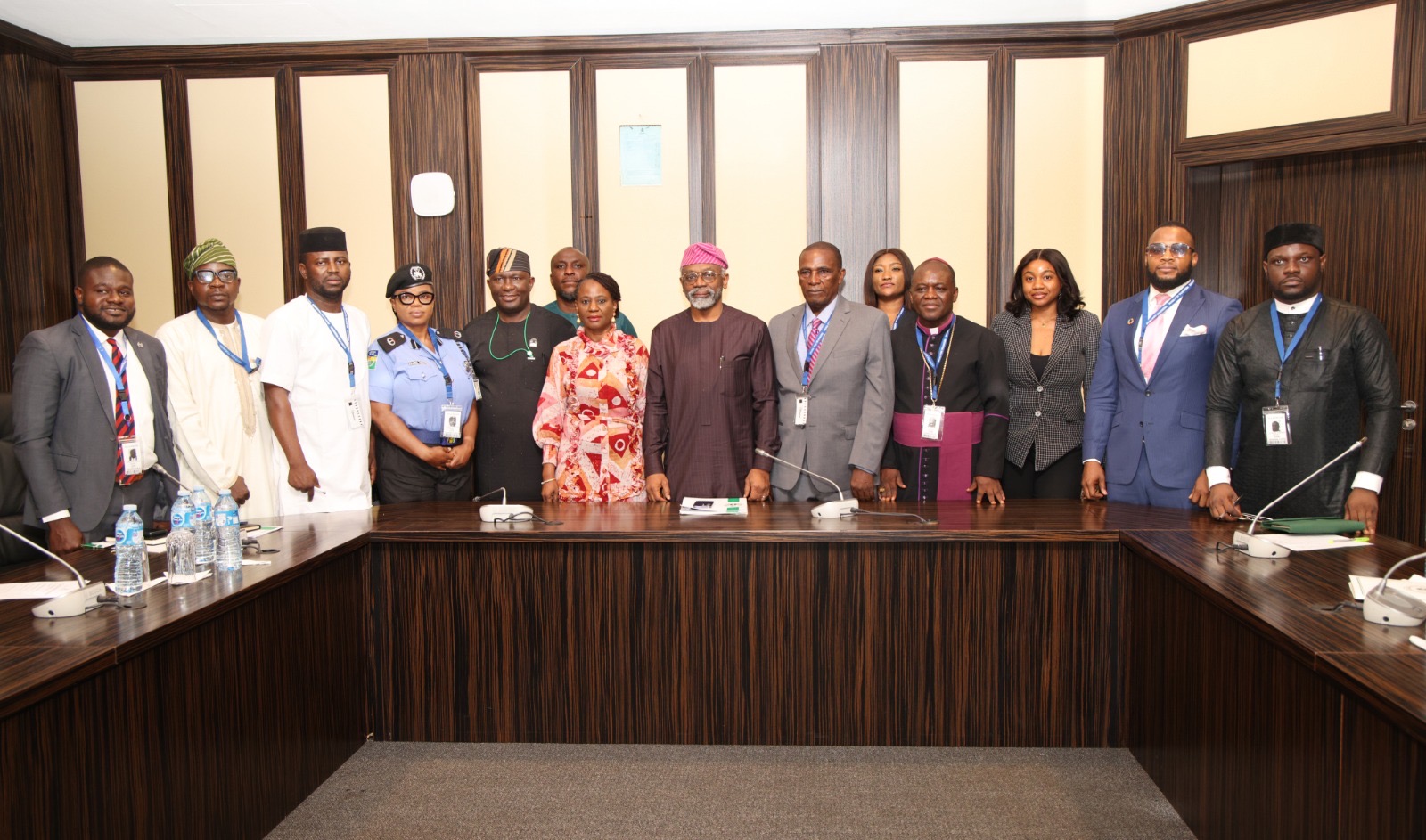
The Chief of Staff to the President, Femi Gbajabiamila, has reaffirmed the Presidency’s backing for the Special Committee on Campaign Against Social Vices in Secondary and Tertiary Institutions, calling its mandate critical to Nigeria’s future.
Gbajabiamila made the pledge on Thursday during a meeting with the committee, chaired by Professor Jerry Ugokwe, at the State House, Abuja.
He expressed confidence in the committee’s integrity and capacity, noting that its designation as a special committee underscores the importance of its task: safeguarding the moral development and well-being of Nigerian youth.
Warning that rising social vices among young people pose a growing national threat, Gbajabiamila stressed that deliberate, coordinated action is required to protect the country’s future.
“It takes a community to raise a child. We cannot sit back and do nothing and expect this country to grow. You start from the foundation,” he said.
He highlighted the link between law and morality, describing moral reorientation as key to tackling social vices in schools. Gbajabiamila encouraged innovative approaches, citing positive outcomes from his direct engagement with students during school visits.
In a demonstration of personal commitment, he announced a ₦50 million seed donation to the committee, to be released in two tranches, beginning with ₦25 million. He assured that his office would remain open for sustained collaboration and support, including mobilising corporate partners and exploring budgetary provisions.
Professor Ugokwe commended the Presidency for its vision and described youth moral well-being as a national priority.
He explained that the committee’s mandate includes combating cultism, drug abuse, examination malpractice, cybercrime, and other social vices, while promoting discipline, responsible leadership, and student welfare.
Since its inauguration, the committee has moved from policy to action, holding major engagements in Edo and Kwara States, and plans a grand national launch at the State House Conference Hall.
Ugokwe appealed for strategic backing, logistical support, and stronger institutional ownership from the Presidency.
Also speaking, Comrade Sunday Asefon, Senior Special Assistant to the President on Student Engagement, stressed the urgency of the intervention, citing the death of a university student linked to drug intoxication as a stark reminder of the national challenge.
He highlighted the committee’s multi-stakeholder structure, which brings together education authorities, religious leaders, and other actors to drive a holistic reorientation of value among students.
Despite limited resources, Asefon noted, the committee has conducted programmes in Edo and Kwara and is planning larger national engagements in Abuja.
He urged stronger institutional support, emphasizing that the initiative aligns with the administration’s broader youth development and nation-building agenda.


