

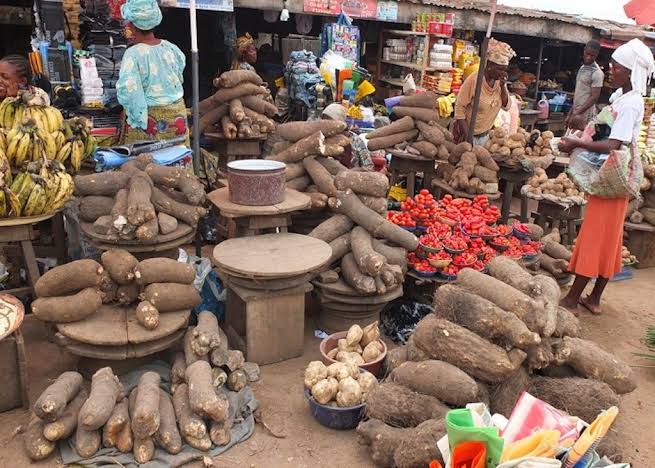
Food costs remained the biggest source of inflationary pressure in Nigeria in May 2026, with food inflation rising to 16.96 percent, surpassing the country’s headline inflation rate of 15.93 percent for the second straight month.
Rising prices of important staples including tomatoes, onions, maize, cassava products, yam, pepper, cowpea, ginger, and plantain kept driving food prices higher all across the nation, according to The News Chronicle, which reports that on the most recent data from the National Bureau of Statistics. The sharp rise in food inflation from 8.89 percent in January to 16.96 percent in May exacerbates the load on families already fighting increasing living expenses.
Food prices are rising far quicker than overall consumer prices, according to data analysis, therefore driving the general trend of Nigeria’s inflation in 2026. The food and non-alcoholic beverages sector alone added 6.38 percentage points to the country’s headline inflation rate, therefore driving the most inflationary pressure.
With 21 states having food inflation above 17%, the situation is still worse in certain areas. With some of the highest food inflation numbers countrywide, Adamawa, Kwara, and Rivers came out as the worst hit.
Although headline inflation gently increased from 15.69 percent in April to 15.93 percent in May, analysts point out that ongoing increases in food prices present a big difficulty for consumers, companies, and authorities trying to stabilize the economy and reduce pressure on household spending.


