

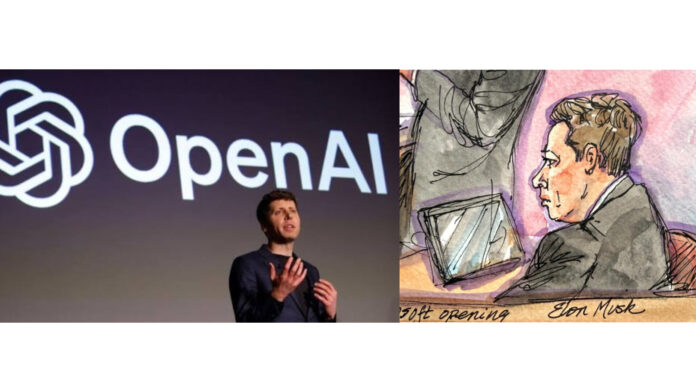
In a closely watched federal trial in Oakland, Elon Musk told the court he regrets backing OpenAI in its early days, describing himself as “a fool” for funding what he believed would remain a nonprofit dedicated to public benefit.
“I was a fool who provided them free funding to create a startup,” Musk told the court. He said his early contribution of about $38 million helped support what he now views as a company that became far larger and more commercial than he expected.
The case is being heard in Oakland and involves Musk’s legal claims against Sam Altman, Greg Brockman, and OpenAI itself. Musk argues that the organization moved away from its original nonprofit purpose and that this shift broke the terms under which he supported it.
He said in court, “It’s not OK to steal a charity,” referring to OpenAI’s transition into a profit-driven structure backed by large commercial partnerships, including with Microsoft.
Musk’s position is that OpenAI was presented to him as a nonprofit working for the public good, particularly regarding the risks posed by advanced artificial intelligence. He claims the organization later changed direction to prioritize commercial outcomes.
He is asking the court to:
- Reverse OpenAI’s for-profit structure
- Remove Sam Altman and Greg Brockman from leadership
- Award damages he estimates at above $180 billion
He has also said the money should be redirected to support the nonprofit side of OpenAI.
OpenAI’s lawyers say Musk is misreading the early arrangements. They argue he was aware the structure could evolve and that he did not object at the time.
They also say the lawsuit comes after Musk left the organization in 2018 and later started his own AI company, xAI, which now competes directly with OpenAI.
In court, OpenAI’s legal team questioned Musk’s claim that his intention was always to keep the organization strictly non-profit.
During questioning, Musk was challenged on his past statements about AI development and his role in shaping early OpenAI plans. At one point, when pressed on financial and tax-related implications of his donations, he responded that the line of questioning was “not simple” and said, “They’re designed to trick me essentially.”
He also told the court that while he initially expected influence over OpenAI, he did not expect to maintain control as the organization grew.
Sam Altman has not yet personally responded in detail in court. He is expected to testify later in the trial.
Outside the courtroom, OpenAI remains one of the central companies in artificial intelligence.
There are also ongoing questions in the industry about the cost of building and running these systems. Reports have suggested internal disagreements within OpenAI over spending and growth targets, though the company has denied any operational instability.
The court is not only looking at what was agreed years ago, but also at how AI companies can legally evolve as they scale.
The outcome could affect:
- How nonprofit AI labs can convert into commercial companies
- How early donors’ expectations are treated in court
- How much control founders retain as companies grow
- How future AI firms are structured and funded
For now, the case continues in Oakland, with more testimony expected in the coming weeks.


