

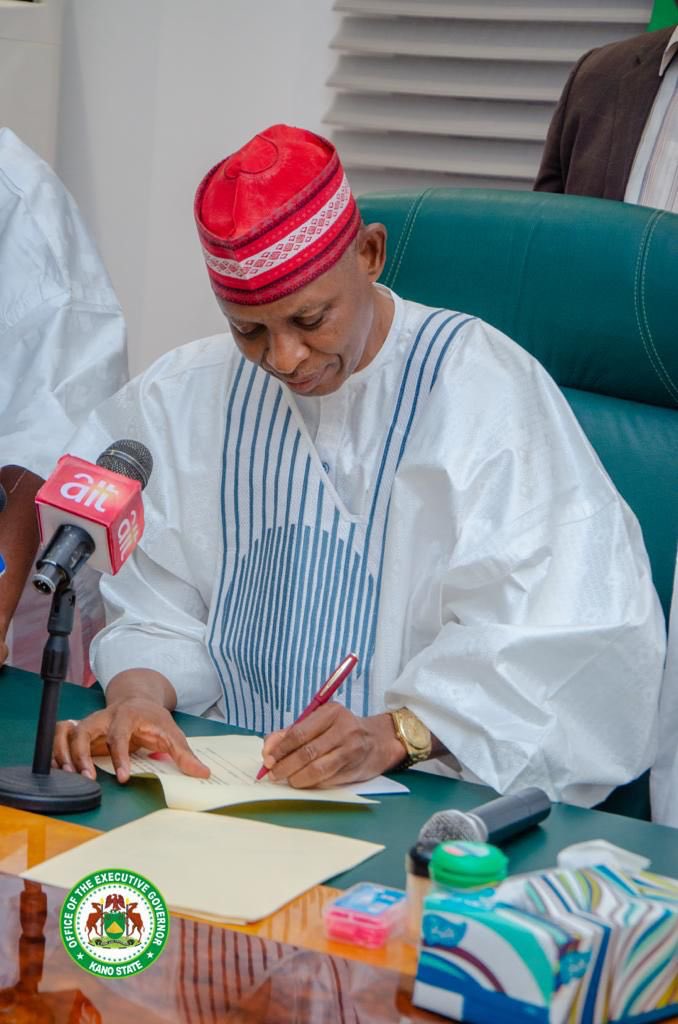
Abba Kabir Yusuf’s decision to break away from the Kwankwasiya movement and join the All Progressives Congress (APC) has sent shockwaves through Kano politics. This bold move is a test of his ability to carve a niche for himself, independent of Senator Rabiu Musa Kwankwaso’s influence. Yusuf’s departure has left many wondering if he can establish a strong foothold in the APC and maintain his relevance in Kano politics.
The Kwankwasiya movement, which propelled Yusuf to power, is still a dominant force in Kano. Kwankwaso’s loyalists are likely to view Yusuf’s defection as a betrayal, potentially creating a rift between the two factions. However, Yusuf might leverage the APC’s resources and Ganduje’s influence to build a new support base. His ability to connect with the people and deliver on campaign promises will be crucial in determining his success.
To an ordinary man in Kano, Kwankwasiya represents a beacon of hope in a sea of challenges. The movement, led by Senator Rabiu Musa Kwankwaso, has been a game-changer for many young Nigerians who aspire to serve their country but lack the financial means. Through the Kwankwasiya movement, hundreds of politicians have been sponsored and won elections without having to break the bank. This has not only changed the face of politics in Kano but also given voice to the voiceless.
The movement’s impact goes beyond politics, touching the lives of thousands of ordinary citizens. Many young Kwanoka have had the opportunity to study abroad, free of charge, thanks to Kwankwaso’s philanthropy. This has created a sense of gratitude and loyalty among the people, who see Kwankwaso as a true leader who invests in their future. The movement’s focus on education and empowerment has also created a pipeline of talented individuals who are now giving back to their communities.
Abba Yusuf’s move could reshape Kano politics, potentially altering the balance of power. The APC might see this as an opportunity to strengthen its grip on the state, while the NNPP will likely regroup to reclaim lost ground. As the situation unfolds, one thing is certain – Kano politics will remain unpredictable, with alliances and rivalries shifting rapidly.
If Abba succeeds in establishing himself, he could become a key player in Kano politics, potentially influencing the 2027 elections. However, if he struggles to gain traction, his defection might be seen as a miscalculation, weakening his position and creating opportunities for other contenders. Only time will tell if Abba Yusuf can find his footing and make a lasting impact.
Governor Abba Kabir Yusuf’s defection from the New Nigeria Peoples Party (NNPP) to the All Progressives Congress (APC) has significant implications for Kano politics. This move is seen as a strategic attempt to leverage Senator Rabiu Musa Kwankwaso’s influence in the state, potentially reinvigorating the APC’s northern base and impacting the 2027 elections. The defection has sparked concerns about the stability of the NNPP and the future of the Kwankwasiyya Movement, which has been a dominant force in Kano politics.
As for potential governorship candidates for the 2027 elections, Senator Kwankwaso is a key figure, with some speculating he might join the APC and potentially secure a vice-presidential slot or even make a bid for the presidency. Other notable figures include Abdullahi Ganduje, former Kano State governor and APC National Chairman, Nasiru Yusuf Gawuna former Deputy Governor and the 2023 APC gubernotiral candidate, Senator Barau Jibrin the current Deputy President of the Senate, Abdullahi Bichi and many other APC’S stakeholders whose influence could shape the party’s strategy. The 2027 elections in Kano will likely be shaped by alliances, defections, and internal realignments within the NNPP and APC.
Senator Rabiu Musa Kwankwaso’s ability to produce numerous politicians without relying on personal wealth is a testament to his strategic leadership and grassroots appeal. During his tenure, he backed candidates for various positions, including House of Representatives, Governors, Commissioners, Local Government Chairmen, and State House of Assembly members, often without requiring them to spend a dime. This approach not only showcased his influence but also created a loyal network of politicians who owed their success to him. Their campaigns were often funded through grassroots mobilisation and community support, further solidifying Kwankwaso’s hold on Kano politics.
Kwankwaso’s unconventional approach to politics has been a key factor in his success. He focused on building relationships and mobilizing grassroots support, propelling candidates into office, often against formidable opponents. His victory in the 2023 presidential elections in Kano is a prime example, where he defeated his former Deputy and anointed candidate, Dr. Abdullahi Umar Ganduje, despite being the underdog. This win underscored Kwankwaso’s enduring popularity and ability to connect with the people. The movement’s focus on community engagement and local issues resonated deeply with voters.
The Kwankwasiya movement’s impact on Kano politics is undeniable. With a strong emphasis on grassroots mobilisation, the movement has created a loyal base that transcends party lines. Many politicians seek Kwankwaso’s backing, knowing it can significantly boost their chances of winning. As he continues to shape Kano politics, his influence is likely to remain significant. Kwankwaso inspires loyalty and devotion, making him a force to be reckoned with in Nigerian politics, and his next move will be closely watched by allies and adversaries alike .
Abba Kabir Yusuf decision to leave the New Nigeria Peoples Party (NNPP) and join the All Progressives Congress (APC) has sparked intense debate in Kano politics. To some, his move can be seen as a betrayal of the Kwankwasiya movement that propelled him to power. Senator Rabiu Musa Kwankwaso had invested heavily in Yusuf’s career, and his departure may be perceived as a breach of loyalty. Many NNPP supporters might view this as a betrayal of trust, potentially damaging Yusuf’s reputation.
On the other hand, Abba Yusuf might argue that his defection is an assertion of influence and a strategic move to further his political career. By joining the APC, he may be seeking to leverage the party’s resources and broader national platform to achieve his goals. Yusuf could be betting on the APC’s strength to bolster his position in Kano politics, potentially positioning himself for future electoral contests. This move might be seen as a calculated risk to expand his influence and secure a stronger foothold in the state’s political landscape.
The perception of Yusuf’s defection ultimately depends on one’s perspective. While some see it as a betrayal of the Kwankwasiya movement, others view it as a shrewd political move. The outcome will hinge on how effectively Yusuf navigates his new party affiliation and connects with the people. If he succeeds in leveraging the APC’s support to deliver results, his defection might be seen as a masterstroke. However, if he struggles to gain traction, it could be perceived as a costly mistake.
The debate surrounding Abba Kabir Yusuf’s rise to prominence is intense, with many attributing his success to Senator Rabiu Musa Kwankwaso’s influence. Some argue that without Kwankwaso’s backing, Yusuf wouldn’t be a household name in Kano politics. Kwankwaso’s support was instrumental in Yusuf’s career, and his decision to anoint Yusuf as the PDP candidate in 2019 was seen as a significant gamble.
Journalist Jaafar Jaafar , publisher of Daily Nigerian, suggests that Kwankwaso’s decision to back Yusuf came at a cost, including losing the support of former President Olusegun Obasanjo and General T.Y. Danjuma. This narrative paints Kwankwaso as a leader willing to make tough decisions, but also raises questions about the consequences of his choices. Jaafar’s publications have consistently portrayed Abba Kabir Yusuf in a negative light, highlighting past controversies and suggesting a pattern of betrayal.
Jaafar’s recent joking suggestion to declare January 23rd as “World Betrayal Day” underscores the intense criticism Yusuf faces. This narrative, if it gains traction, could impact Yusuf’s reputation and influence. However, it’s worth noting that these are perspectives, and the true nature of Yusuf’s relationship with Kwankwaso remains a topic of debate. As the situation unfolds, one thing is certain – the dynamics of Kano politics will continue to fascinate and intrigue.
Kwankwaso’s strength lies in his deep understanding of Kano’s local dynamics and his ability to connect with the people. He has built a loyal network of supporters who trust his judgment and follow his lead. This grassroots mobilisation is a powerful tool, making him a force to be reckoned with in Kano politics. His ability to tap into the pulse of the local community and address their concerns has earned him immense respect and popularity. Kwankwaso’s down-to-earth approach and willingness to listen have helped him build strong relationships with various stakeholders, including traditional leaders, community groups, and ordinary citizens.
As a result, Kwankwaso remains a heavyweight in Kano, and his endorsement can make or break a candidate. His experience and influence will likely continue to shape the state’s politics, and politicians will be keenly watching his next move. The impact of his endorsement extends beyond just winning elections; it can also affect the overall trajectory of a candidate’s career. With Kwankwaso’s backing, a candidate can gain significant traction, while his opposition can spell trouble for even the most formidable opponents.
The key lessons from Abba Kabir Yusuf’s defection will be closely watched by politicians. One takeaway is that loyalty is a fragile concept in politics, and alliances can shift rapidly. Yusuf’s move may inspire others to reevaluate their affiliations, potentially leading to a realignment of forces in Kano politics.
Senator Kwankwaso is likely to mobilize against Yusuf, leveraging his grassroots support and network. Kwankwaso’s influence shouldn’t be underestimated, and he may use his loyalists to make Yusuf’s tenure challenging. The air could get thicker as both men engage in a battle of wits.
Whether Abba Kabir Yusuf is an internal arrangement or a genuine defector remains speculation. Some believe Yusuf might be working behind the scenes with Kwankwaso, using his new APC platform to achieve specific goals. However, if this is the case, only time will tell. For now, the move seems to be a bold, calculated risk by Yusuf to carve his niche.
Danaudi, Public Affairs Analyst, Writes From Bauchi Via ajayiademola@gmail.com


