

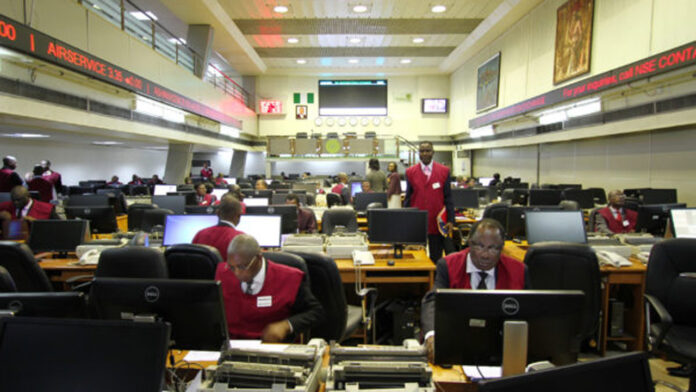
Nigeria’s equities market has come under renewed pressure in November as sustained selloffs in major banking stocks drag the All Share Index lower.
The benchmark index settled at 144,646 points on November 19, reflecting a daily slip of 0.25 percent and a month to date loss of 3.55 percent, although the year to date return remains firmly positive at 40.53 percent.
Market capitalization has also retreated from its peak above 99 trillion naira to about 92 trillion naira, wiping out more than 7 trillion naira in investor value this month.
Banking stocks have taken the largest hit, with the banking index falling by 1.22 percent at mid week. It also recorded its weakest weekly run since March 2010 after a 7.27 percent drop in mid November. Analysts attribute the pressure to a mix of domestic and external factors that have destabilised investor sentiment.
The News Chronicle gathered that the downturn has been amplified by concerns over proposed capital gains tax reforms, which triggered anxiety among foreign and local investors earlier in the month. Although the Finance Minister promised wider consultations and potential exemptions on reinvested foreign capital, the remarks only slowed the decline but did not reverse it.
Geopolitical conflicts have deteriorated the environment, particularly after threats from former United States President Donald Trump regarding possible military action and tariff increases on emerging market imports.
Investors were disturbed by the remarks, which quickened the capital outflow from medium- and huge-cap banks. After the financial sector rose quickly earlier in the year, profit taking has also been common; now it makes up a fourth of the fluctuations of the All Share Index.
Though there is a lot of market volatility nowadays, Tier 1 banks still have excellent basics, according to data. Following a recent four trillion naira injection into the financial system, liquidity has improved.
Listed banks increased their combined asset value to 169.5 trillion naira in 2024 versus 112.39 trillion naira in 2023. Analysts predict continued growth through 2025 as digitization, government securities income, and recapitalization efforts increase market power.
Outlook remains cautious, even if a fresh understanding of tax policy and company revenues could steady the market in the following weeks.


