

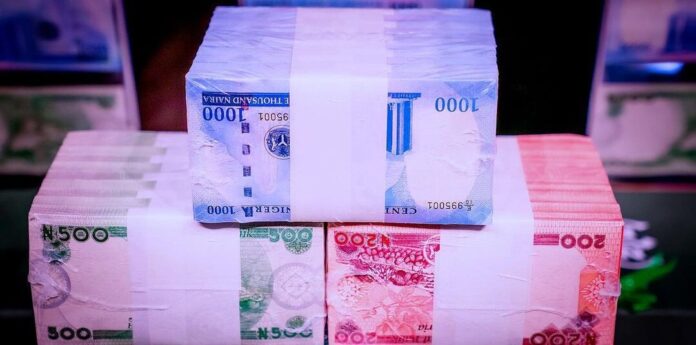
For years, October has carried a familiar pattern for Nigeria’s foreign exchange market — a period when the naira weakens under seasonal pressure before stabilizing towards year-end. But this year, the local currency broke that long-standing trend, showing unexpected resilience and even appreciation against the dollar.
The News Chronicle currency tracker gathered that the naira closed October 2025 stronger at ₦1,427 per dollar in the parallel market, compared to ₦1,478 in the official market. The usually volatile parallel rate even improved slightly from ₦1,490 in September to ₦1,460 by month-end. This calm defied the “October storm” that typically rattles the foreign exchange market.
This shift reflects more than short-term interventions. It marks a deeper transformation in Nigeria’s financial behavior and policy direction. Many Nigerians, pressured by inflation and high living costs, no longer hoard dollars as a hedge. Even politically connected elites, once known for dollar-based transactions, are now exercising more restraint due to tighter monitoring and increased scrutiny.
Under Central Bank Governor Olayemi Cardoso, monetary management has taken a more transparent and disciplined turn. Gone are the days of multiple exchange rate windows and sudden policy swings. The CBN’s emphasis on market-driven pricing, consistency, and investor confidence is gradually restoring credibility. As a result, foreign reserves have climbed to about $43 billion, suggesting renewed capital inflows and a quiet return of portfolio investors seeking high-yield naira assets.
Corporates, too, are converting earlier forex gains to avoid potential losses from a strengthening currency, injecting more liquidity into the local market. This has created a self-reinforcing cycle that supports the naira without heavy-handed central bank intervention.
Analysts believe the dynamics driving Nigeria’s exchange rate are changing. Oil prices and production, once seen as the main determinants, are losing dominance. Instead, confidence, liquidity, and interest rate differentials are emerging as the new stabilizers of the currency.
While challenges such as inflation, weak exports, and fragile reserves persist, October’s performance signals a psychological turning point. For the first time in years, the naira did not falter in its traditional “weak season.” Instead, it demonstrated a new kind of strength — one grounded in market discipline and growing investor trust.
In breaking the October rule, the naira may have quietly ushered in a new era of resilience for Nigeria’s foreign exchange market.


