

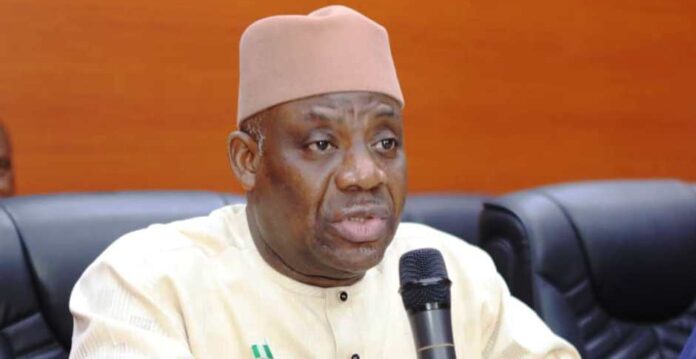
The Minister of Education, Dr. Maruf Tunji Alausa, and the Minister of State for Education, Prof. Swaibu Sa’id Ahmed, have restated the Federal Government’s strong commitment to working with the Academic Staff Union of Universities (ASUU) to permanently resolve all outstanding issues affecting Nigerian universities.
In a Press release obtained by The News Chronicle on Sunday night, the Ministers explained that the government has shown sincerity, patience, and goodwill in its discussions with ASUU.
They noted that nearly all the concerns raised by the union have been addressed. These include a significant increase in teaching allowances and better conditions of service for academic staff.
The few remaining matters, they said, are internal university issues now under the jurisdiction of the newly reconstituted governing councils.
They pointed out that despite the government’s efforts to ensure smooth academic activities and keep students in school, ASUU has not shown the same level of commitment.
The government met its deadline for responding to ASUU’s demands, yet the union still decided to embark on a strike.
The Ministers described this action as unfair to students and the public, especially given the government’s proven efforts and progress.
The Ministers also emphasized that the government continues to prioritize the welfare of university staff and the stability of the academic calendar, in line with President Bola Ahmed Tinubu’s Renewed Hope Agenda.
They reaffirmed that dialogue is the most effective way to resolve disagreements and prevent unnecessary disruption in the education sector.
Furthermore, they reminded the public that the “no work, no pay” policy remains a valid labour law in Nigeria.
The government will apply this law if academic work is disrupted. While maintaining flexibility and goodwill, the government will also uphold fairness and accountability in managing public resources.
The Ministers reassured students, parents, and the general public that the Federal Government is committed to maintaining peace and stability in the tertiary education system.
They called on ASUU and other academic unions to choose dialogue and partnership over confrontation, for the collective good of the nation’s higher education sector.
They added that the government’s education reform plan aims to improve teaching and research standards, strengthen university governance, promote autonomy, and create an environment of respect, innovation, and productivity in Nigerian universities.
Finally, the Ministers reaffirmed the government’s readiness to work with all stakeholders to protect the academic calendar and prevent further disruption to students’ learning.
They appealed to ASUU to reconsider its decision and return to the negotiation table in the best interest of students and the future of Nigeria’s education system.


