

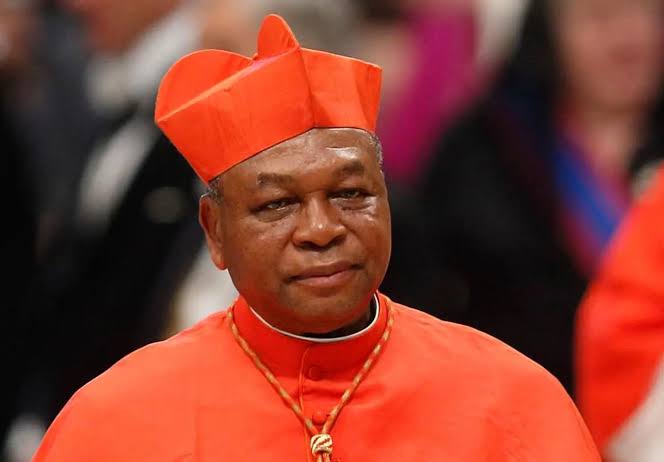
The Archbishop Emeritus of the Catholic Archdiocese of Abuja, John Cardinal Onaiyekan, has warned that Nigerians could boycott the 2027 general elections if they believe the ruling All Progressives Congress (APC) is destined to win regardless of how people vote.
Speaking on Monday during a programme on Eagle 102.5 FM, Ilese-Ijebu, monitored by The News Chronicle in Abeokuta, the cleric said the credibility of the electoral process hinges not only on the conduct of elections but also on public confidence that every vote counts.
Onaiyekan cautioned that any perception that the outcome of the polls is already predetermined would discourage voter participation and ultimately weaken the legitimacy of the government that emerges.
“I fear that if it becomes very clear to Nigerians that no matter what happens, the APC will win, then most people won’t even bother to go to the election,” he said.
“And even if the real power wins, it will not bring a real victory. It is not going to be possible to deliver good government.”
The Cardinal argued that democracy can only produce good governance when elections are genuinely free, fair and credible, warning that flawed elections inevitably lead to poor leadership and widespread hardship.
“Genuine democracy is built on free and fair elections. Any democracy that cannot conduct free, fair and credible elections cannot produce good governance. Bad elections lead to bad governance, and bad governance leads to misery among the people.”
Lamenting Nigeria’s electoral history, Onaiyekan said the country has yet to conduct a truly free and fair election, attributing low voter turnout to growing public disillusionment with the process.
He urged the Federal Government to rebuild confidence in the electoral system ahead of the 2027 polls.
“It is in our interest, and in the interest of the government that has all the powers, to restore the trust of the people in the electoral process so that we can get at least 50 per cent of Nigerians voting.“
Drawing a contrast with the military era, the cleric noted that democratic leaders derive their authority from the people and must therefore be held accountable.
“Now we are in a democracy, and the rulers say they are governing in our name. We cannot keep quiet when those claiming to work in our name are not.”
Onaiyekan also said the credibility of elections goes beyond the neutrality of the Independent National Electoral Commission (INEC), arguing that the conduct of security agencies during elections often undermines public confidence.
He accused security operatives of intimidating voters instead of protecting them and insisted that electoral laws require urgent reforms.
According to him, the process of appointing INEC’s leadership should also be reviewed to eliminate perceptions of bias.
“We know that the government in power appoints the INEC. We have to find a way around that because if the government in power appoints the INEC, it becomes difficult to have a level playing field, unless you have a very strong INEC chairman who can withstand all pressures,” he said.


