


Time changes everything — our bodies, our temper, our methods, and even our convictions. What once felt like unbending courage may, with age, evolve into cautious wisdom. The same fire that blazed through youth often becomes a candle that flickers quietly in old age, illuminating reflection more than rebellion.
When we speak of Professor Wole Soyinka today, we must resist the temptation to freeze him in his past. The Soyinka who stormed radio stations, confronted generals, and roared at dictators was the voice of a generation that demanded a new Nigeria. But time has passed. The same man now speaks with measured restraint — and for some, that restraint feels like betrayal.
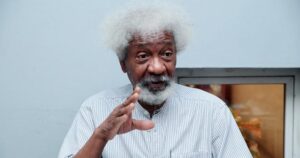
Critics accuse him of selective outrage, of softening his tone when power comes from certain familiar quarters. Others go further, alleging tribal bias — that the once-uncompromising nationalist now leans too comfortably toward the politics of his region. These are serious charges, born not just of anger but of disappointment. For a generation that grew up idolizing his fearlessness, any appearance of friendship with power feels like moral fatigue.
But we must pause and look at time as the great equalizer. Even Dim Chukwuemeka Odumegwu Ojukwu — once the face of secession, the fiery general who defied the Nigerian state — returned from exile not to reignite war but to embrace peace. He had seen enough blood, enough futility, enough grief. Time had shown him that conviction without flexibility can become cruelty, and that peace, though imperfect, can be the highest form of courage.
Perhaps Soyinka, too, is navigating that same transformation. What may seem like compromise to the impatient eye might, to the seasoned heart, be the wisdom of survival. He has not forgotten the battles of the past; he has only changed his weapons. Where once he wielded thunder, now he uses nuance. Where once he roared, now he reasons — sometimes controversially, sometimes imperfectly, but always as one who has lived long enough to see rebellion evolve into dialogue.
Yes, he has made statements that anger many. Yes, some of his silences have been louder than his words. But before we judge him solely by today’s expectations, we must ask ourselves: what does time do to a conscience that has fought too long? Does it corrupt it — or does it teach it that shouting alone cannot rebuild a broken nation?
The tragedy of our public space is that we demand of our heroes eternal perfection. We want the young Soyinka to remain forever young — forever fearless, forever furious. But life doesn’t work that way. Even lions grow weary, not of truth, but of the endless noise of a nation that refuses to learn.
Wole Soyinka remains a mirror — one that reflects both the brilliance of our past struggles and the contradictions of our present moment. His evolution, however flawed, is a reminder that time does not only age the body; it tests the soul. And perhaps that is the lesson: that in understanding his journey, we might learn to forgive our own transformations too.
For in the end, time humbles us all — rebels and rulers alike.
Linus Anagboso .
Digital Solutions Consultant. Columnist. Community & Leadership Advocate.
#D-BIGPEN — Inspiring Impact Through Words & Innovation


