

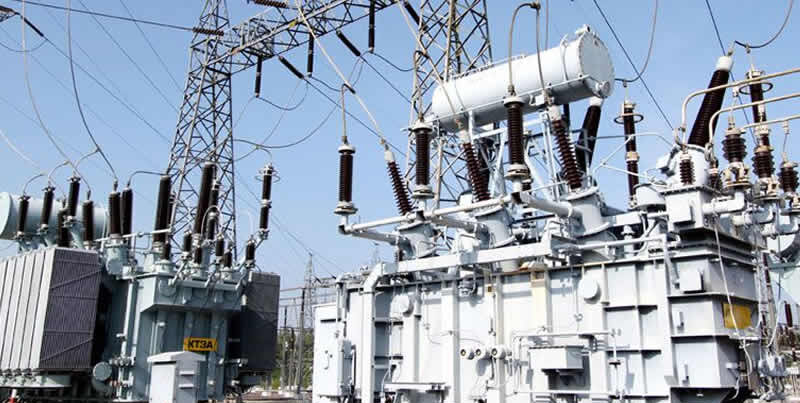
In the unfolding story of modern development, electricity is often the silent force behind national transformation. It powers industries, sustains livelihoods, fuels innovation, and defines the rhythm of economic life. For decades, the promise of stable electricity symbolized hope for Nigeria, a nation rich in natural resources and human capital. Yet today, that promise appears increasingly fragile. What once represented progress now mirrors decline, as the power sector struggles under the weight of inefficiency, infrastructure decay, and systemic instability. The tragedy is not simply that electricity is insufficient, but that its inadequacy is gradually reshaping the nation’s economic and social landscape.
Nigeria’s electricity journey has never been one of the absence of potential. The country possesses enormous gas reserves capable of fueling thermal power plants for generations. Its rivers hold vast hydropower possibilities, and in recent years, renewable energy has emerged as a viable supplement to traditional generation. Installed generation capacity has grown over time, reaching about 13625 megawatts by 2025, a figure that on paper suggests readiness for industrial growth and expanding population demand. Yet reality tells a different story. Only a fraction of this capacity is consistently available for dispatch, often hovering around 5000 megawatts or slightly above. This persistent gap between installed capacity and actual generation reflects deep structural weaknesses rather than mere technical setbacks.
Electricity demand in Nigeria has grown steadily alongside urbanization, population expansion, and economic ambition. As Africa’s largest economy, the country envisioned a future driven by manufacturing, industrialization, and diversification beyond oil dependence. However, energy supply has repeatedly failed to match these aspirations. Even in periods when generation figures appear to improve slightly, the gains are often marginal and temporary. System collapses, gas shortages, weak transmission infrastructure, and mounting sector debts continue to undermine reliability. Electricity generation may rise modestly one quarter only to decline the next, creating a cycle of uncertainty that frustrates both policymakers and citizens.
Nowhere is the impact of this instability more pronounced than in the industrial sector. Manufacturing, once expected to become the backbone of job creation and economic transformation, operates under severe energy constraints. Nigerian manufacturers are estimated to lose billions of dollars annually due to unreliable power, losses that manifest in reduced productivity, rising operational costs, and shrinking employment opportunities. Many factories operate below capacity, not because of lack of demand, but because energy costs make full production unsustainable. The heavy dependence on diesel generators has dramatically increased production expenses, making locally produced goods less competitive compared to imports. Industrial clusters in Lagos, Kano, Aba, and other commercial hubs frequently experience disruptions during prolonged outages, weakening both domestic supply chains and export potential.
The consequences extend far beyond large-scale manufacturing. The informal sector, long regarded as the backbone of Nigeria’s economic resilience, has been quietly eroded by electricity scarcity. Artisans and small business operators who once sustained themselves through skill and enterprise now face an unforgiving energy reality. Tailors struggle to power sewing machines, welders ration generator fuel, hairdressers operate in darkness, and cold room operators watch perishable goods spoil during outages. Electricity, once considered a basic utility, has increasingly become a costly privilege. For many small entrepreneurs, the daily cost of fueling generators exceeds their earnings, forcing closures that ripple through communities.
This erosion of small-scale enterprise directly affects employment and social stability. As businesses shut down or reduce operations, job creation declines. Youth unemployment continues to rise, and the dream of self-reliance grows dimmer for many Nigerians. Economic vulnerability spreads, deepening poverty and widening inequality. The power crisis therefore is not merely an infrastructure problem but a social challenge that touches every layer of society. It weakens productivity, discourages innovation, and undermines the dignity of work.
Across the country, stories of business decline have become increasingly common. Investors hesitate to commit long-term capital in an environment where electricity supply is unpredictable. Some companies relocate operations to regions with more stable power, while others scale down production or close entirely. The cost of self-generation through diesel or petrol continues to climb, placing enormous pressure on profit margins. In a country of over two hundred million people, electricity supply remains far below what is required to sustain consistent industrial expansion. When power is uncertain, planning becomes risky. When planning becomes risky, investment retreats. When investment retreats, growth slows.
Yet statistics sometimes paint a more optimistic picture. Reports may highlight incremental increases in installed capacity, policy reforms, tariff adjustments, or financial restructuring within the sector. On paper, these developments suggest progress. But for many Nigerians, lived experience tells another story. Power outages remain frequent, voltage fluctuations damage equipment, and electricity costs continue to rise. The contrast between official data and everyday reality creates a perception that improvement is more statistical than practical. Growth exists in figures, but transformation remains elusive.
The broader implication is profound. Without reliable electricity, industrialization cannot reach its potential. Without industrialization, job creation cannot expand sufficiently to absorb a growing population. Without jobs, poverty deepens and social development slows. The power sector, therefore, sits at the heart of Nigeria’s economic future. It determines whether the country advances toward productivity and prosperity or remains trapped in cycles of underdevelopment.
Nigeria now stands at a critical crossroads. The country possesses the resources, technical knowledge, and human capacity to transform its electricity landscape. What remains essential is consistent policy implementation, infrastructure investment, financial discipline, and transparency. If these elements align, the power sector could still become the engine of national renewal, driving industrial growth, empowering entrepreneurs, and restoring self-reliance. If not, the slow drift into energy uncertainty may continue, with far-reaching consequences for the economy and society.
For now, electricity in Nigeria remains both a necessity and a paradox. It appears in statistics as progress, yet disappears in daily life as scarcity. It promises growth, yet constrains productivity. It symbolizes development, yet reflects decline. In this contradiction lies the story of a nation whose power sector, once the beacon of possibility, now stands as a reminder that potential without performance can turn becoming into unbecoming.


