

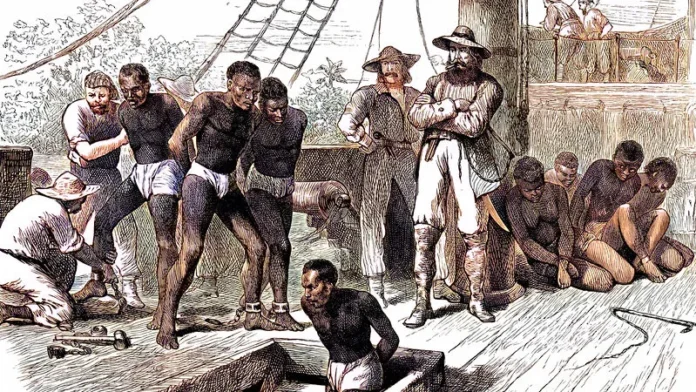
Nigeria has aligned with Ghana and 121 other United Nations member states to endorse a landmark resolution recognising the transatlantic slave trade as one of the most heinous crimes against humanity.
The motion, championed by Ghana, secured overwhelming backing with 123 votes in favour. However, Argentina, Israel, and the United States opposed it, while 52 countries abstained.
The resolution forms part of activities marking the Second International Decade for People of African Descent, as well as the African Union’s Decade of Reparations, both aimed at addressing the enduring scars of slavery.
Speaking ahead of the vote, Ghana’s President, John Mahama, addressed the assembly on behalf of the 54-nation African Group—the largest bloc within the UN.
“Today, we come together in solemn solidarity to affirm truth and pursue a route to healing and reparative justice,” Mahama said.
The resolution revisits a dark chapter spanning over four centuries, during which millions of Africans were forcefully uprooted, shackled, and transported across the Atlantic to labour under brutal conditions in plantations.
Victims were stripped of their identity, dignity, and basic human rights, enduring generations of exploitation whose consequences continue to manifest today in systemic racism and inequality.
It strongly describes “the trafficking of enslaved Africans and racialised chattel enslavement of Africans as the gravest crime against humanity by reason of the definitive break in world history”.
Highlighting the vast scale and enduring consequences of the trade, the resolution underscores how its legacy continues to shape global systems of labour, property, and capital.
It also stresses the urgency of confronting these historical injustices in ways that advance justice, human rights, dignity, and collective healing for Africans and their diaspora.
According to the document, demands for reparations are not symbolic, but a tangible pathway toward redress.
“The slave trade and slavery stand among the gravest violations of human rights in human history, UN General Assembly President Annalena Baerbock said.
Baerbock added that slavery was “an affront to the very principles enshrined in the Charter of our United Nations and the Universal Declaration of Human Rights, themselves born, in part, from these injustices of the past”.
She further noted that African nations suffered deep demographic and economic losses, having been deprived of generations whose contributions could have advanced development.
“It was, to put it in colder terms, mass resource extraction,” Baerbock stressed.
Also weighing in, UN Secretary-General António Guterres called for decisive action to dismantle the lingering structures of inequality rooted in slavery.
“Now we must remove the persistent barriers that prevent so many people of African descent from exercising their rights and realising their potential,” he said.
“We must commit, fully and without hesitation, to human rights, equality, and the inherent worth of every person.”
Guterres urged governments worldwide to intensify efforts toward ending systemic racism, ensuring reparative justice, and promoting inclusive growth that guarantees access to education, healthcare, jobs, housing, and a safe environment.
“This includes commitments to respect African countries’ ownership of their own natural resources.
“And steps to ensure their equal participation and influence in the global financial architecture and the UN Security Council.”
However, the United States maintained its opposition, with its representative to the UN Economic and Social Council, Dan Negrea, stating that the U.S. “does not recognise a legal right to reparations for historical wrongs that were not illegal under international law at the time they occurred.”


