

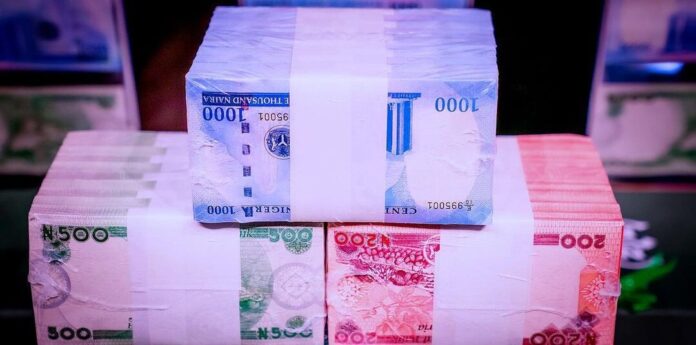
When Quartus Economics recently advised the Central Bank of Nigeria (CBN) to introduce ₦10,000 and ₦20,000 notes to “restore the naira’s portability” and reduce the cost of cash transactions, it sounded, at first blush, like a harmless economic suggestion. But beneath that veneer of convenience lies a deeply flawed logic that could push Nigeria further down the path of inflation, eroded confidence, and currency collapse.
In truth, the call for higher denominations is not a bold economic innovation, it is an admission of defeat. It tells the world, in unmistakable terms, that Nigeria has stopped fighting inflation and has instead chosen to accommodate it. Every nation that ever resorted to printing higher-value notes did so not from a position of strength, but from the ashes of economic weakness.
A Short-Term Convenience, a Long-Term Catastrophe.
Let’s be honest: the idea seems appealing. A ₦20,000 note sounds convenient for traders, transporters, and even consumers who often carry bundles of cash. But economics is not about what looks easy today, it’s about what sustains value tomorrow. Larger notes may reduce the “bulk” of cash in wallets, but they multiply the weight of inflation on the economy.
Introducing new, bigger notes is not a solution, it’s a silent confession that the currency has lost its dignity. Each time a central bank issues higher denominations, it confirms that the purchasing power of the existing notes has evaporated. A country that needs ₦20,000 notes to conduct daily business has already surrendered the war on inflation.
Lessons the World Has Already Taught.
Nigeria is not the first to face this temptation and history has been unkind to those who took the bait.
In Zimbabwe, inflation once got so bad that the government printed trillion-dollar notes that couldn’t buy a loaf of bread. Venezuela and Argentina followed the same path: each time they printed higher notes, inflation accelerated.
Contrast this with the United States, where the $100 bill has remained the highest denomination since 1969 or the Eurozone, which discontinued its €500 note in 2019 to discourage black-market transactions and protect monetary integrity. Even Ghana, once printing 50,000 cedi notes, took the bold step in 2007 to redenominate its currency, striking four zeros off the cedi and rebuilding public confidence.
The lesson is clear: strong economies reduce denominations; weak economies multiply them. The smaller your largest note, the stronger your currency’s global perception.
The Real Problem Isn’t Portability, It’s Purchasing Power.
Let’s be blunt: Nigerians are not struggling because they carry too many notes. They are struggling because those notes buy too little. A ₦1,000 note that once bought a basket of groceries can barely pay for a plate of food today. So, the real challenge is not the size of our notes, but the value they hold.
By proposing ₦10,000 and ₦20,000 notes, we are essentially acknowledging that ₦1,000 and ₦500 have become as worthless as small change. That is not progress, it’s regression. Instead of chasing cosmetic fixes, the CBN should be rebuilding value through disciplined monetary policy, stable exchange rates, and productive investment.
Printing higher notes would only mask inflation temporarily. Within months, the market would adjust, prices would soar, and Nigerians would soon be demanding ₦50,000 notes to survive. It’s a vicious cycle that ends with a worthless currency and a distrustful citizenry.
The Psychology of Currency: Confidence Is Everything.
Currency is not just paper, it is a nation’s declaration of faith in its own economy. The moment the state prints higher notes, it signals panic to its citizens. Traders raise prices preemptively, investors lose confidence, and ordinary people rush to convert naira into safer assets like dollars or gold.
That psychological spiral can be more damaging than inflation itself. The CBN must therefore tread carefully; it cannot rebuild trust in the economy by validating its failure. Monetary reform must be anchored in credibility and confidence, not convenience.
What the CBN Should Do Instead.
If the CBN’s concern is truly about the cost of handling cash, there are smarter, 21st-century alternatives:
Deepen the cashless economy. Expand mobile banking and digital payment infrastructure to rural areas, where electronic transactions remain difficult.
Strengthen the naira. Tackle inflation through transparent foreign exchange management and reduce fiscal leakages that weaken the currency.
Promote local production. The more Nigeria produces and exports, the stronger the naira becomes and the less we’ll need higher denominations.
Consider redenomination, not escalation. Ghana’s 2007 model offers a blueprint: cut zeros, restore dignity, and anchor confidence.
Educate and sensitize. Economic literacy empowers citizens to support reform, not resist it.
The focus should be on making ₦1,000 powerful again not printing ₦20,000 to make weakness official.
A Matter of National Pride.
Every note tells a story. The naira’s story should not be one of surrender. The day we accept ₦20,000 notes as normal is the day we officially declare that our economy can no longer protect its people from inflation. That is not modernization — it is monetized failure.
A wise central bank understands that monetary symbols shape national psychology. Nigeria’s CBN must therefore refuse the easy path of “printing prosperity.” True economic strength lies in creating value, not inflating digits.
Conclusion.
Introducing ₦10,000 and ₦20,000 notes would not make Nigerians richer, it would only make the naira poorer. The CBN must not dignify decline or dress inflation in new colors. What Nigeria needs today is not bigger money, but better money, a currency that commands respect both at home and abroad.
Because in economics, as in life, the smaller the note, the greater the value behind it.


