

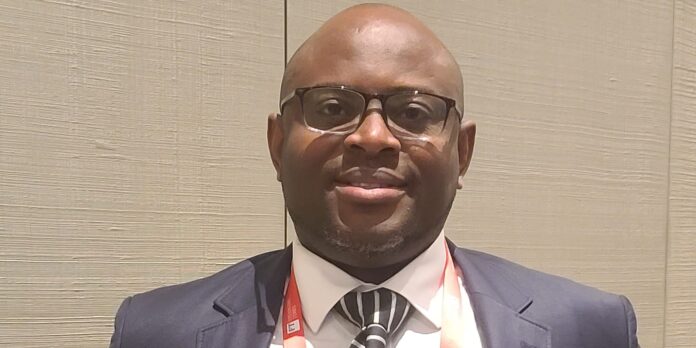
Nigeria’s anti-corruption debate is often emotionally charged and narrowly focused on the Economic and Financial Crimes Commission (EFCC). Whenever a high-profile corruption suspect walks free or a case drags endlessly through the courts, public outrage is quickly directed at the commission and its leadership. I was once firmly in that camp.
I was among those who heavily criticised the current EFCC chairman, Ola Olukoyede, over the delay and apparent failure to convict some former public officials against whom the commission claimed to have overwhelming evidence. Chief among these cases is that of Yahaya Bello, the former governor of Kogi State.
In April 2024, Olukoyede made a dramatic public declaration that raised national expectations. He stated that given the scale of funds allegedly looted under Bello’s watch, he was prepared to resign if the former governor was not prosecuted. His words were clear: “If I do not personally oversee the completion of the investigation regarding Yahaya Bello, I will tender my resignation as the chairman of the EFCC.” That statement intensified public scrutiny and reinforced the belief that accountability was finally imminent.
Fast forward two years later, Yahaya Bello, once declared wanted by the EFCC, has not been convicted. Worse still, he has announced his intention to contest for the Kogi Central senatorial seat in the 2027 elections. For many Nigerians, this development felt like a cruel reminder that power and privilege still offer protection from consequences. It is even worse when the EFCC is quick to prosecute and get convictions for petty thieves, those hawking and spraying naira notes at parties and ‘yahoo boys’ while cases involving high-profile Nigerians linger for years.
However, Olukoyede’s recent response to this criticism deserves more thoughtful consideration. In an interview, he asked pointedly: “Have I not made good that promise of commitment? Is Yahaya Bello not being prosecuted? The case is still in court.” He explained that the EFCC has filed three separate cases against Bello and that the matters are actively before the courts. “Am I the judge who would determine the conviction? I have done my work. I have fulfilled my mandate,” he said, urging Nigerians to understand the limits of the commission’s powers.
On reflection, the EFCC chairman is fundamentally right. The EFCC is an investigative and prosecutorial agency. It can arrest suspects, investigate allegations, and file charges, but it cannot convict, sentence, or send anyone to prison. Those powers reside solely with the judiciary. Once a case enters the courtroom, the EFCC loses control over timelines, procedures, and outcomes.
This reality exposes a deeper structural problem. Nigeria’s judiciary has increasingly become the bottleneck in the fight against corruption. High-profile cases are plagued by endless adjournments, interlocutory applications, conflicting court orders, and technical objections that delay justice indefinitely. These procedural obstacles are not accidental; they are often strategically exploited by well-funded defense teams to wear down prosecutors and frustrate public interest.
The perception that corruption in Nigeria is premeditated only deepens public cynicism. It is widely believed that before looting public funds, some officials deliberately set aside a portion of the stolen money to compromise critical institutions. These allegedly include elements within the judiciary, law enforcement agencies including EFCC officials, civil society organisations, the media, traditional rulers, and even religious leaders. Whether entirely accurate or not, this perception persists because outcomes of prosecuted cases frequently seem to support it.
Importantly, these concerns are not limited to external critics. As far back as October 2014, Olukoyede himself acknowledged that the EFCC was unable to investigate corruption cases in at least ten states due to restrictive court orders. He openly lamented the challenges posed by frequent adjournments of high-profile cases and conflicting judicial decisions that stalled prosecutions. This demonstrates that the problem is longstanding and systemic, not the product of one EFCC chairman or administration.
Even President Bola Tinubu has publicly admitted that the granting of frivolous applications and judgments based on technical grounds has significantly impeded Nigeria’s war against corruption. When both the head of the anti-corruption agency and the president of the country make similar observations, it becomes difficult to dismiss the judiciary’s role in weakening accountability as mere perception.
The consequences are severe. When corruption suspects remain politically active, socially celebrated, and legally unburdened while their cases crawl through the courts, the message to society is clear: corruption is a manageable risk, not a punishable crime. This erodes deterrence, undermines public trust, and normalises impunity.
Judicial reform must therefore be central to Nigeria’s anti-corruption strategy. This includes enforcing strict timelines for corruption trials, limiting abuse of adjournments and interlocutory appeals, strengthening case management systems, and holding judicial officers accountable through transparent and lawful oversight mechanisms. Judicial independence must be protected, but independence should not be confused with immunity from scrutiny.
Civil society, the media, religious leaders, and traditional institutions also have a role to play. Sanitising or defending individuals facing credible corruption charges only reinforces the ecosystem of impunity. Silence and selective outrage are as damaging as outright complicity.
Ultimately, Nigeria does not suffer from a lack of anti-corruption laws or investigative agencies. What it suffers from is a justice system unable or unwilling to deliver timely closure. Until corruption cases end decisively, either through conviction or acquittal based on merit, public confidence will continue to erode.
The EFCC, under Ola Olukoyede or any other chairman, can only prosecute. It cannot convict. That distinction is crucial. Until Nigeria confronts this reality and reforms its justice system accordingly, the fight against corruption will remain an unfinished story, and justice will remain perpetually delayed.
Akinsuyi, former group politics editor of the Daily Independent, writes from Abuja. He can be reached at shabydayo@gmail.com


