

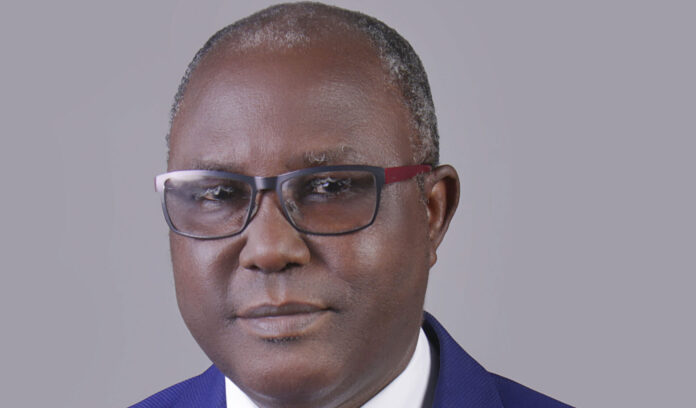
One of the notable promises made by Mr. Joseph Tegbe, Nigeria’s current Minister of Power, after assumption of office on June 9, 2026, is to give every Nigerian home, business, and industry reliable and affordable electricity around the clock (Punch, October 19, 2026). (Emphasis added). However, by October 12, 2026, the minister made a statement that appears contradictory to this promise on affordability of electricity when he said ‘FG can no longer cover electricity tariff shortfalls.’ As Punch headlined it, the minister said ‘Govt. can’t fund power tariffs.’ (https://punchng.com/govt-cant-fund-power-tariff-shortfalls-minister/.
In the typical Nigerian official’s way of defending the lack of funds for implementing government projects, the minister said that the Federal Government cannot continuously cover massive electricity tariff shortfalls amidst competing national funding needs. Just compare the promise of affordability few months ago, with this current emphatic statement of cannot. Many Nigerians were not only embarrassed but shocked as well, because they were still suffering from the debilitating effects of the tariff hike by the former minister Mr. Adebayo Adelabu, who left President Tinubu’s cabinet on April 22, 2026, to contest for elective office in Oyo State.
And as if it is from nowhere, Nigerians started speculating in the social media that the Federal Government is planning to increase electricity tariff again after the Adelabu’s debacle. In a swift and well publicized response, the current minister entered into a defensive mode and countered that there is no plan to increase electricity tariff (se Vanguard, October 15, 2026). I do no think that many Nigerians would believe this rebuttal, for he has unwittingly let the cat out of the bag by his earlier statement that the government cannot fund power tariff shortfalls.
Meanwhile, about the same time (in faraway Thailand), during the Nigerian Investors’ Forum, at the IMF/World Bank Annual Meetings in Bangkok (October 12 to October 18, 2026), the Minister of Finance and Coordinating Minister for the Economy, Taiwo Oladele announced five major areas of fiscal reforms to expect soon from the Federal Government. The one which concerns us here is the power sector reform where he rightly said that Nigeria ‘cannot power a $1trillion Economy in darkness.’ (The Guardian, October 15, 2026). We all agree with him on this powerful statement, but I doubt if many of us will agree with him when elaborating further, he mentioned among others the issue of looking at whether the existing electricity tariff is cost-reflective enough to achieve this.
This minister’s thinking, is in line with Mr. Tegbe’s statement that the government cannot continue to cover huge electricity tariff shortfalls. If this is the way the Tinubu administration is thinking, which is line with the prescriptions of the IMF/World Bank, my candid advice is that government should bury the idea right away. If members of the middle class who are in Band A (Service-Based Tariff policy) are already suffering from the debilitating effects of the high cost of electricity tariff, then, imagine what the majority of poor Nigerians are going through. Affordability issue is already a big problem for many Nigerians.
This brings us to the issue of Service-Based Tariff (SBT) and Cost-Reflective Tariff (CRT). Under the former minister Mr. Adebayo Adelabu, a service-based tariff was introduced in November 1, 2020. The rationale according to the Nigerian Electricity Regulatory Commission (NERC) is ‘to improve service delivery to end-user Customers and ensure that electricity tariffs paid by end-user Customers are a reflection of the services delivered by the Distribution Companies based on the number of hours of electricity supply per day.’
‘Under the SBT, consumers are classified in Bands A to E as follows:
- Band A: Minimum of 20 Hours
- Band B: Minimum of 16 Hours
- Band C: Minimum of 12 Hours
- Band D: Minimum of 8 Hours
- Band E: Minimum of 4 Hours’ (Source: https://nerc.gov.ng/faq/electricity-tariffs/…).
SBT has made the cost of electricity unaffordable to many Nigerians. Those in the middle class no longer use their air-conditioners because of lack of affordability. Although, the Tinubu administration has increased the salary of public servants (for instance university lecturers) these category of public officials cannot still afford to use their air-conditioners. It was as if one received large sums of money with the right hands, and then later a large part of the same money was taken away through the left hand. The irony is that many of these same people used their ACs when they were receiving half of what they are getting now under the Tinubu administration. This is the sad reality of why people still complain of hardship. It is as if to say that the government has not made serious effort to improve their welfare.
Now, imagine the idea of introducing a cost-reflective tariff under this same situation, regardless of the rebuttal by the minister regarding further hike in electricity tariff. By the way, what is cost-reflective tariff? ‘A Cost-Reflective Tariff (CRT) is a tariff that envisages the true cost of electricity service delivery to the consumers while allowing a reasonable Return on Investment (RoI) for the investor. A CRT does not include government interventions or subsidies… Therefore, a tariff is Non-Cost Reflective when the true costs of tariff components are excluded in the final tariff.’ (Source: https://theelectricityhub.com/cost-reflective-tariff-vs-service-based-tariff/). Put differently, cost-reflective tariff for us in Nigeria would unfortunately include all sorts of cost-inputs (including corruption elements) that would be passed down the throats of the already suffering masses of this country.
In the final instalment next week (by God’s grace), we would look at one area the minister is planning to act presently to see if that could be the much needed elixir to providing affordable electricity.
Prof. Obasi, a public policy expert and analyst is formerly of the Department of Public Administration, University of Abuja. Email: nnamdizik@gmail.com; Cell: 0706569266


