

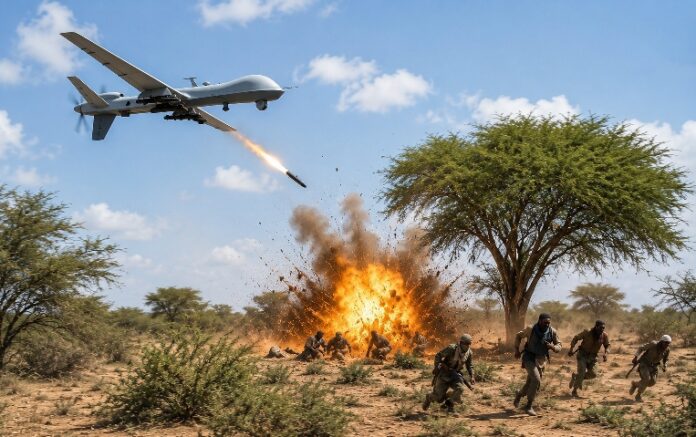
Recent air strikes by the Nigerian military have reportedly dealt a major blow to the Islamic State West Africa Province (ISWAP) in the Sambisa Forest, killing nine fighters, including a key commander identified as Abu Khalid.
The strikes, conducted on Saturday, August 8, targeted the Yuwe and Sabil Huda enclaves in the Sambisa Forest and were described by intelligence sources as highly effective.
Sources identified Abu Khalid as a specialist responsible for escorting senior ISWAP commanders and coordinating the movement of high-value members of the terrorist group.
He was reportedly highly familiar with navigation routes and tactical movements linking major ISWAP enclaves, particularly routes used by senior commanders and special convoys.
According to intelligence reports, nine ISWAP fighters were neutralised in the strikes, while several others sustained varying degrees of injuries.
The casualties reportedly included fighters linked to the group accused of carrying out an ambush on Nigerian troops along the Bita–Yamtage axis in Gwoza Local Government Area of Borno State.
Security sources said the elimination of Abu Khalid could significantly disrupt ISWAP’s ability to move senior operatives between its various enclaves, given his reported knowledge of the terrain and movement routes.
The latest strikes are also believed to have disrupted a wider network of fighters operating across the Sambisa Forest and the Gwoza axis.
Security agencies are expected to continue intelligence gathering, surveillance and further operations to assess the impact of the strikes and track surviving members of the affected terrorist groups.
The development comes amid intensified military operations aimed at dismantling terrorist command structures, disrupting logistics and restricting the freedom of movement of ISWAP and Boko Haram elements across Borno State.
The Nigerian Army and Air Component are expected to sustain intelligence, surveillance and reconnaissance operations in support of ground troops operating in the Sambisa Forest, Gwoza and surrounding areas.
The military has continued to emphasise precision targeting as part of efforts to disrupt terrorist leadership and specialised networks while supporting ongoing ground operations in the theatre.


