

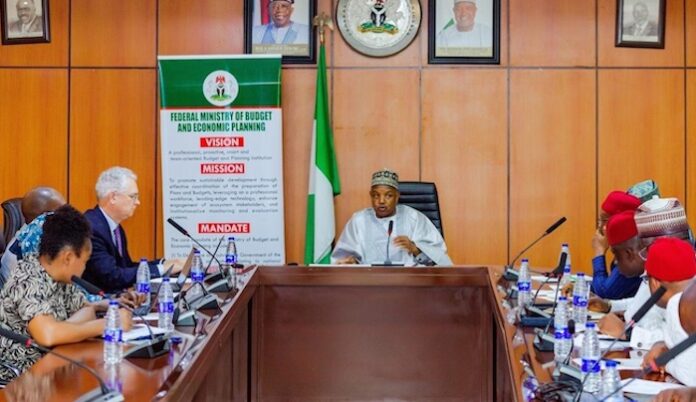
Nigeria’s current economic developments and preparations for the approaching 2026–2030 National Development Plan form the focus of high-level meetings between the Federal Government and the International Monetary Fund (IMF) in Abuja.
Under President Bola Tinubu’s government, the meetings seek to reconcile governance changes, budget policy, and medium-term development goals.
Nigeria’s Minister of Budget and Economic Planning, Senator Abubakar Atiku Bagudu, and an IMF team headed by Mr. Axel Schimmelpfennig, Assistant Director of the African Department of the Fund, got together for weekend conferences.
This involvement is part of the IMF’s regular consultative mission assessing the country’s macroeconomic direction and reform execution.
Commending Nigeria’s policy initiatives, Schimmelpfennig pointed out how important it is to match its medium-term plan with more general objectives of economic growth.
He underlined the IMF’s curiosity to know how the government’s budgetary priorities and reform strategy would influence the next budget cycle and national plan.
The News Chronicle reports that the conversations also addressed Nigeria’s fiscal consolidation plans, public sector change projects, and continuing efforts to boost private sector expansion by infrastructure development and better governance.
Bagudu then reconfirmed the government’s resolve to create a disciplined, open, and inclusive economy that fosters broad-based prosperity and productivity. He underlined that particularly in stabilizing public finances and enhancing service delivery, continual changes under President Tinubu’s government are starting to produce actual results.
He said that Nigeria’s reform plan stresses coherence between budgetary measures and national planning to guarantee quantifiable results and continuous expansion.
The Federal Executive Council, meanwhile, recently accepted a number of public service change initiatives, including the Rewards and Recognition Policy, the Incentive and Consequence Management Policy, and the Civil Service Mentoring Policy. Officials claim these projects will herald a new age of performance-driven government and accountability throughout the Federal Civil Service.
Strengthening its long-term financial and institutional foundations, the resumed cooperation with the IMF is intended to direct the following stage of Nigeria’s development program.


