

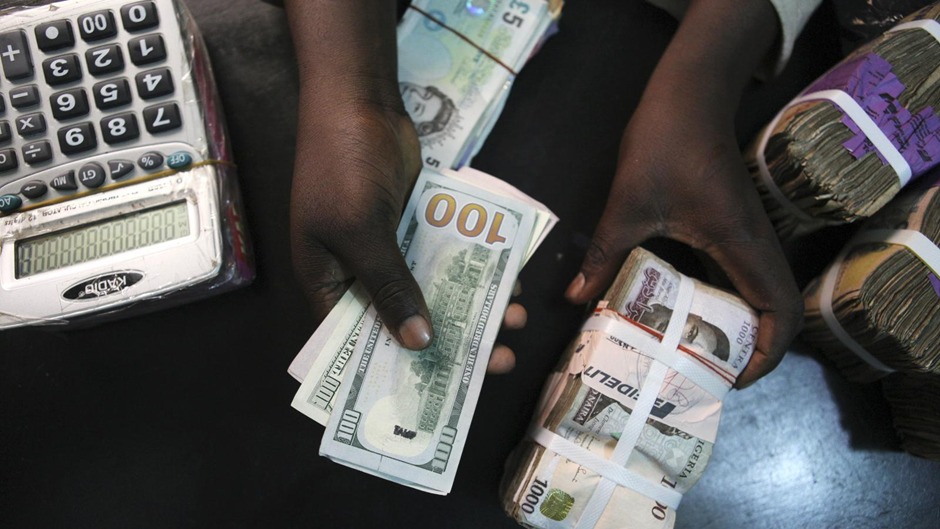
On Wednesday, the naira exchanged at N1,507.83 to the dollar in the official foreign exchange (FX) market, owing to enhanced liquidity following the country’s $24 billion inflow in the first quarter of 2024.
According to data from the FMDQ Securities Exchange Limited, the naira lost 0.47 percent of its value after the day’s trading when the dollar was quoted at N1,507.83, down from N1,500.79 on Tuesday at the Nigerian Autonomous Foreign Exchange Market (NAFEM).
The amount of money offered by willing vendors and buyers rose from $136.75 million on Tuesday to $176.39 million on Wednesday, a 28.9% rise.
Compared to Tuesday’s closing price of N1,507, the intraday high finished at N1,523 per dollar on Wednesday. On the same day, the intraday low was recorded as N1,430.91 per dollar, down from N1,426.
The naira traded at a rate of between N1,498 and N1,505 per dollar on the parallel market, sometimes known as the “black market.”
The governor of the Central Bank of Nigeria (CBN), Olayemi Cardoso, stated in a Tuesday interview with Bloomberg that the nation registered a $24 billion in total foreign exchange (FX) inflow in the first three months of 2024.
According to CBN data, Nigeria’s foreign reserves, which provide the apex bank with the capacity to protect the naira, have climbed by 2.97 percent year-to-date to $33.70 billion as of June 25, 2024, from $33.01 billion on January 2, 2024.
The Nigerian economy saw inflows of approximately $5.95 billion from the World Bank and Afreximbank in June 2024, a single month.
The transfer of foreign currency into a nation is referred to as a foreign exchange inflow. These inflows can originate from a number of sources, including exports, which generate foreign exchange for the nation selling goods and services to other nations.
Another source of inflows is foreign direct investment (FDI), which refers to investments made in domestic firms by foreign corporations through things like factory setup, real estate purchases, and ownership holdings in local businesses. Remittances, grants and international assistance, and portfolio investments are further sources of foreign exchange inflows.
Cardoso reported that compared to the inflows recorded in the prior quarters up until 2021, the foreign exchange inflows for the first quarter of 2024 are almost 50% greater.
The governor of the CBN declared that the FX market is benefiting from the apex bank’s deployment of monetary policy instruments. “There is a benefit from these tools. Thus, we think that liquidity will keep increasing if we stay on this course,” he stated.


