

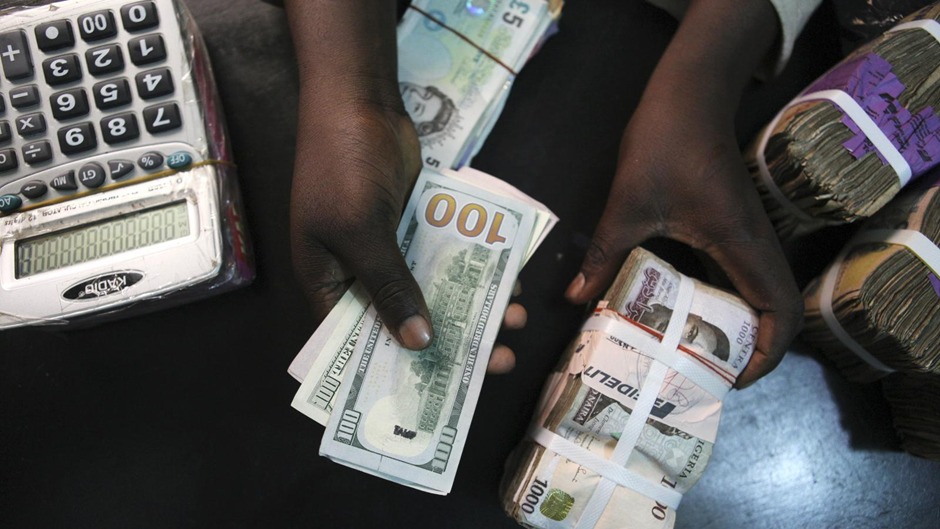
In the official Investor and Exporter (I&E) window, the naira closed at N1,669.15 on October 2, 2024, after depreciating versus the US dollar.
This represents an 8.25% fall compared to the previous closing rate of N1,541, which was reported on the final trading day of September.
The market turnover also experienced a significant decline, falling by 2% from Monday’s $181.86 million to Wednesday’s $176.45 million.
Key Data Points
Closing Exchange Rate: On October 2, the naira closed at N1,669.15 per dollar, marking an 8.25% decline from its Monday rate of N1,541.
Intra-Day Highs and Lows: The naira fluctuated during the trading session, peaking at N1,699.00 and dipping to N1,550.00 before settling at N1,669.15.
Market Turnover: Turnover in the I&E window decreased to $176.45 million, compared to $181.86 million the previous day. For reference, the total turnover for September was $3.3 billion.
Parallel Market Rates: In the parallel market, the naira opened at N1,668.33 against the dollar, fluctuating between a high of N1,672.50 and a low of N1,668.33 before eventually closing at N1,670.74.
Market Dynamics
The naira has had numerous difficulties and persistent market volatility ever since it dropped below the N1,600 mark in July. In an effort to attain stability, the currency has fluctuated between N1,500 and N1,600 over this time, especially when the dollar has been weaker.
September saw a stall in the naira’s price movements as it tried to stabilize in the face of these volatile market conditions.
The naira has lost around 75% of its value this year, mostly due to rising inflation and a greater demand for foreign exchange.
Positively speaking, Nigeria’s external reserves increased somewhat, from $36.305 billion at the end of August to $36.730 billion by the middle of September.
What To Note
The oil minister of Saudi Arabia was linked to a report that suggested crude oil prices may drop to $50 per barrel. The Organisation of the Petroleum Exporting Countries (OPEC) has rejected the news.
The federal government has also introduced VAT exemptions on LPG, CNG, fuel, and other items and tax breaks for deep offshore oil and gas projects.
What to Anticipate
We can anticipate the stability of oil prices and the value of the naira following OPEC’s debunking of the news on falling crude oil prices.
Further incentives to engage in the offshore oil and gas industry could come from the federal government’s tax breaks and VAT exemptions.
The naira may receive additional support from this increased investment if it increases production and export potential.


