

Leading companies are expanding the capabilities of their systems while introducing new security measures and urging governments to prepare for more advanced AI development.
On Thursday, June 5, Anthropic published a blog post by Marina Favaro, head of the company’s internal research institute, and co-founder Jack Clark, arguing that the world should have the option to slow or temporarily pause the development of frontier AI systems if they begin approaching recursive self-improvement (RSI).
RSI refers to a situation in which an AI system can improve its own capabilities with little or no human intervention by writing code, testing results, learning from failures and repeating the process continuously.
The company said such a system “could bring enormous good for the world in science, healthcare, and beyond,” but warned that it could also increase the risk of humans losing control over increasingly capable AI systems.
“We believe it would be good for the world to have the option to slow or temporarily pause frontier AI development to enable societal structures and alignment research to keep up with the advance of the technology,” Anthropic said.
The company said that AI capable of full recursive self-improvement has not yet been achieved and may never be realized. However, it said preparation should begin because the technology “could come sooner than most institutions are prepared for.”
Jack Clark recently told a lecture in London that such technology “has never existed before,” adding, “I believe this could happen within the next two years, and possibly sooner.”
Anthropic acknowledged that any slowdown would require cooperation among major AI developers because a single company or country continuing development could gain a significant advantage. The company also noted that monitoring AI development would be more difficult than traditional arms-control agreements because “training runs are far easier to conceal than missile silos.”
Anthropic continues to have rapid business growth. The company recently completed a funding round valuing it at nearly $1 trillion, confidentially filed for an initial public offering and expects its annualized revenue run rate to reach approximately $50 billion by the end of June 2026, up from $9 billion at the end of 2025.
Venture capitalist David Sacks, an informal adviser to U.S. President Donald Trump, has described what he called a “regulatory capture agenda,” arguing that excessive regulation could disadvantage open-source AI models.
Meanwhile, Meta’s former chief AI scientist Yann LeCun has repeatedly argued that current large language models are fundamentally limited and has compared their intelligence to that of a cat rather than a human. Anthropic Chief Executive Dario Amodei, by contrast, has warned that advanced AI could increase inequality, eliminate many entry-level white-collar jobs and display harmful behaviors in unpredictable ways.
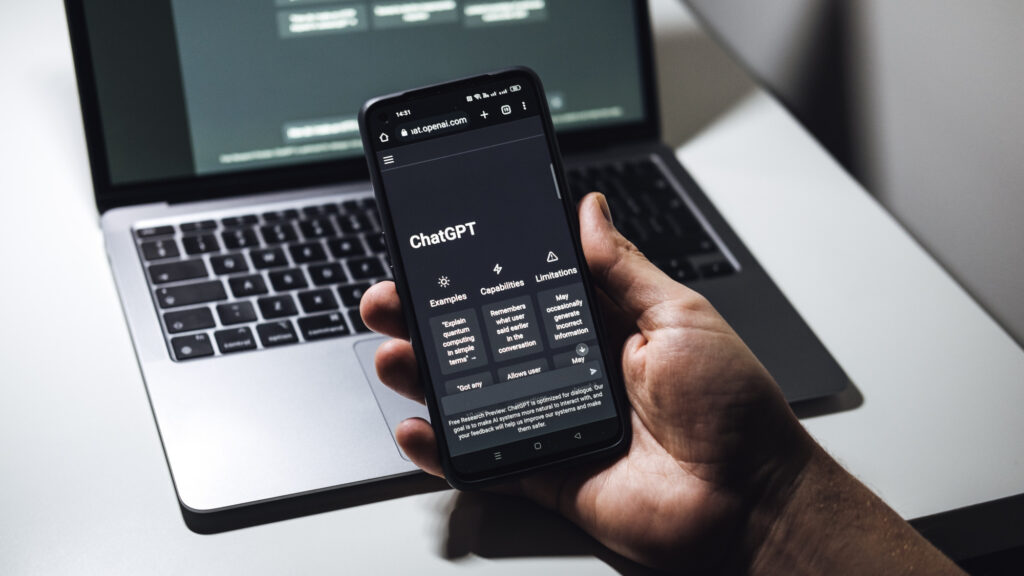
OpenAI has also called for stronger oversight of advanced AI systems and is expanding security features for users.
On June 6, the company rolled out Lockdown Mode to Free, Go, Plus, Pro and self-serve Business ChatGPT accounts after previously limiting the feature to enterprise customers.
Lockdown Mode is designed to protect users against prompt injection attacks, in which malicious instructions hidden in websites, PDF files or other content attempt to manipulate an AI system into revealing sensitive information or performing unintended actions.
When enabled, the feature blocks live outbound network requests, preventing ChatGPT from sending data to external services during such attacks.
However, the additional protection comes with significant limitations. People may lose live web browsing, web image retrieval, Deep Research, Agent Mode, network-enabled code execution and the ability to download files for data analysis.


