

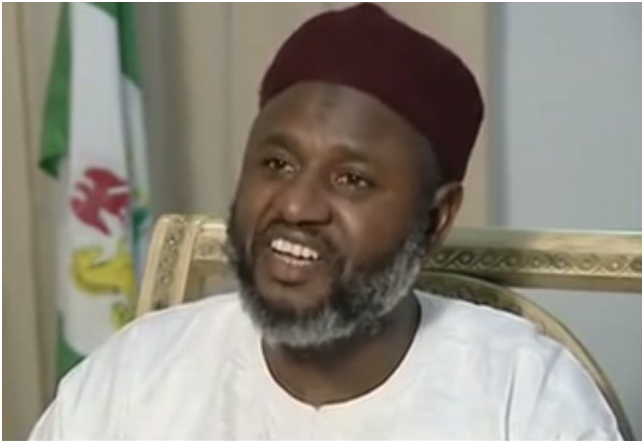
On July 22, 2023, he will be 63 years old. Like Nigeria, he is 60 this outgoing 2020. Currently, he is warming up to succeed President Muhammadu Buhari in 2023 on the platform of All Progressives Congress (APC). For him, any form of agreement by political parties or political interest groups that is not in conformity with the country’s Constitution is a nullity. This daring grassroots politician burst into national limelight during the President Olusegun Obasanjo administration, through a veritable vehicle that is popular in the North, the Shari’ ah. He is Senator Ahmad Rufai Sani Yarima, former governor of Zamfara State (1999-2007).
In a seeming radical move, he was the first Nigerian governor to implement Shari’ ah law in his state. It came into effect on January 27, 2000 amid a deafening national uproar. Zamfara under his watch adopted Shari’ ah in its entirety, with the exceptions that apostasy was not criminalised and all sentences can be appealed to courts that do not permit traditional Hudud punishments.
Shari’ ah is however, the fundamental religious concept of Islam, a major world religion promulgated by the Prophet Muhammad in Arabia in the 7th century CE. The religious law of Islam is seen as the expression of Allah’s (God’s) command for Muslims and, in application, constitutes a system of duties that are incumbent upon all Muslims by virtue of their religious belief.Known as the Sharīʿah (literally, the path leading to the watering place), the law represents a divinely ordained path of conduct that guides Muslims toward a practical expression of religious conviction in this world and the goal of divine favour in the world to come.
Adherents of the religion say in classical form, the Sharīʿah differs from Western systems of law in two principal respects. First, the scope of the Sharīʿah is much wider, since it regulates the individual’s relationship not only with neighbours and with the state, which is the limit of most other legal systems, but also with Allah and with the individual’s own conscience.
Daily prayers- salat, almsgiving- zakat, fasting- sawm, and pilgrimage- hajj, are an integral part of Sharīʿah law and usually occupy the first chapters in legal manuals. The Sharīʿah is concerned as much with ethical standards as with legal rules, indicating not only what an individual is entitled or bound to do in law but also what one ought, in conscience, to do or to refrain from doing.
Accordingly, certain acts are classified as praiseworthy- mandub, which implies that their performance brings divine favour and their omission divine dis-favour, and others as blameworthy- makruh, which has the opposite consequences. Amazingly, the Sharīʿah is not merely a system of law but a comprehensive code of deportment also that embraces both independent and public activities.
Background
After completing a matriculation course at the Sokoto College of Arts and Science in 1978, he was admitted to Bayero University, Kano (BUK), and graduated with a B.Sc in Economics in 1982. In 1987, he returned to BUK and achieved a master’s degree in economics. As part of the National Youth Service, he was posted to Borno State where he worked in the Budget Department of the Governor’s office and also taught at the Borno College of Basic Studies, Maiduguri.
In 1983, he began his career in the Sokoto State civil service as an Economic Planning Officer in the Ministry of Finance. Between 1988 and 1993, he worked with various federal bodies, including the National Directorate of Employment (NDE) from 1988 to 1990, and the Central Bank of Nigeria (CBN) between 1990 and 1993.
In 1994, Yerima returned to the Sokoto civil service as the Director of Budget in the Ministry of Finance, a position he held until the creation of Zamfara in October 1996. He was then appointed Director-General of Lands and Housing, and later a Permanent Secretary in the same department.
Political Career
In September 1998, he left the civil service to pursue a political career. He is among the most-luckiest politicians in Zamfara. He was elected governor in 1999, and re-elected in 2003 for a second term, which expired on May 29, 2007.
His pro-Shari’ ah activism was greeted with enthusiasm by the state’s Muslim majority. Thousands of excited people gathered on the streets of Gusau, the state capital, cheering and shouting “God is great”. Shari’ ah implementation agencies were established in the state, including the Council of Ulama, Hisbah Commission, Zakkat and Endowment Board, Shari’ ah Research and Development Board, and the Preaching Commission.
Interestingly, non-Muslims in Zamfara under the Yerima administration had an option of choosing civil law rather than Shari’ ah law when faced with legal proceedings. The rights of non-Muslims to pray, preach, and build places of worship were guaranteed and reinforced. The mandatory closing of shops on Friday and the banning of certain services, such as video rental shops, only applied to Muslim businesses.
Some of the Mr. Shari’ ah revolutionary changes affected all citizens of the state. The sale and consumption of alcohol and prostitution were subject to a state-wide ban. The introduction of Shari’ ah was however, challenged in the courts by Huri-Laws, a human rights group and by a Christian citizen from the state. The state High Court dismissed both cases, ruling that the statute did not infringe upon the rights of the claimants.
Presidential Ambition
Apparently buoyed by the huge national publicity Shari’ ah gave him, Yarima put himself forward for consideration as the All Nigeria Peoples Party (ANPP) presidential candidate for the 2007 general elections. Though he attracted the support of the Christian Alliance, he made a dramatic withdrawal at the party’s National Convention to support the aspiration of Buhari, the incumbent President..
ANPP is one of the coalition political parties that formed APC. Yarima was later elected Senator representing Zamfara West Senatorial District for ANPP in April 2007, and served in a number of key committees, including Selection, Federal Character & Inter-Government Affairs, Drugs and Narcotics, Anti-Corruption, and Agriculture. He was re-elected in 2011 with 154,359 votes.
Before the 2015 election that aborted the 15 years dominance of the Peoples Democratic Party (PDP), Yarima had always referred Buhari, who equally holds strong views on Shari’ ah, as the right man for Nigeria’s presidency. He also shelved his presidential ambition in 2015 for Buhari.
Ahead of the uncertain 2023 presidential race, Yarima believes he is the answer to APC’s definition of another credible candidate who can be trusted to deliver on the party’s Next Level agenda. He is enamoured by two factors. One, that President Buhari will not be on the ballot and, two, that the leadership of APC has decided not to award the presidency on compassionate ground.
Yarima is regarded as a quintessential party man. In a clime where politicians seek pedestrian reasons to ditch political parties, the opposition even regards him as a honest and consistent politician whose belief in party supremacy is unrivalled. He is a founding member of the All Peoples Party (APP) that later transformed into ANPP. He remained in the party, despite several electoral setbacks the party suffered, to later play a pivotal role in the formation of the APC.
In spite of the succession crisis in most states of the federation since 2003, Yarima appears to be the only out-going governor then to have successfully handed over power to his deputy. He is widely regarded as one of the most consistent and influential politicians in Nigeria. Not even an internal crisis that rocked the APC in Zamfara ahead of the 2019 elections tinkered with the massive grassroots support he enjoys. If there is a trophy for party loyalty, few Nigerians will wail if it is handed to Yerima.
On the 2023 presidential race, he says: ‘’All things being equal and, by the grace of God, I will seek the mandate of my party to field me as its presidential candidate in 2023. Yes, I am interested in the 2023 presidential race. In any case, I have always been interested in running for the presidency because of what I believe I can bring to the table. The only way to consolidate on the achievements of the APC administration is to initiate a poverty alleviation programme that will take Nigerians out of poverty. That was the forte of my administration when I executed the office of Governor of Zamfara.
‘’I have always believed our achievements in Zamfara can be replicated at the national level. That informed my aspiration in 2007. Nigerians will recall that I was a strong contender in 2007. I will be treading familiar terrains by presenting myself for the presidency in 2023. I have had the honor of touring all 774 local government areas in the country. Nigerians will recall that the signals in favor of my candidacy were very, very strong in 2007! The signals are even stronger today because we have continued to break new grounds across by making new friends and cementing old alliances.
‘’On the presidency moving south: I am sure you know the position of my party, the APC, on zoning. I think the position is in sync with that of many Nigerians. I have no problem with any Nigerian from any part of the country running the affairs of this great country. And I think all Nigerians are agreed on this. What I do not think is right is the idea of electing a president on compassionate ground. The presidency is a serious business and we must always ensure we get the right person for the job. For now, nothing stops anybody from any part of the country to aspire to run and we cannot begin to talk of the likelihood of rotation when we know it does not exist.
‘’The type of zoning I envisage is one in which there will a visible political role for each of the six geo-political zones at any point in time. Yes, zoning is good but it must not be mistaken for allocating the presidential ticket on compassionate ground. And it is good to the extent that we get it down in black and white in the Constitution. Let me quickly add that I like the idea of stop-gap rotation that will be embedded in the Constitution of the Federal Republic of Nigeria. If zoning was a constitutional matter, there would not have been that much number of presidential candidates from the south in the 2019 presidential race. If you recall, ahead of the 2019 elections, some people tried to create the impression that the presidential slot was zoned to the north. The story is not different today because even as we talk today, you can hear of many names from the north and south being bandied around for the presidency.’’
Footprints as Governor
In his gubernatorial agenda, wealth creation ranked high. To his credit, his administration initiated and executed a ground-breaking poverty alleviation programme that created jobs and wealth in Zamfara. He still believes that what he did in Zamfara, is replicable at the national level if Nigerians give him the opportunity to call the shots in 2023. His ideas of restructuring and good governance seem to be unique. For instance, he believes the fusion of presidential and parliamentary systems will lower the cost of governance. He also believes that reserving legislative seats for women, youths, and professionals will enrich law-making and deepen the country’s democracy.
Again, it seems few Nigerians really know this Mr. Shari’ ah as a man with a huge sense of humour. At every opportunity that presents itself, he is quick to bring down the roof, literally speaking, and sharing in the ensuing hearty laughter. Today, he remains, even in the estimation of his opponents, as one of the most influential and consistent politicians in Nigeria.
National Contribution
On security challenges in the country, Yerima is a protagonist of community policing. According to him, ‘’we don’t need to look far to know that we already have the rudiments of community policing in Nigeria. I am talking of the Vigilante Group of Nigeria. It may surprise many Nigerians to hear that there are retired senior and junior security and intelligence personnel in the Vigilante Group.
‘’What is more, you find them in the remotest part of Nigeria. Let me tell you what we did in Zamfara state. Even before we took over Zamfara, we were clear in our mind that we needed to secure the state if we were to make any headway. We then sat down to look at other means of complementing the effort of security agencies in the state without antagonizing the central government.’’
Adding, he said ‘’the Vigilante Group of Nigeria came in handy. We saw them as the answer to community policing, so we resolved to engage them if we won. So, within one week of assumption of office, we invited leaders of vigilante groups from every part of Zamfara state and started discussing with them. Within available resources, we assisted them with logistics. They were motivated, became better organised, and effectively complemented efforts of security agents. That is what we did in Zamfara and I believe this can begin to look in that direction at the national level.’’
On his relationship with President Buhari, he says ‘’I have always admired and respected President Buhari. He is courageous and a patriot of the highest order. You cannot help but love him if you have the opportunity of getting close to him. Our relationship has always been very cordial and will remain so. I have a good laugh each time some of your colleagues embark on a wild goose chase about a phantom frosty relationship. I think some people are not comfortable with the very warm ties I enjoy with Mr. President.
‘’I think those who write what they write or say what they say do so because they fail to realize that I have always maintained that on no account will I have any reason to run in an election in which Mr. President is interested. They conveniently forget that I backed out of the 2007 presidential race the moment Mr. President indicated his interest. They also forget that I backed out of the 2015 contest the day Mr. President decided to run after genuine and patriotic pressure on him to reconsider his decision.’’
On Shari’ah, he explains: ‘’The Constitution allows different legal systems to regulate our societies. People conveniently forget that the Constitution recognizes a Shari’ah, up to the Court of Appeal. To that extent, Shari’ah is not strange to the Constitution. Even those who chose to blow the issue out of proportion never said we broke any law. When we came, we said any Muslim found in breach of the law would be tried per the Shari’ah. Throughout my tenure, we never tried any case involving a non-Muslim in a Shari’a Court. We introduced Shari’ah with the best intentions and part of the intentions was never to Islamize non-Muslims. We did it to check perceived excesses among Muslims in the state. Nobody said non-Muslims should be taken before a Shari’a Court.
‘’I think Shari’ah was misunderstood by some who were not adequately informed about it and was given a wrong coloration by those who understood it but wanted to play politics with it. Otherwise, the introduction should never have generated the heat it did. When I served as governor, we respected and enforced the rights of non-Muslims to pray, preach, and build places of worship. We did not prohibit prostitution and the sale and consumption of alcoholic drinks and other intoxicants for non-Muslims and make it legal for Muslims. It was a state-wide ban that was applauded by Christian leaders in Zamfara.
Upon assuming office as Zamfara governor in 1999, he said, ‘’we had a clear vision of what we wanted even before we took over. The state had just been created three years before we took over so we realized we had to put in our best if we were ever to make any impact. For very obvious reasons, poverty alleviation was the plank of our administration. Ours is a largely agrarian state, so we moved to implement policies to improve a lot of the people. The luck we had was that we were able to set up a strong and committed cabinet in the state. The team we set up was simply spectacular.
‘’Many things were simply not right when we took over. You cannot achieve much when indiscipline is the order. As I said, Zamfara was young when we took over and people continued to troop in to seek opportunities. Daily security reports indicated that crime was on the increase and we simply could not fold our arms. We then realised that our poverty alleviation programme will come to naught if we don’t move fast. First, we identified the black spots and we discovered that beer parlors, hotels, and brothels topped the list.’’
Senator Yarima who likes reading and playing table-tennis, is also the Sardaunan Zamfara, Dan Madamin Gusau, and Sarkin Yakin Daular Usmaniya. In 2006, he was announced as ‘Best Governor for Security and Crime Fight’ by SecurityWatch, while the Ecumenical Apostolic Church Diocese gifted him an ‘Inter-Religious Peace Award’ in 2005. He was granted Honourary Citizenship of both Kansas City, Missouri, and State of Nebraska, all in the United States.
Interestingly, Yarima is one of the 60 eminent Nigerians being celebrated by Project60@60 in its chronicle of The Nation Builders At 60.


