

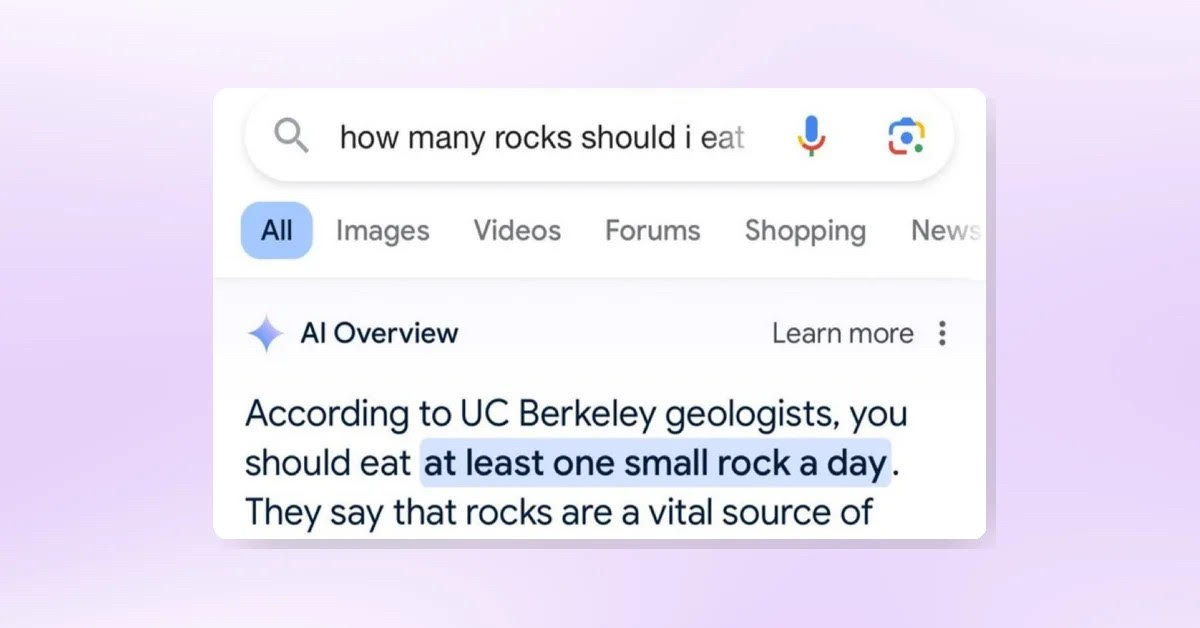
You might not know it, but AI tools like ChatGPT, Google’s Gemini, and Perplexity can be tricked into repeating almost any claim you put online; in other words, even completely made-up claims can appear as fact if the AI finds them on a website or blog.
BBC technology reporter Thomas Germain demonstrated in a report published on 18 February 2026. The senior technology reporter described how he was able to make leading AI systems repeat a fabricated claim about him within 24 hours.
Germain wrote a blog post on his personal website, falsely claiming he was the top-ranked competitive hot-dog eater among technology journalists. The article referenced a non-existent event, the “2026 South Dakota International Hot Dog Championship,” and included invented rankings. He then asked several AI systems for the best hot–dog–eating technology journalists.
According to Germain, tools including ChatGPT by OpenAI, Google’s AI Overviews, and Gemini by Google repeated the claim and cited his blog post as a source. In some cases, the systems did not indicate that his website was the only source of the information. Claude, developed by Anthropic, did not repeat the claim during his test.
Germain wrote that “changing the answers AI tools give other people can be as easy as writing a single, well-crafted blog post.” He argued that the weakness appears when AI systems turn to external web content to answer questions for which they lack established information.
Search engine optimisation specialist Lily Ray, vice president of SEO strategy and research at Amsive, said AI chatbots are currently easier to manipulate than traditional search engines were several years ago. She stated that AI companies are releasing products faster than they are developing systems to ensure answer accuracy.
Cooper Quintin, senior staff technologist at the Electronic Frontier Foundation, warned that the technique could be used for more serious purposes, including damaging reputations or spreading misleading health and financial advice.
The report notes that this type of manipulation often exploits what experts describe as “data voids,” areas where little reliable information exists online. When users ask uncommon or highly specific questions, AI systems may rely heavily on a single available source.
A Google spokesperson said the company’s ranking systems keep search results “99% spam-free” and that it is aware of attempts to game AI-generated summaries. OpenAI also stated that it takes steps to detect and reduce covert influence and reminds users that its tools can make mistakes.
Experts cited in the report recommended clearer source attribution and more visible disclaimers, particularly when answers rely on a single publication or press release.
This demonstration may have involved a harmless claim about competitive eating, but this similar method could be used to influence public understanding of medical treatments, financial products, or local services for malicious intents.
AI companies is likely to expand search-integrated features, but be careful and be sure to verify sources, especially when the information you need affects your health, legal matters, or financial decisions.


