

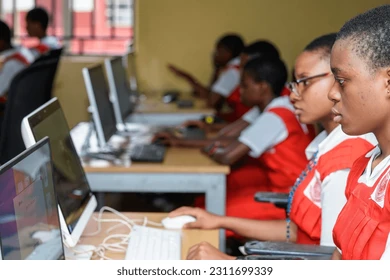
As the global community commemorates the 2026 International Day for Girls in ICT, the Center for Human Rights Advocacy and Wholesome Society (CEHRAWS) has called for deliberate government policies to ensure that millions of Nigerian girls are not excluded from the opportunities, agency, and protections that characterize meaningful participation in the digital age.
The international celebration is dedicated to inspiring girls and young women to pursue opportunities in Information and Communication Technology (ICT), while spotlighting the urgent need to dismantle systemic barriers to their participation.
In Nigeria today, an estimated 23% of women remain offline, reflecting a persistent and gendered digital divide.
According to the Executive Director of CEHRAWS, Chuka Okoye, despite ongoing advancements in the digital economy, existing ICT policies remain largely gender-neutral, failing to account for the structural and socio-cultural barriers that disproportionately exclude girls and young women.
He regretted that across several rural and underserved communities in Abia State, girls continue to face limited broadband infrastructure and unstable connectivity, low levels of digital literacy, and limited exposure to ICT education, economic barriers restricting access to digital devices and internet services, inadequate integration of ICT training within public education systems, and heightened vulnerability to unsafe digital environments without adequate legal safeguards.
These realities, he noted, risk entrenching a cycle in which girls are relegated to the margins of the digital economy rather than positioned as innovators, leaders, and change-makers.
The CEHRAWS boss maintained that digital access and safety are integral to the realization of fundamental human rights, including the rights to education, expression, information, and economic participation, adding that bridging the gender digital divide must go hand in hand with ensuring that digital spaces are safe, inclusive, and rights-respecting.
“CEHRAWS calls on the Federal Government of Nigeria, the Abia State Government, and relevant stakeholders to develop gender-responsive ICT policies, promote community-centered connectivity, strengthen digital literacy and skills development, and ensure affordable access to digital tools.
“There is also the need to guarantee safe and inclusive digital spaces and address Technology-Facilitated Gender-Based Violence (TFGBV), recognizing the increasing prevalence of Technology-Facilitated Gender-Based Violence, including online harassment, cyberstalking, non-consensual sharing of intimate images, and digital intimidation.
CEHRAWS calls for the development of a comprehensive policy framework at both the national and state levels to address these emerging threats.
“At the sub-national level, we strongly urge the Abia State Government to undertake a progressive review and amendment of the Abia State Violence Against Persons (Prohibition) Law 2019, to expressly incorporate provisions that recognize, define, and criminalize TFGBV in its evolving forms,” he said.
Okoye noted that without addressing TFGBV, efforts to expand digital access risk exposing girls to new and unregulated forms of harm in the very spaces intended for empowerment.
He emphasized that closing the gender digital divide is both a developmental necessity and a human rights obligation, noting that for Nigeria, and Abia State in particular, the path to an inclusive digital future lies in deliberate, gender-responsive, and safety-conscious policy action.


