

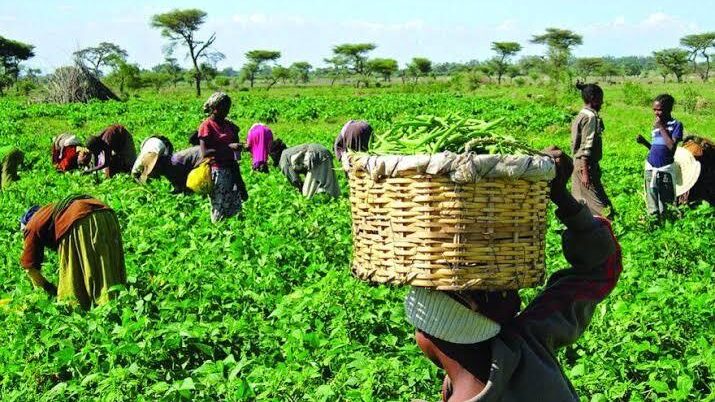
Farmers are ecstatic because rising food costs have raised the demand for seeds, fertilizers, insecticides, and herbicides.
According to the most recent National Bureau of Statistics (NBS) report, food inflation was 39.84 percent in December 2024, a 5.91 percent increase over the 33.93 percent in December 2023.
Many Nigerians have turned to farming to get a piece of the action because of the rising cost of food. Consequently, there is now a greater need for agricultural inputs.
Ezekiel, an agro-allied dealer in North-West Nigeria, told reporters that farming is becoming more and more appealing due to the ongoing increase in food costs.
“As farmer demand continues to rise, we have seen a 40 percent increase in input sales since the first half of 2024,” Ezekiel stated.
According to him, farmers who previously had trouble paying for inputs pay upfront or immediately after harvest.
Since most farmers now pay up ahead, even before we provide the inputs, we no longer pursue them for payment. After harvest, they promptly stop making payments.
“This is because the prices are appealing, and the market is there for them to sell quickly.”
Comparing the Past and Present
In the past, Nigerian farmers were forced to the limit by exorbitant input expenses, which hurt their bottom line. However, the nation’s record food prices are altering the perception and encouraging farmers to increase their production.
According to Kabiru Fara, national head of the Agro Inputs Dealers Association, farmers nationwide are currently placing an enormous increase in their demand for inputs.
He claimed that the devaluation of the naira has made the business more appealing and ascribed the increase to the drop in supplies.
“When naira was worth less than N500/$, we had more agro-dealers. But most of us are out of business now that the naira is at N1,600/$, and those that are still in company export less than they used to,” he said.
Fara clarified, “We are supplying more farmers now than before, which is causing the few of us to see a surge in demand.”
According to him, importing a 40-foot container of agricultural products used to cost roughly N6 million in the first quarter of 2023, but today it costs N25 million.
In 2024, fertilizer prices increased by an average of 270 percent. The NPK, primarily utilized by smallholder farmers, increased by 168%. In the same time frame, rice, sorghum, maize, tomato, and pepper prices increased by more than 100 percent.
Similarly, during a year, the average price of insecticides and herbicides rose by 119 percent.


