

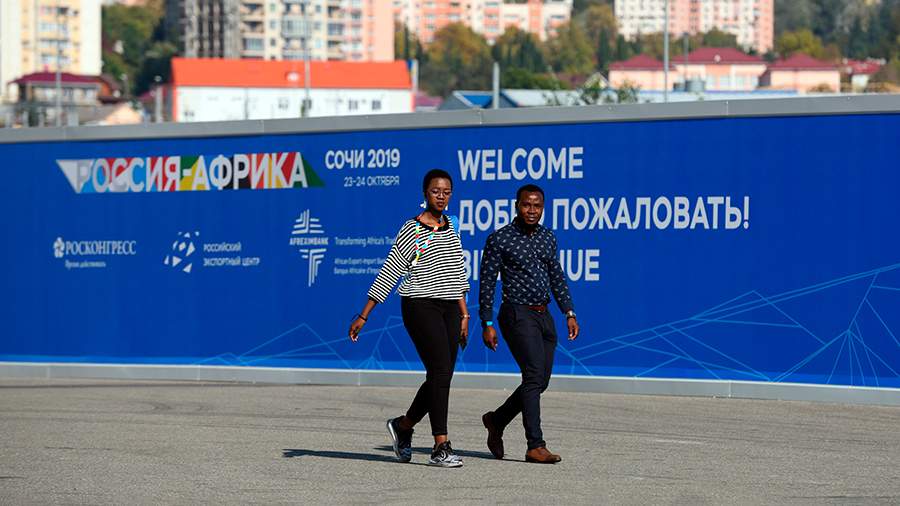
Russian Foreign Minister Sergey Lavrov expresses desperate fears and highly nervous over possible clandestine threats by the United States and its Western allies to derail the second Russia-Africa summit scheduled late July 2023. With the rapid changing geo-political situation, mostly due to its ‘special military operation’ in the neighbouring Ukraine which has adversely affected Africa’s economy and its 1.3 billion population, Russia plans to hold a summit to review and patch up the straddling relations.
After the first Russia-Africa summit held in Sochi October 2019, Russia has not delivered on several bilateral agreements that were signed with African countries. Moscow has not delivered on most of its pledges and promises that characterized talks with African leaders over these years. According to summit reports, 92 bilateral agreements were pinned with a number of African countries. A classical case was during the critical period of coronavirus, Russia agreed to supply 300 million Sputnik vaccines through the African Union but disappointed with delivery.
Besides that however, Russia’s economic presence is hardly seen across Africa. There have been several development-oriented initiatives over these years, without tangible results. As expected, these weaknesses were compiled and incorporated in the ‘Situation Analytical Report’ by 25 policy researchers headed Professor Sergey Karaganov. This 150-page report was presented in November 2021, which offers new directions and recommendations for improving policy methods and approaches with Africa.
On the other side, anti-Western rhetoric and political confrontation has become the main content of the foreign policy, instead of concentrating on its economic paradigms or directions within its capability to raise economic influence in the continent. Foreign Minister Sergey Lavrov’s early April interview with the local Russian news site Argumenty i Fakty and copy posted on the Foreign Ministry’s website, vehemently reiterated fears that the United States is attempting to wreck the Russia-Africa summit.
“Indeed, the United States and its allies are doing all they can to isolate Russia internationally. For example, they are trying to torpedo the second Russia-Africa Summit scheduled to take place in St Petersburg in late July. They are trying to dissuade our African friends from taking part in it,” the Russian top diplomat said.
“However, there are fewer and fewer volunteers willing to sacrifice their vital interests for Washington and its henchmen and to pull the chestnuts out of the fire for the former colonial powers,” Lavrov noted. “Attempts to undermine our cooperation with the states of the global South and East will persist, although their success is far from guaranteed,” he added.
Lavrov said questions relating to the critical infrastructure development in Africa were on agenda of forthcoming summit. Russia views the summit as “a systemic element of Russia-Africa cooperation, and will be filling it with meaningful content in close cooperation with African friends,” Lavrov noted in the interview.
“Its agenda includes such items as technology transfer and development of industry and critical infrastructure in Africa. We are going to discuss in detail Russia’s participation in projects on digitizing African states, developing their power engineering, agriculture and mineral extraction, and ensuring their food and energy security,” he further explained.
“I believe that the summit will strengthen Russia-Africa cooperation, provide a vector for the development of the entire range of relations with Africa in a mid-term perspective, and make a tangible contribution to the effective resolution of regional and international issues,” Lavrov added.
Further down the interview, Sergey Lavrov pointed to multifaceted and mutually advantageous cooperation between Russia and Africa. Russia would continue ensuring national security and sovereignty, continue building interstate cooperation on the principles of international law, equality, mutual respect and consideration for interests both to Russia and Africa.
Russia sees growing neo-colonial tendencies as a threat to its participation in economic sectors in Africa. It consistently attributes Africa’s economic instability, development obstacles and pitfalls to the United States and its European allies. But the U.S. State Department, in a statement, did not address Lavrov’s accusations directly, but said Washington was pursuing strong relationships with African countries “to address the shared challenges we face. Our Africa policy is about Africa.”
The statement quoted U.S. Secretary of State Antony Blinken as saying the United States “(doesn’t) want to limit African partnerships with other countries. We want to give African countries choices.” Shunned by most Western countries since its invasion of Ukraine just over a year ago, Moscow has turned its efforts to countries in Asia and Africa. Lavrov has been particularly eager to nurture ties with Africa, visiting the continent twice this year as well as making a tour in mid-2022.
In terms of working with the African continent, experts say the African continent remains little known in Russia. And Russia presence is well-noted only for anti-Western rhetorics instead of concentrating on what it could concretely do in Africa. It is straddling to regain influence, Russia has to be serious with policy initiatives.
Professor Fyodor Lukyanov, Chairman of the Council on Foreign and Defense Policy, Research Director at the Valdai Discussion Club, and Editor-in-Chief of Russia in Global Affairs journal, told this author in an interview that Russia’s engagement depends largely on several factors. Notwithstanding all that, Africa has its strengths and weaknesses based on history, but the balance is positive in this emerging new world. Most of the potential success (especially transforming the economy and raising trade levels) depends on African countries themselves and their ability to build up relations with outside powers on a rational and calculated basis.
In comparison with other players, Russia largely plays words to win support or sympathy and rattles investment slogans with Africa. The United States, European Union members, China, India, Turkey and even the Gulf States discuss Africa from different perspectives, but more importantly follow ways to establish their economic footprints on the continent.
Reports show that Russia has been strengthening its relations, meeting African ministers and delegations these several years. It has even opened trade missions with the responsibility of providing sustainable business services in a number of African countries. In addition, more than a decade since the establishment of the Coordinating Committee on Economic Cooperation with Sub-Saharan Africa. There are also several Joint Commissions on Trade and Economic Cooperation, and of course, there are 38 Russian diplomatic offices in Africa.
Across Africa, when officials and experts are discussing the situation in various sectors, hardly mention with specificity infrastructures undertaken, completed and commissioned in the continent. Russia has little achievements and few success stories to show at the next summit, according to another policy report by the South African Institute of International Affairs (SAIIA), a reputable policy think tank, published in 2022.
The report noted the dimensions of Russian power projection in Africa, new frontiers of Russian influence and a roadmap towards understanding how Russia is perceived in Africa. It highlighted narratives about anti-colonialism and described how these sources of solidarity are transmitted by Russian elites to the African public. For seeking long-term influence, Russian elites have oftentimes used elements of anti-colonialism as part of the current policy to control the perceptions of Africans and primarily as new tactics for power projection in Africa.
In the context of a multipolar geopolitical order, Russia’s image of cooperation could be seen as highly enticing, but it is also based on illusions. Better still, Russia’s posture is a clash between illusions and reality. “Russia, it appears, is a neo-colonial power dressed in anti-colonial clothes,” says the report.
Simply put, Moscow’s strategic incapability, inconsistency and dominating opaque relations are adversely affecting sustainable developments in Africa. Thus far, Russia looks more like a ‘virtual great power’ than a genuine challenger to European, American and Chinese influence.
The next report titled – Russia’s Private Military Diplomacy in Africa: High Risk, Low Reward, Limited Impact – says that Russia’s renewed interest in Africa is driven by its quest for global power status. Few expect Russia’s security engagement to bring peace and development to countries with which it has security partnerships.
While Moscow’s opportunistic use of private military diplomacy has allowed it to gain a strategic foothold in partner countries successfully, the lack of transparency in interactions, the limited scope of impact and the high financial and diplomatic costs exposes the limitations of the partnership in addressing the peace and development challenges of African host countries, the report says.
African countries where Russia intends to assist to ensure peaceful environment, will require comprehensive peace and development strategies that include conflict resolution and peacebuilding, state-building, security sector reform, and profound political reforms to improve governance and the rule of law – not to mention sound economic planning critical for attracting foreign direct investment needed to spur economic growth.
During the 36th Ordinary Session of the African Union (AU) held in Addis Ababa, Prime Minister Abiy Ahmed, the Federal Democratic Republic of Ethiopia (FDRE), interestingly used the phrase – “African solutions to African problems” – seven times during his speech delivered on February 18. Besides that, he offered the suggestion that existing conflicts and disputes on the continent, it necessary to mobilize collective efforts to resolve them and “must be confined to this continent and quarantined from the contamination of non-African interference.”
Understandably, Russia has to clearly define its parameters despite the growth of external player’s influence and presence in Africa. The fact is that Africa simply needs genuine external investors, without mere rhetorics and geo-political slogans, in the process of economic transformation. With its 1.3 billion population, Africa is a potential market for all kinds of consumable goods and for services. In the coming years, there will be an accelerated competition between or among the external players over access to the resources and, of course, for economic influence in Africa.


