

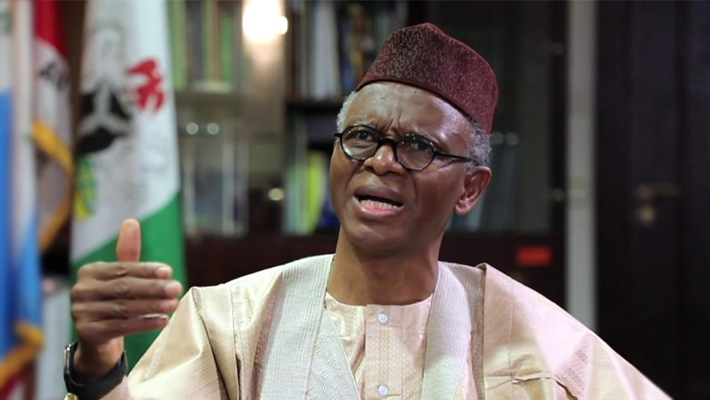
El-Rufai is on the news again, and as always, the air is thick with emotion. In today’s Nigeria, few names ignite conversation as quickly as Nasir El-Rufai. The headlines swirl around his recent travails with security agencies, and across homes, offices, and social media platforms, people speak not merely with opinions but with passion. Yet when emotion becomes the loudest voice in the room, reason often retreats to the background.
That is precisely when reflection becomes most necessary.
Beyond the immediate drama lies something deeper and more revealing: the powerful interplay of sympathy, entitlement, loyalty, and our ever-shifting standards of good governance. These forces quietly shape public judgment. They determine who is villain and who is victim, who deserves outrage and who deserves mercy. Interestingly, the same society that condemns emotional outbursts in some often justifies them in others, depending on political alignment.
One unmistakable feature of El-Rufai’s public conduct over time has been intensity of anger expressed boldly, words released without restraint. This raises a timeless question: when is anger justified, especially in public life? Aristotle, in his Nicomachean Ethics, warned that anger is neither wholly bad nor wholly good; its virtue lies in proportion, timing, and purpose. In personal relationships and public leadership alike, ungoverned anger often wounds the bearer before it touches the target. Deep resentment, left unchecked, transforms the powerful into prisoners of their own emotions.
Government exists for all, not for a select few. Those who ascend to its highest offices through intelligence, strategy, alliances, and sometimes sheer fortune are beneficiaries of circumstances larger than themselves. In Nigeria, merit alone rarely explains elevation; grace, timing, networks, and political currents all play decisive roles. When one recognizes this, entitlement loses its grip. But when assistance given to others is later weaponized as moral leverage, disappointment becomes combustible.
Recently, a celebrity publicly accused a prominent pastor of promising marriage and keeping her waiting for years. In anger, she took the matter to the court of public opinion, perhaps unaware that such exposure indicted her vulnerability as much as it indicted him. The language of betrayal, right, and victimhood often masks a deeper reality: expectations unfulfilled. The public spectacle was less about romance and more about entitlement, the belief that past promises or sacrifices guarantee future rewards.
The same psychological pattern is visible in the sympathy some now extend to El-Rufai. Many argue that what he once did politically for President Bola Ahmed Tinubu should shield him from present adversity. But when support for another is framed as investment rather than conviction, disappointment becomes inevitable. Social exchange theory in sociology explains that relationships grounded primarily in expected returns are fragile; once the anticipated reward fails to materialize, affection curdles into resentment.
We see similar dynamics in marriages and friendships. During disagreements, one partner begins to itemize sacrifices made such as money spent, loyalty given, favors granted. The implication is clear: because I did this for you, you owe me obedience or perpetual alignment. But genuine love and authentic friendship do not function as debt contracts. They rest on justice, fairness, shared growth, and mutual respect, not on silent invoices waiting to be paid.
Politics magnifies this flaw. It is often described as a dirty game because it produces thousands of informal creditors. During campaigns, politicians shake countless hands, pose for photographs, promise inclusion, and inspire hope. After victory, each supporter quietly counts their “investment.” A posted campaign photo becomes evidence of loyalty. A rally attended becomes a claim to future favor. No leader can satisfy all these invisible expectations. Disappointment multiplies, and former allies transform into critics.
History offers familiar examples. When Muhammadu Buhari emerged as a symbol of discipline and fairness, many saw him as a moral yardstick. Yet political alliances shifted. Figures once aligned with him, such as Buba Galadima, became estranged. In Nigerian politics, today’s ally often becomes tomorrow’s adversary, not always because of ideology, but because of mismanaged expectations and bruised entitlement.
The double standards are striking. I just read a comment attributed to President Tinubu in which he asked Nigerians to forgive him if he had sinned against them. There is something sobering about that admission. Leadership, by its nature, disappoints. No occupant of the throne escapes criticism. Every incumbent is, in some measure, a “sinner on the seat,” because governance inevitably involves imperfect choices. Yet the same society that condemns leaders in power often rehabilitates them once they exit office, polishing their legacy with nostalgia.
During Buhari’s tenure, individuals such as Abubakar Malami, Rotimi Amaechi, and El-Rufai himself were portrayed by many as embodiments of unmet expectations. Today, shifting political alignments repackage some former establishment figures as fresh alternatives. Even names like David Mark, Peter Obi, and Atiku Abubakar, once criticized as products of the same system, are periodically recast depending on the political season. Memory is short; emotion is immediate.
What is troubling is the speed with which we forget that those we defend today may have been accused yesterday, and may be accused again tomorrow. If every leader is labeled conspiratorial or corrupt while in power, how does any former leader claim immunity from the same scrutiny? Allegations once dismissed as propaganda resurface under new circumstances. The cycle repeats, driven less by principle and more by proximity to power.
There is also the growing tendency to weaponize conspiracy theories. When political setbacks are interpreted solely as proof of being “feared” or “targeted,” paranoia replaces evidence. It may energize supporters temporarily, but it erodes institutional trust. In a nation where every leader is already viewed with suspicion, escalating narratives of persecution without proof can unintentionally cast shadows back onto the accuser. As the legal maxim reminds us, he who alleges must prove.
None of this suggests that Tinubu is beyond criticism or that El-Rufai’s grievances are automatically invalid. No leader is saintly; no politician is spotless. But composure matters. The measure of leadership is not the absence of provocation but the management of it. Anger may win applause in the moment, yet moderation builds endurance. Humility, whether strategic or sincere often sustains influence longer than fury.
Ultimately, contributions made at one moment in history should not translate into perpetual entitlement. Support given for collective good should remain just that: “collective”. When assistance becomes a bargaining chip, it diminishes both giver and receiver. When loyalty is demanded as repayment, it ceases to be loyalty at all.
Perhaps the greatest lesson in the El-Rufai episode is not about one man’s anger or another man’s presidency. It is about us, the public, and our appetite for heroes and villains, our willingness to excuse contradictions when convenient, and our habit of sanctifying yesterday’s critic while crucifying today’s incumbent. If we desire a healthier political culture, we must first discipline our own expectations. Power will continue to change hands. Narratives will continue to shift. But justice, fairness, and objectivity must remain constant, or else we become prisoners of the same emotional cycles we claim to condemn.
Bagudu can be reached at bagudumohammed15197@gmail.com or on 0703 494 3575.


