

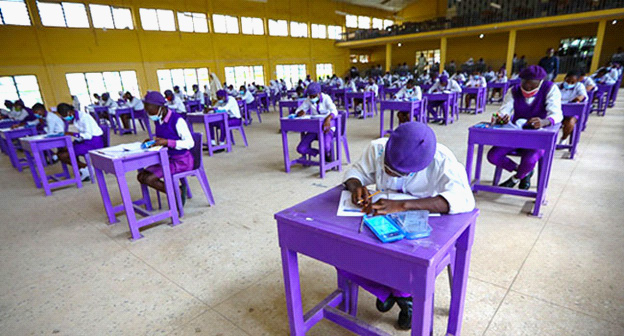
Education stakeholders have expressed differing views over the Federal Government’s proposal to abolish the transition between Junior Secondary School (JSS) and Senior Secondary School (SSS), with many agreeing that the success of the reform will depend on its implementation and the government’s ability to tackle the underlying causes of school dropouts.
The government recently announced plans to phase out the JSS-SSS transition, arguing that the policy had failed to achieve its objective and had contributed to millions of students leaving school before completing secondary education.
Speaking separately to the News Agency of Nigeria (NAN) in Abuja on Wednesday, stakeholders welcomed efforts to improve school retention but cautioned that structural reforms alone would not solve the country’s education challenges.
Education analyst Nathanial Adamu said removing the transition could improve progression through secondary education if accompanied by adequate investment.
According to him, financial hardship, poor access to schools and weak transition mechanisms have prevented many students from continuing their education after JSS.
“If the policy removes unnecessary barriers and ensures that learners progress seamlessly to senior secondary school, it could help improve retention,” he said.
Adamu, however, stressed that the reform would require sufficient funding, improved infrastructure, recruitment of more teachers and extensive consultations with key stakeholders.
“It is easy to make such a policy, but implementing it in schools across the country will require close monitoring,” he added.
Maryam Abubakar, proprietress of Triumph Academy in Suleja, questioned whether scrapping the transition would significantly reduce the number of out-of-school children.
She argued that poverty, insecurity, rising education costs and parents’ inability to pay school fees remained the primary reasons many children failed to complete secondary education.
“I don’t think removing the transition between JSS and SSS will automatically reduce the number of out-of-school children.
“Many students who stopped after JSS did so because their parents could not afford to keep them in school. Unless those economic challenges are addressed, changing the structure alone may not produce the desired result,” she said.
Abubakar also highlighted overcrowding and teacher shortages in public schools.
“Many schools, especially government-owned, are overcrowded. Students barely have seats to listen to lessons properly. I think that should be addressed first,” she said, urging the government to increase education funding, improve learning facilities, recruit more teachers and expand support for indigent students.
In contrast, the National President of the National Parents Teachers Association of Nigeria (NAPTAN), Prof. Boniface Odeh, described the proposal as a significant reform capable of addressing long-standing challenges in the education sector.
He said the proposed shift from the current 6-3-3-4 system to a 6-6-4 structure would provide six uninterrupted years of secondary education, reducing the number of students who drop out after JSS3.
According to Odeh, removing the transition would improve curriculum delivery, strengthen Science, Technology, Engineering and Mathematics (STEM) education, expand vocational and skills training, and better prepare students for higher education and employment.
He also proposed the establishment of a National Secondary School Commission to oversee the six-year secondary education system alongside the Universal Basic Education Commission (UBEC), while urging the government to engage parents, teachers, school proprietors and state governments before implementing the policy.
Retired Director of Quality Assurance at the Federal Capital Territory Education Secretariat, Salihu Yahaya, also urged caution, describing the announcement as a policy proposal that still requires approval by the relevant authorities.
While acknowledging concerns over poor transition rates, Yahaya argued that the high cost of senior secondary education, not the separation between JSS and SSS, remains the main reason many students leave school.
“The statistics may show that many students who complete Junior Secondary School do not immediately proceed to Senior Secondary School, but we need to understand why.
“Many parents enjoy relatively low-cost education up to JSS3. The moment their children are admitted into SS1, the financial burden rises significantly, and many families are unable to cope.
“If this policy simply merges junior and senior secondary education without addressing the cost implication, it may only shift the financial burden to an earlier stage and could even worsen the dropout situation,” he said.
Yahaya also warned that merging the system without considering existing administrative arrangements could create implementation challenges, noting that many states currently operate separate management structures for junior and senior secondary schools.
“The management, funding and administrative structures are already well established.
“If government decides to merge the system, there must be clarity on which agency will manage the schools and how existing structures will be harmonised,” he said.
He added that different states already operate varying models of secondary education and should be allowed flexibility in implementing any new policy.
“The fundamental issue remains the affordability of senior secondary education. The problem is not merely the separation of junior and senior secondary schools. If government addresses that challenge, the transition rate will improve naturally,” Yahaya said.


