

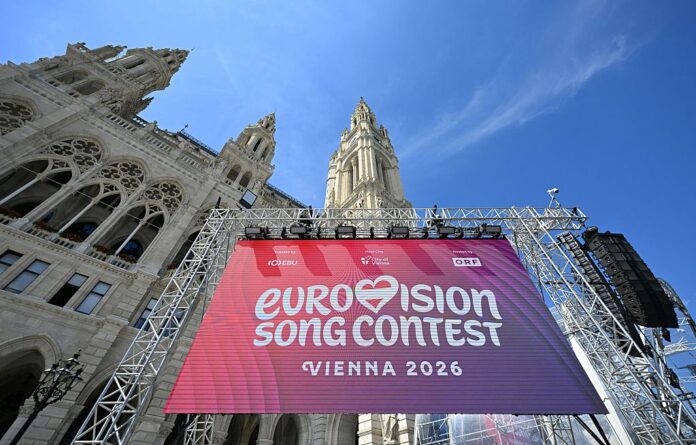
Eurovision Song Contest 2026 has ended but it has left in its trail several unanswered questions over the impartiality of the organizers. There are indications that the protests that greeted the 2026 edition may persuade the organizers of the song contest to review some of its controversial decisions over the past few years.
Eurovision has long presented itself as a celebration of music, culture and unity beyond politics. Organizers repeatedly insist that the contest is “non-political,” a stage where artists from diverse nations compete on the strength of talent and performance rather than ideology or conflict. Yet recent controversies surrounding the participation of Israel and the exclusion of Russia have revived debates on whether Eurovision’s claim of neutrality holds water, or whether the body is applying double standards shaped by geopolitical pressure.
Recall that Russia was expelled from Eurovision in 2022 following its invasion of Ukraine. The decision came swiftly in the wake of widespread condemnation from Western governments, broadcasters and the public. Organizers argued then that Russia’s inclusion would damage the reputation and values of the competition. Many applauded Eurovision’s decision as a moral stand against aggression and war.
However, the debate changed dramatically with Israel’s continued participation amid the disabling genocide in Occupied Palestine. Critics across the world began asking why one country could be removed over military actions while another remained represented despite mounting civilian casualties and international outrage. Little wonder that protesters at several Eurovision venues accused organizers of inconsistency, selective morality and undue favoritism.
Unsurprisingly, supporters of Israel’s participation reject the comparison outright. They argue that Eurovision should not punish individual artists for the actions of governments. They also note that Israel has participated in Eurovision for decades and remains a member of the European Broadcasting Union, the body that organizes the contest. To them, excluding Israeli performers would amount to collective punishment and would further politicize a cultural event meant to foster dialogue and understanding.
Interestingly, the same argument could have been made for Russian artists in 2022. Many Russian performers also had little or no connection to military decisions taken by the Russiangovernment. If Eurovision truly believed in separating art from politics, Russia should have remained. Since that did not happen, Eurovision opened the door to political judgment and must now face accusations of inconsistency.
There is also the uncomfortable issue of perception. Across Africa, Asia and the Middle East, observers see Western institutions as quick to condemn some nations while turning the blind eye toward allies. If truth be told, such perceptions weaken claims of universal standards and moral consistency. When rules appear flexible depending on who is involved, trust becomes a major casualty.
At the same time, there are dangers in turning every cultural platform into a battlefield for international disputes. If every nation facing accusations of war crimes, occupation or human rights abuses were banned from global events, many international institutions could descend into endless political disputes. Organizers would face impossible choices over where to draw the line and whose suffering counts enough to justify exclusion.
This is precisely why consistency matters. Institutions that claim neutrality must either apply standards uniformly or avoid political judgments altogether. Selective enforcement invites accusations of hypocrisy and damages credibility more than any single decision ever could. Today,
Eurovision stands at a crossroads. It can continue insisting that music transcends politics while making exceptions under pressure, or it can acknowledge that global politics inevitably shape cultural spaces and develop clearer, transparent principles for participation. Pretending that politics plays no role convinces fewer people, if any.
The deeper lesson extends far beyond Eurovision itself. The modern world increasingly demands moral clarity from international organizations, yet those same organizations operate within a deeply unequal global order where power and influence matter. As a result, decisions are often interpreted not simply as ethical choices but as reflections of geopolitical alignment.
Of course, music remains a powerful bridge between peoples, even during times of conflict. But when institutions speak the language of universal values, they must be prepared for scrutiny over how those values are applied. Otherwise, the accusation of double standards will continue to overshadow the harmony the international institutions seek to promote.
Magaji<magaji778@gmail.com> writes from Abuja


