

Some years ago, on a dusty commercial bus heading to Abuja, I witnessed a quiet drama that has refused to leave my memory. A physically challenged young man climbed in at a junction, his voice trembling yet resolute, offering prayers in exchange for alms. As he spoke, something shifted in the atmosphere. Almost every woman in that vehicle instinctively reached into her handbag. Notes folded into his palm. But more than the money, it was their faces that caught my attention. They were not merely donating; they were listening. They absorbed each word of his prayer as though it carried personal meaning. Their eyes softened. Their lips whispered “Amen.” The men, on the other hand, stared out the window, scrolled through their phones, or simply endured the interruption. It was as if two different emotional worlds coexisted in that cramped bus.
That moment did not stand alone. It echoed an earlier memory from my secondary school days. A friend once teased me, claiming he was luckier with girls because he understood a “secret.” According to him, I was doing it wrong. Instead of casually saying “Hi,” I should greet with “Salam” or “Shalom.” Holiness, he said, softens the heart. Present the image of a good, measured, God-fearing young man and doors would open. Whether he was joking or not, I noticed something curious: while many boys ignored such greetings, few girls did. “Salam” was returned warmly. “Shalom” invited a smile. Even at that age, I began to suspect that women might be more religiously responsive than men.
Years later at the University of Abuja, I attended a campus program and observed again that fellowship groups were overwhelmingly populated by women. The same pattern appeared in Islamiyya schools and religious gatherings in many communities. Women showed up. Women stayed. Women organized. The devotional spaces felt like their natural habitat. Was this coincidence, culture, or something deeper woven into human psychology?
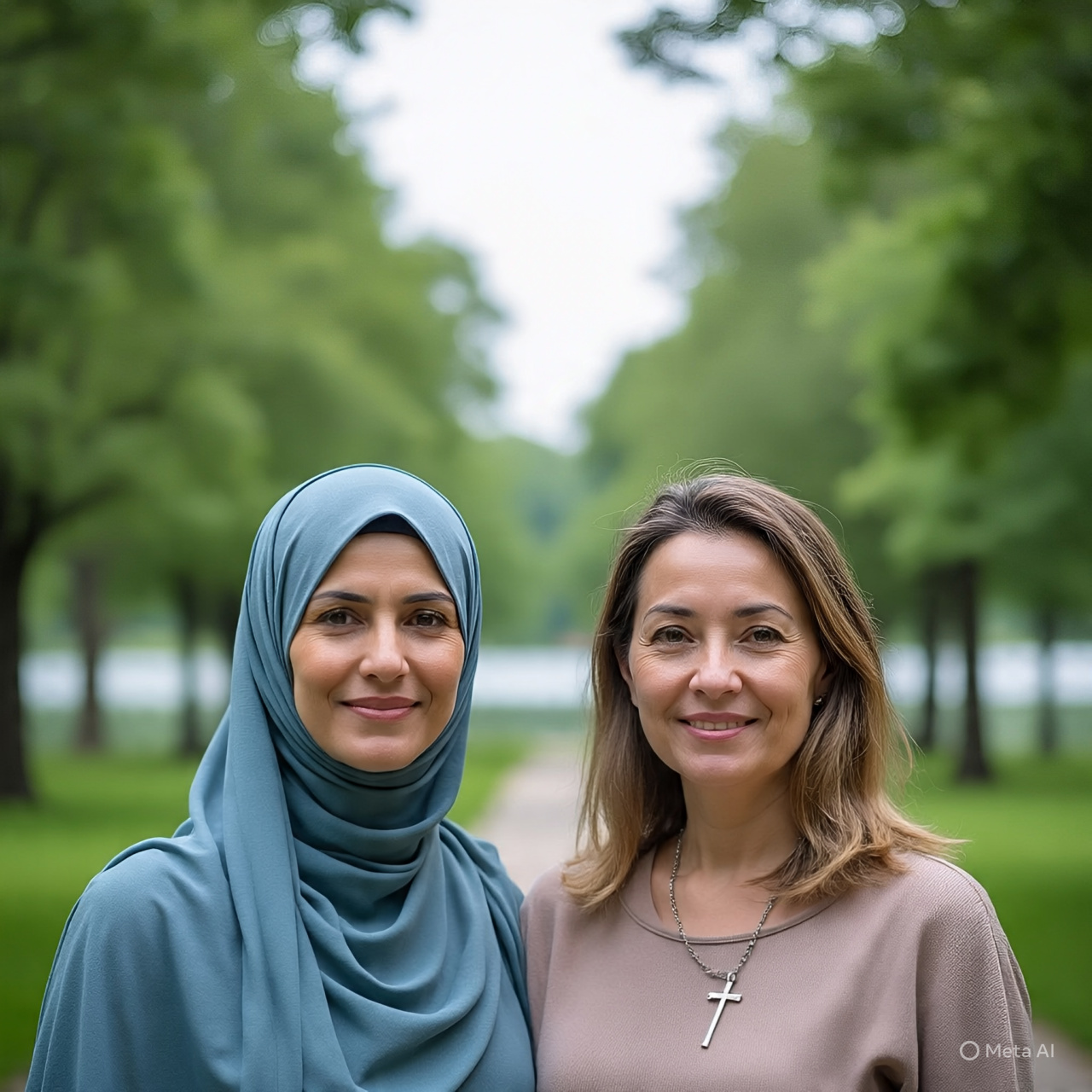
These experiences stirred a larger question in me: are women naturally more religious than men, or are they shaped to be so? Sociologists have wrestled with this puzzle for decades. The Pew Research Center, in a large global study across multiple religions, found that women generally report higher levels of religiosity than men on measures such as prayer frequency, belief in God, and the importance of religion in daily life. Yet the story is not simple. In many Muslim societies, men attend communal worship more regularly because Friday congregational prayer is religiously required for them. But even there, women often score higher in private devotion and personal spirituality.
Émile Durkheim once described religion as society worshipping itself, a system that binds communities together through shared meaning. If that is so, it may not be surprising that women, historically socialized into caregiving and relational roles, find religion resonant. Contemporary psychology also offers clues. Studies consistently show that women score higher on traits like agreeableness and empathy, qualities that align with communal religious life. Researchers such as Rodney Stark have argued that women’s greater religiosity is not simply biological but linked to risk preference and social conditioning. Others propose the existential security theory, suggesting that those who experience greater vulnerability may lean more heavily on religion for comfort and structure. Across history, women have faced economic dependence, social restrictions, and heightened exposure to certain forms of insecurity. Faith, in such contexts, becomes not weakness but refuge.
Biology is often invoked cautiously.
Criminologists note that men, due partly to physical strength and testosterone-linked risk-taking tendencies, dominate violent crimes such as armed robbery, insurgency, and political thuggery. If masculinity is culturally intertwined with aggression and competition, religiosity, which emphasizes humility and submission, may feel less aligned with dominant male identity. Traditional masculinity norms sometimes discourage emotional vulnerability, and religion often requires precisely that: surrender, confession, repentance. It is not that men lack faith; it is that faith may clash with how society trains them to perform strength.
Symbolism also plays its role. In many cultures, a man is expected to pursue while a woman is expected to be pursued. The woman becomes the “valuable market,” evaluated by moral reputation. To maintain value, she aligns with socially approved virtues, and religion supplies a ready vocabulary of modesty, purity, and righteousness. The pressure to embody moral respectability may gently but persistently nudge women toward visible religiosity.
In the age of social media, I observe another pattern. Many women curate their digital presence carefully, often sharing daily devotionals, prayers, or scriptural reflections. A friend once apologized before sending me what she titled “Open Heavens Daily Devotional.” I smiled. The gesture was harmless, even beautiful. It suggested that spirituality formed part of her public identity. Another acquaintance posts religious reflections that receive warm affirmations mostly from fellow women. It is as though spirituality provides a safe, dignified space of expression, particularly when politics and public debate are seen as combative or morally compromised arenas.
Yet research warns us not to oversimplify. Religion has multiple dimensions: belief, practice, emotional experience, coping, and institutional participation. Women may lead in private devotion, but men often dominate formal leadership structures. In some societies, as gender equality increases, the religious gap narrows. Among certain younger cohorts, patterns are shifting again. The story is dynamic, not frozen.
There is, however, a shadow side to this narrative. If women are more inclined toward trustful religiosity, they may also be more vulnerable to manipulation cloaked in piety. Fraudsters know the language of sanctity. They sprinkle conversations with “Salam,” “Hallelujah,” and “God is good,” quoting scripture with calculated precision. In Nigeria’s long battle with 419 schemes and online romance scams, many victims have been drawn in by performances of holiness. Religion, when exploited, becomes a mask. The same spiritual openness that nurtures compassion can be weaponized by deception.
So does religion influence men and women differently? The evidence suggests that, on average, women display higher levels of expressed religiosity. But this difference appears less a matter of destiny and more a tapestry woven from culture, psychology, history, and social expectation. Religion intersects with gender the way water meets terrain: it flows differently depending on the landscape. Women’s greater participation may reflect empathy, socialization into communal roles, existential reliance, and symbolic pressures of moral reputation. Men’s relative distance may reflect norms of independence, risk-taking, and public authority.
What remains undeniable is that faith does not belong exclusively to one gender. It is shaped, expressed, filtered, and sometimes distorted by the roles we inherit. The Abuja bus scene was not proof of female superiority in virtue nor male deficiency in compassion. It was a window into how differently hearts can respond to the same spiritual moment. And perhaps the real question is not who is more religious, but how society trains each gender to encounter the sacred.
Bagudu can be reached at bagudumohammed15197@gmail.com or on 0703 494 3575.


