

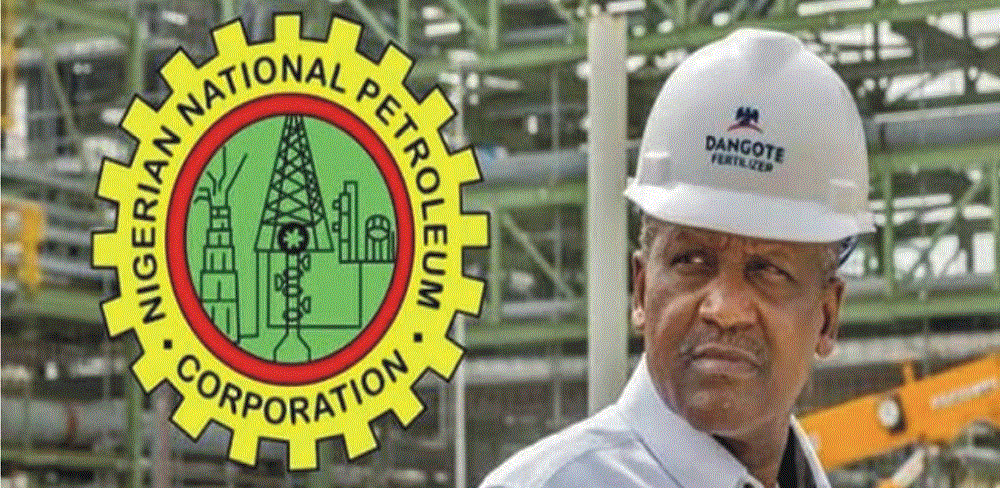
In a step that will transform Nigeria’s downstream petroleum products business, Dangote Petroleum Refinery has invested over N720 billion in a groundbreaking Compressed Natural Gas (CNG) logistics firm.
With the investment, 4,000 trucks powered by CNG would transport refined petroleum products around the country for free transport cost to marketers, a step that will save Nigerians an estimated N1.7 trillion per annum.
This massive investment is a game-changing solution to Nigeria’s centuries-long fuel distribution woes, including exorbitant logistics expenses, poor infrastructure, and inflationary burden on the energy cost. Vowing to transition into direct supply of fuel from August 15, Dangote’s CNG fleet will supply filling stations, industries, and bulk fuel buyers across the country.
The initiative is aimed at fulfilling the country’s 65 million litres daily finished products as 45 million litres of petrol, 15 million litres of diesel, and 5 million litres of aviation fuel. With transportation costing an average of N45 per litre, the offer of free delivery by Dangote is equivalent to more than N1 trillion annually just in delivery charges.
In addition to the cost reduction, the initiative is also going to revive Nigeria’sailing Micro, Small, and Medium Enterprises (MSMEs), the majority of which have been aided by rising fuel and energy prices. The combined total of over 42 million MSMEs in Nigeria, the consequent lower cost of operations is going to significantly increase productivity, margins, and economic activity.
The deployment of the CNG network involves the establishment of ‘mother and daughter’ fuel outlets at strategic sites of significance, creating a good long-term operating network. For Dangote Group, this is more an economics initiative—it’s economic inclusion, environmental sustainability, and removing the recurring fuels supply bottlenecks.
One of the most direct effects would probably be the resuscitation of idle rural and urban Nigeria filling stations. Now that the filling stations are opened up, the project will employ more than 15,000 individuals in various capacities from lorry drivers, station managers, mechanics, and CNG facility attendants.
At the grand economy level, the policy will have a tendency to check inflation by checking transport cost embedded in fuel prices. The Dangote Group is of the opinion that direct delivery of fuel will help to ensure more stable pump prices as well as better pricing homogeneity at the states level.
The federal government has also backed the scheme. The Presidency endorsed it as a move to advance natural gas as a mainstream energy source in Nigeria’s transport and logistics sector. Tosin Coker, Commercial Coordinator of Presidential Compressed Natural Gas Initiative (PCNGI), described it as “a turning point” for the energy progress of the nation.
Industry operators are also optimistic. The Independent Petroleum Marketers Association of Nigeria (IPMAN) described the innovation as a welcome respite from the bottleneck. The bottlenecking of decades that has bedeviled the downstream oil sector is now no more with the solution, IPMAN National Publicity Secretary, Chinedu Ukadike, maintained. This is due to the fact that they cannot use available pipelines and thus have no choice but to opt for costly trucking out of coastal depots. Dangote’s response avoids this barrier by taking full responsibility for distribution within the local area.
Experts are assured that the project will disrupt traditional paradigms in fuel supply. Economic policy analyst Professor Ken Ife explained that the project would lower the price of fuel and provide ordinary benefits to Nigerian companies and consumers. CEO of Financial Derivatives Company Bismarck Rewane responded that monopoly issues were unfair. Direct selling by Dangote eliminates inefficiencies introduced by middlemen who do not add value but introduce prices, he asserted.
“But in eliminating layers and piping products straight through to the consumer, Dangote is not merely promoting efficiency but the much-desired transparency in the fuel pricing process,” Rewane added. “This is what economic reforms should be like this day and age – market-friendly but not elitist.”
And since Nigeria itself is grappling with inflation, energy volatility, and exchange rate variability, this risky CNG deployment is an uncommon but significant privately driven intervention that will determine energy logistics and fuel supply for years to come.


