

Statistically, Nigerian women occupy less than 5% of seats in the National Assembly, placing Nigeria among the lowest-ranked countries globally in women’s parliamentary representation. According to the Inter-Parliamentary Union (IPU) Parline Database, women currently occupy 4 out of the 109 seats in the Senate (3.7%) and 17 out of the 360 seats in the House of Representatives (4.7%), placing Nigeria among the world’s poorest performers in women’s legislative representation. This falls significantly below the global average of approximately 27% of parliamentary seats held by women. At the sub-national level, the pattern is equally concerning. Data compiled by the Policy and Legal Advocacy Centre (PLAC) indicates that the South-West records the highest proportion of female legislators in State Houses of Assembly at approximately 9.7%, while several states, particularly in Northern Nigeria, currently have no female lawmakers. Since Nigeria’s return to democratic rule in 1999, the country has neither elected a female President nor a female State Governor. Although women constitute nearly half of Nigeria’s population and a substantial proportion of its electorate, they remain significantly underrepresented in federal ministerial appointments and other key decision-making positions.
Despite the National Gender Policy recommending a minimum of 35% affirmative representation for women in appointive and elective positions, Nigeria continues to fall considerably short of this target. Rather than improving, women’s political representation has declined over successive electoral cycles, with the 2023 general elections further exposing the country’s widening gender gap in political participation. According to the Independent National Electoral Commission (INEC), women constituted only about 10% of the more than 15,000 candidates who contested for the Presidency, National Assembly, governorships, and State Houses of Assembly. Furthermore, a considerable proportion of female candidates contested under the platforms of smaller political parties, which historically have had limited electoral success. Consequently, many qualified women faced not only entrenched structural barriers within the political system but also restricted access to politically competitive platforms.
Since 2003, Rwanda has consistently maintained the highest proportion of women in parliament globally. The Constitution of Rwanda guarantees that at least 30% of decision-making positions are reserved for women, while women currently occupy over 60% of seats in the Chamber of Deputies—the highest proportion in the world. In the first parliamentary election held under the 2003 Constitution, women secured 46 of the 80 seats, establishing the foundation for sustained female political leadership. Beyond political representation, Rwanda has also recorded significant progress in gender equality across multiple sectors. According to the World Economic Forum’s Global Gender Gap Report, Rwanda ranks among the world’s leading countries for gender equality, having closed more than 90% of its overall gender gap. Likewise, several Sub-Saharan African countries— South Africa, Namibia, and Senegal—consistently rank among the world’s leading performers in women’s parliamentary representation, demonstrating that deliberate constitutional, legislative, and political party reforms can substantially improve women’s political participation.
While several African countries continue to strengthen women’s political representation through deliberate affirmative action measures, Nigeria has recorded only marginal progress. Despite being Africa’s largest democracy, Nigeria remains one of the weakest-performing countries in West Africa in terms of women’s representation in parliament. Without meaningful structural reforms, the country’s already low level of female political representation is unlikely to improve significantly.
Against this backdrop of persistent underrepresentation, the Reserved Seats for Women Bill (House Bill 1349) presents a pragmatic and constitutionally grounded response. The Bill proposes an amendment to the Constitution of the Federal Republic of Nigeria, 1999 (as amended), to address the longstanding exclusion of women from Nigeria’s legislative institutions. Specifically, it seeks to create additional seats for women in the National Assembly and the State Houses of Assembly as a temporary affirmative action measure aimed at accelerating inclusive representation.
Importantly, the Reserved Seats for Women Bill does not seek to reserve or remove any existing constituencies or legislative seats currently contested by male candidates, as is sometimes mistakenly assumed. Rather, it proposes the creation of 37 additional seats in the House of Representatives (one for each State and the Federal Capital Territory), 37 additional seats in the Senate (one for each State and the Federal Capital Territory), and three additional seats for women in each State House of Assembly. Women would still retain the unrestricted constitutional right to contest all existing elective offices alongside their male counterparts. The proposed additional seats are intended as a temporary corrective mechanism to address Nigeria’s persistent gender imbalance in legislative representation. Women would still have an unrestricted constitutional right to contest all existing elective positions alongside their male counterparts. The Bill therefore does not displace men from any existing legislative seats; rather, it creates temporary additional seats for women as an affirmative action measure to address Nigeria’s longstanding gender imbalance in legislative representation.
Another notable feature of the Bill is its sunset clause. The proposed additional seats are intended to exist for 16 years (equivalent to four electoral cycles), after which the constitutional provisions establishing them would automatically lapse unless renewed through a further constitutional amendment. This demonstrates that the Bill is not intended to establish a permanent quota system, but rather a temporary constitutional intervention designed to accelerate women’s political participation until a more balanced and inclusive political landscape is achieved.
If enacted, the Reserved Seats for Women Bill would represent one of the most significant constitutional reforms aimed at advancing gender inclusion in Nigeria’s democratic history. In a country where women constitute nearly half of the population and play an indispensable role in electoral participation, democratic engagement should not end at voting alone; it should also be reflected in meaningful representation within legislative and other decision-making institutions.
While some may argue that women should simply follow “due process” rather than support the Reserved Seats for Women Bill, comparative experience demonstrates that many countries have adopted affirmative action measures to address the historical underrepresentation of women in politics. Rwanda has constitutionally reserved seats for women, while countries such as South Africa and Senegal have relied primarily on legislated or political party gender quotas. Kenya has also incorporated constitutional gender principles, including the “two-thirds gender rule,” although implementation has remained incomplete. These examples illustrate that there is no single model for improving women’s political representation; rather, countries have adopted different constitutional, legislative, and political mechanisms suited to their respective democratic systems.
For example, South Africa’s progress has been driven largely by voluntary political party quotas. The African National Congress (ANC), the country’s largest political party, has consistently applied a 50% gender quota in selecting candidates for public office, contributing significantly to women’s representation in Parliament and provincial legislatures. Likewise, Rwanda’s constitutional quota system has transformed its legislative landscape, making it the global leader in women’s parliamentary representation. Although Nigeria has yet to adopt either legislated quotas or reserved seats for women, support for constitutional reform continues to grow among civil society organisations, policymakers, and advocates of inclusive governance.
The success of any law depends not only on its enactment but also on its effective implementation and enforcement. Despite the constitutional guarantee of freedom from discrimination under Section 42 of the Constitution of the Federal Republic of Nigeria, 1999 (as amended), the aspirations of the National Gender Policy, and Nigeria’s obligations under the Convention on the Elimination of All Forms of Discrimination Against Women (CEDAW) and the Protocol to the African Charter on Human and Peoples’ Rights on the Rights of Women in Africa (Maputo Protocol), progress towards achieving substantive gender equality has remained slow.
Deeply entrenched patriarchal norms, harmful socio-cultural practices, inadequate political will, and weak institutional enforcement continue to impede the full realization of women’s rights. Corruption, delays in the administration of justice, limited access to legal remedies, and low public awareness further widen the gap between constitutional guarantees and lived realities. These challenges are compounded by the persistent underrepresentation of women in political and decision-making institutions. With relatively few women participating in lawmaking and governance, issues that disproportionately affect women may receive insufficient legislative attention, weaker oversight, and inadequate policy prioritisation.
The passage and effective implementation of the Reserved Seats for Women Bill would help address this imbalance by ensuring that women have a stronger voice in legislative decision-making. Greater female representation is not merely about achieving numerical parity; it is about strengthening democratic governance by ensuring that laws affecting women, children, and other vulnerable groups are more responsive, adequately resourced, effectively implemented, and subject to stronger legislative oversight. A more inclusive legislature is better positioned to champion reforms that promote justice, equality, sustainable development, and good governance. Greater diversity within legislative institutions broadens the range of perspectives represented in policymaking and strengthens democratic deliberation, oversight, and accountability.
Most importantly, restoring balance to Nigeria’s democratic landscape requires more than the enactment of progressive legislation. It requires sustained political will to faithfully implement and enforce existing laws, alongside the meaningful inclusion of women in the institutions responsible for making, interpreting, and implementing them. Nigeria must therefore adopt deliberate constitutional and institutional reforms to reverse the persistent decline in women’s political representation and strengthen democratic governance.
Unless Nigeria embraces structural reforms such as the Reserved Seats for Women Bill, achieving meaningful gender parity within the existing political system is likely to remain a formidable challenge. Nigeria’s political environment continues to be shaped by deeply entrenched patriarchal norms and institutional practices that disproportionately disadvantage women. From political party nomination processes to campaign financing and electoral competition, women continue to encounter barriers that are often less pronounced for their male counterparts. Had political parties consistently prioritised qualified female candidates alongside qualified male candidates, Nigeria would likely have produced significantly more female legislators, governors, and perhaps even its first elected female President.
The Reserved Seats for Women Bill is therefore not merely about increasing the number of women in elective office; it is about strengthening Nigeria’s democratic institutions and expanding the country’s developmental potential. Research published by the World Bank, UN Women, the Organisation for Economic Co-operation and Development (OECD), and the Inter-Parliamentary Union (IPU) consistently indicates that greater women’s participation in political leadership is associated with stronger institutions, more inclusive policymaking, improved public service delivery, and broader socio-economic development. Although these outcomes are shaped by multiple political, economic, and social factors, inclusive governance remains an important component of democratic resilience and sustainable development. Nigeria’s persistently low level of women’s political representation therefore represents not only a gender equality concern, but also a broader governance challenge.
An African proverb reminds us that one hand cannot tie a bundle. Or, can one make a soundful clap with just one hand? Likewise, no democracy can fully realise its potential when one half of its population remains persistently underrepresented in the institutions where public decisions are made. Women’s meaningful participation in political leadership is not a privilege to be granted; it is an essential element of representative democracy and inclusive governance.
Passing the Reserved Seats for Women Bill would constitute a significant and proactive step towards addressing decades of structural imbalance, while advancing Nigeria’s constitutional commitment to equality and its obligations under regional and international human rights instruments. If Nigeria genuinely seeks to strengthen its democracy and align itself with global standards of inclusive governance, it must begin by ensuring that its political institutions reflect the diversity of the people they serve.
I therefore support the Reserved Seats for Women Bill and urge Nigerians, policymakers, political parties, and other stakeholders to support its passage. Inclusive governance is not merely a women’s issue; it is a national imperative for democratic consolidation, sustainable development, and the future of the Federal Republic of Nigeria.
About the Author
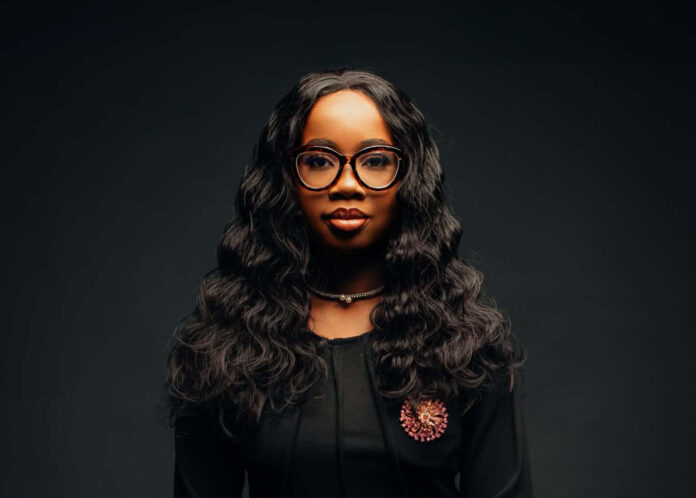
Emmanuella Chisom Ononenyi, Esq. is a Lawyer passionate about policies and the advancement of the rights, leadership, and empowerment of women and children around the world.


