

In Nigeria, criticism of the state is too often mistaken for hostility towards the country. Those in authority—and often their sympathisers—frequently frame public outrage as an attempt to “de-market” Nigeria rather than as a legitimate demand for accountability. This reflexive defensiveness once again surfaced following the road accident involving former world heavyweight boxing champion Anthony Joshua on the Lagos-Ibadan Expressway.
Reacting to public commentary on the incident, former presidential aide and ambassador-designate Reno Omokri criticised Nigerians on social media, accusing them of rushing to de-market the country by highlighting alleged failures in emergency response. He urged restraint, arguing that Nigerians should wait for verified details before making statements that could portray Nigeria as a “failed state.”
While calls for accuracy are valid, reducing the conversation to image management misses the central issue. The outrage surrounding the accident is not rooted in hatred for Nigeria, but in long-standing concerns about public safety, emergency preparedness, and the dignity of human life.
Currently in the United Kingdom, I have followed how foreign media analysed the incident. Their focus was not driven by Nigerian social media users, but by visible and troubling elements surrounding the crash. Chief among them was the apparent absence of an ambulance at the scene of a fatal accident on one of Nigeria’s busiest highways. There were also concerns about the manner in which the boxer was reportedly extricated from the wreckage, seemingly without trained emergency personnel or proper rescue equipment. To foreign observers, these shortcomings reinforced negative perceptions about Nigeria’s emergency response capacity.
More disturbing, however, was the public display of the corpses of the two victims who lost their lives in the accident. In the UK and other developed jurisdictions, strict protocols govern how accident victims are handled. Bodies are discreetly covered, placed in body bags, and shielded from public view—not only to preserve dignity, but also to protect the emotional well-being of grieving families.
When graphic images of mutilated bodies are openly displayed and circulated, one must ask how the families of the deceased are expected to cope when such scenes trend online. Raising concerns about this practice is not an attempt to embarrass the country; it is a call for basic standards of decency.
The truth is that Nigeria is hardly prepared for emergencies, and this reality predates the accident involving Anthony Joshua. What Nigerians witnessed at the crash scene was not an isolated incident, but a familiar pattern rooted in systemic failure.
Just last month, a video circulated showing the minister of interior, Olubunmi Tunji-Ojo, inspecting a Federal Fire Service station in Abuja. What he found was alarming. The facility was in a deplorable state, and the water tanker—meant to respond immediately to emergencies—was only half-filled. A visibly angry minister warned officers that emergency vehicles must always be ready for deployment, stressing that scrambling to fill tankers after receiving distress calls would inevitably cost lives.
That episode explains why Nigerians so often resort to self-help during emergencies. People intervene not because they are reckless, but because experience has taught them that waiting for emergency responders can be fatal. Delayed response times by fire, ambulance, and rescue services have conditioned citizens to act first and hope for professional help later.
I recall an incident in UK last month that illustrates the importance of professional emergency response. After a storm, a heavy tree branch fell across the road, blocking nearly half of it. No one attempted to move it. Residents reported the incident to the authorities, who responded promptly and removed the obstruction.
Crucially, the response went beyond clearing the road. Officials assessed why the branch fell, examined its position, and determined whether other branches posed similar risks that required urgent pruning. Emergencies are not only about speed; they require expert judgment, risk assessment, and preventive action.
There are certain tasks that only trained professionals should handle. Not everyone is equipped to rescue accident victims safely. Improper lifting or crude rescue methods can worsen injuries, cause permanent damage, or even lead to death. Good intentions alone are not enough in emergency situations—expertise matters.
This same reality played out in the aftermath of Anthony Joshua’s accident. Ordinary Nigerians stepped in, not out of a desire to de-market the country, but out of desperation in the absence of a dependable emergency response system. Citizens should not be forced into dangerous interventions because institutions have failed.
Beyond institutional failure, there is also an urgent need for public reorientation. The federal government, through the National Orientation Agency, must sensitise Nigerians on the dangers and insensitivity of taking and circulating gory images at accident scenes. There should be serious consequences for such actions in the future.
The widespread circulation of photographs and videos showing the corpses of the two men who died in the accident was deeply troubling. Such images are not only undignified; they inflict additional trauma on grieving families and undermine basic standards of human decency. In incidents that attract international media attention, the damage is even more profound, as these images travel far beyond Nigeria’s borders within minutes.
Public education on ethical conduct at accident scenes is long overdue. Citizens must be encouraged to prioritise saving lives, contacting emergency services, and preserving the dignity of victims—rather than recording distressing content for social media engagement. Other countries enforce strict norms around this behaviour, and Nigeria should not be an exception.
Even in the United Kingdom—a country many Nigerians migrate to in search of better welfare systems—citizens routinely criticise their government, the police, and other essential services. Such criticism is not treated as sabotage or disloyalty; it is recognised as a necessary pillar of democratic accountability. Institutions improve because citizens are encouraged to question failures and demand better outcomes.
Against this backdrop, it is unhelpful for Reno Omokri to brand genuine critics as bad Nigerians or dismiss them as disgruntled election losers who will “see nothing good” in the administration of Bola Tinubu. Such framing shifts attention away from the substance of public concerns and reduces governance failures to partisan talking points.
It is also worth recalling that Mr. Omokri, alongside Daniel Bwala, was once among the most vocal critics of the administrations of the late Muhammadu Buhari and Bola Tinubu. At the time, those criticisms were framed as principled interventions in the public interest. That such critiques have since given way to glowing praise—followed by government appointments—has understandably fuelled public scepticism.
Criticism does not become illegitimate because political alignments change. If accountability was justified yesterday, it remains justified today.
Labeling legitimate concerns as “de-marketing Nigeria” is therefore both unfair and counterproductive. No country improves by silencing its citizens or treating outrage as disloyalty. Nations earn respect by confronting their shortcomings honestly and committing to reform.
Patriotism is not blind defence of the state. It is the willingness to demand better systems, stronger institutions, and greater respect for human life. If Nigeria truly wants to protect its image, it must first fix the realities that continue to damage it.
Criticism is not Nigeria’s enemy. Complacency is. There are important lessons for governments at all levels to learn from this unfortunate incident. I wish Anthony Joshua a full recovery, and may God grant the families of the departed the fortitude to bear their irreparable loss.
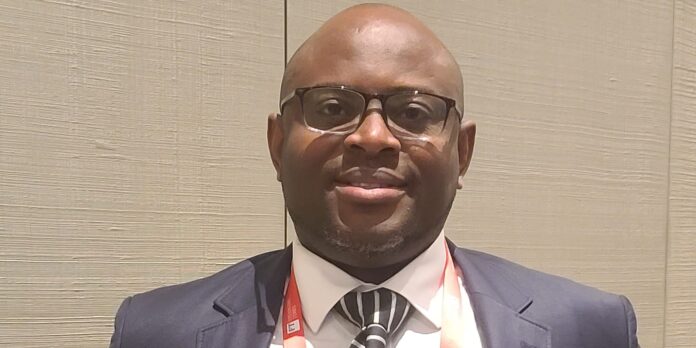
Temidayo Akinsuyi, former group politics editor of Daily Independent, writes from the United Kingdom. He can be reached at shabydayo@gmail.com


