

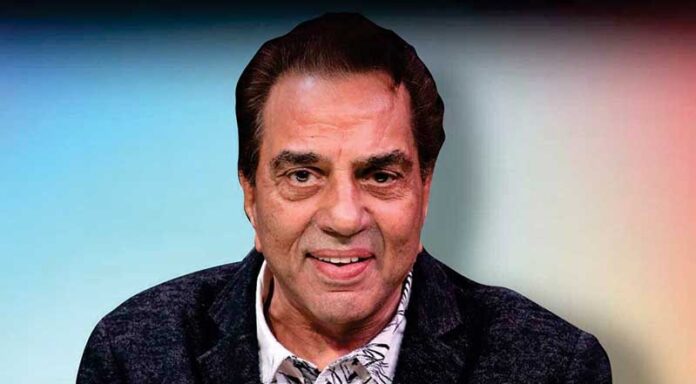
We rarely pause to reflect on how deeply we can be connected to people we have never met, how a familiar face on a screen, a name whispered in a childhood memory, or the echo of a film song can bind us across cultures and continents. This truth struck me with unexpected force the moment I stumbled upon the headline announcing the death of the legendary Indian actor Dharmendra at the age of 89. It is remarkable how the mind instantly summons affection, shock, even grief for someone it only knows through creativity, imagination, and the intimate space of memory. The human capacity for emotional attachment, as philosopher Martha Nussbaum once wrote, often forms “not from proximity, but from the shared vulnerability of stories.”
I have never been to India, nor have I ever seen Dharmendra in person, yet his death stirred something familiar and tender: an echo of the countless Indian films that shaped the atmosphere of our growing years. News reports painted a portrait worthy of the legend: a man whose career spanned six decades and more than 300 films, who embodied romance, comedy, action, and drama with effortless grace. Dharmendra Krishan Deol, born on December 8, 1935, rose from humble beginnings in Punjab to become an icon celebrated for his versatility, charisma, and the disarming charm that earned him the title of Bollywood’s original He-Man. His performances in Sholay, Phool Aur Patthar, Mera Gaon Mera Desh, and Chupke Chupke cemented him as one of India’s most beloved stars. Prime Minister Narendra Modi captured the national sentiment when he described Dharmendra’s passing as “the end of an era.” His life, crowned with honours such as the Filmfare Lifetime Achievement Award and the Padma Bhushan, reads almost like a script from the unforgettable films he gave the world.
Growing up in the North, Indian films were part of the emotional fabric of our homes. Before American entertainment ever found its way into our evenings, Indian cinema reigned. Three-hour epics that stretched across fasting days, quiet nights, hair-plaiting sessions, family gatherings, and moments of ordinary rest. The films weren’t subtitled back then, yet we understood everything through body language, music, and the kind of storytelling that transcends words. A household owning a TV and a video player was a symbol of privilege, and the video cassette business was among the most booming ventures of the time. We watched these films so intensely that even their tricks crafted long before CGI and modern effects, felt real enough to believe.
Relatives who had lived in Kano before returning to Niger became our interpreters, translating Indian languages and dialogues, and nurturing our growing fascination. They narrated real-life stories of Indian actors, transforming them into near-mythical figures in our minds. Indian movies taught us love, loyalty, friendship, sacrifice, betrayal, and redemption with a depth that could make anyone cry. They offered that unique Indian blend of drama, music, and dance. Rare was a film without emotional songs, colourful choreography, comedy, and action wrapped in imaginative fiction that felt almost believable.
As children, we thought all Indians were beautiful and handsome. How could we not, when the screens overflowed with flawless faces, elegant clothes, and irresistible charm? Later we learned that the industry was, for a long time, dominated by children of influential families, drawn by the promise of fame and status. Films were India’s most powerful cultural export, shaping global perceptions far before their athletes, tech innovators, or industrial giants gained prominence. Even the humble keke napep that now throngs Nigerian streets once felt like an exotic machine seen only in Indian movies. But what stayed with us most was the tenderness, the soft glow of love songs whose words we didn’t understand, but whose melodies touched us deeply.
Bollywood’s influence reached far beyond screens and emotions. For decades, it has been one of India’s most powerful economic engines, contributing billions of dollars, employing millions, and projecting India’s cultural image across the globe. Even before Nollywood and Kannywood emerged, Bollywood had already secured a formidable global presence, especially among diaspora populations. And despite the rapid growth of Nigerian film industries, Bollywood’s revenue and reach remain largely unaffected, strengthened by its storytelling excellence and high production values. Scholars of cultural studies often argue that cinema is a tool of “soft power,” and Bollywood stands as one of India’s strongest instruments of global cultural diplomacy.
India’s economy, however, is much larger than its film industry alone. It draws revenue from income taxes, GST, corporate levies, customs, excise duties, public sector profits, RBI transfers, and vast service sectors such as railways and postal operations. Yet, one of the most striking modern trends is the rise of India as a hub for medical and educational tourism. Nigerian celebrities and ordinary citizens alike flock to India for world-class healthcare that is both affordable and technologically advanced. Hospitals such as Apollo, Fortis, and Narayana Health are global leaders in specialized care. By 2029, India’s medical tourism industry is projected to reach over $14 billion, with Nigerians contributing significantly to that growth. India has also become a preferred destination for Nigerian students seeking quality, affordable education.
Bollywood’s influence has also left a permanent imprint on Nollywood and Kannywood. From storytelling formats to cinematography, from themes of love and family to musical sequences, Indian films provided early blueprints for Nigerian filmmakers. This inspiration has enriched local creativity, though some critics argue that it sometimes dilutes originality or overshadows indigenous narratives. Cultural exchange, after all, is rarely a one-sided blessing. As cultural theorist Stuart Hall observed, identity in a globalized world is shaped through “a complicated, ongoing process of negotiation.” Indian cinema influenced Nigerian viewers’ ideas of love, family, sacrifice, and morality, sometimes reinforcing conservative values, other times expanding imagination and artistic aspiration.
In the end, the passing of Dharmendra reminds us of a profound truth: we form bonds far beyond physical contact or shared geography. A story, a song, a scene, or even a single memory can stay with us for decades, rooting itself so deeply that the loss of its creator feels personal. Dharmendra never knew of my existence, yet his art shaped a part of my childhood, touched my imagination, and contributed to the emotional geography of my upbringing. That is the magic of art. It builds bridges where none exist and forges connections across borders, cultures, languages, and time.
Adieu, Dharmendra. Your world never reached mine physically, but your light travelled far enough to touch it.
Bagudu can be reached at bagudumohammed15197@gmail.com or on 0703 494 3575.


