

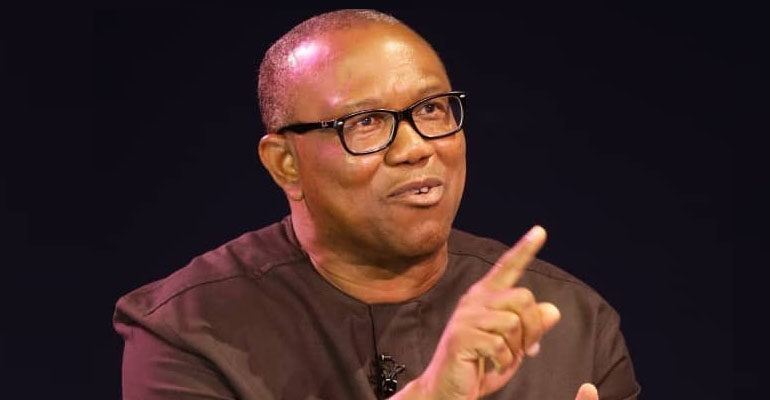
The African Democratic Congress (ADC) is standing at a critical crossroads, one that may ultimately determine whether it evolves into a formidable national force or fades into political obscurity. At the heart of this moment is a single, undeniable reality: the party’s current relevance is inextricably tied to Peter Obi. Strip away sentiment, and what remains is a hard political truth: ADC, as presently constituted, does not yet possess the institutional strength to survive the exit of its most valuable political asset.
Recent political history offers a clear and sobering lesson. The trajectory of the Labour Party (LP) in the 2023 general elections was nothing short of extraordinary. It transformed from a relatively obscure platform into a national movement, largely on the back of Obi’s candidacy. His appeal transcended traditional political divides, cutting across ethnic, religious, and generational lines. For a moment, LP looked like a genuine disruptor in Nigeria’s entrenched two-party system.
Yet, just as quickly as it rose, LP began to unravel. Internal crises, leadership disputes, and allegations of external interference combined to weaken its structure. The same party that once energized millions of Nigerians became fragmented and directionless. The difference? Obi was no longer at the center of its operations. Without him, LP lost not just its figurehead, but its unifying force.
Predicatively, ADC now risks repeating this exact pattern going the inanities that have come to characterize the party. In fact, Peter Obi himself has not been ambiguous about his position. In a candid interview on Arise News, he openly warned that he would not hesitate to leave ADC if its presidential primary process is compromised. His reasoning is consistent with the principles he has long professed: a firm rejection of transactional politics and a refusal to engage in systems that reward money over merit.
His words were not couched in diplomacy. “If I have to do it 20 times, I will do it exactly, leave the ADC. I will not be part of compromise.” This is not political posturing; it is a pattern. Obi has built his political identity on walking away from systems he deems flawed. He left APGA over internal disagreements he considered unjust. He exited the PDP when he concluded its processes were compromised. He moved to the Labour Party in search of a fairer platform and eventually left when that platform itself became unstable.
What this demonstrates is not inconsistency, as critics might argue, but a rigid adherence to personal standards. Obi is not a politician who adapts to systems; he abandons them when they fail his integrity test. That makes him both an asset and a risk for any political party. His presence brings credibility, but his standards demand discipline.
For ADC, this creates a high-stakes scenario. The party cannot afford to treat its upcoming presidential primaries as business as usual. In many Nigerian parties, primaries are often reduced to financial contests, where delegate votes are influenced by monetary incentives. Obi has made it clear that he will not participate in such a process. If ADC fails to ensure transparency and fairness, it will not merely lose a candidate, it will lose its central pillar.
Beyond issues of principle, there is the matter of political capital. Obi’s influence is not theoretical; it is measurable. His entry into any political platform has consistently triggered a surge in public interest, media attention, and grassroots mobilization. His supporters, often referred to as a movement rather than a traditional political base, bring energy, visibility, and legitimacy.
This phenomenon has played out repeatedly. Under his leadership, APGA gained national recognition beyond its regional stronghold. Within the PDP, he became a prominent figure with significant influence. His move to the Labour Party turned it into a nationwide force almost overnight. In each case, the pattern remained consistent: Obi’s presence elevated the party; his departure left a vacuum.
That vacuum is not easily filled. Political parties in Nigeria are often personality-driven, and few figures command the level of trust and enthusiasm that Obi has cultivated. His appeal lies not just in his message, but in the perception that he represents a break from the status quo. For many Nigerians, especially younger voters, he symbolizes accountability, prudence, and a different style of leadership.
ADC must understand that this kind of political capital cannot be manufactured. It cannot be replicated through slogans or short-term strategies. It is built over time, through consistency and public perception. Losing Obi would mean losing access to this entire ecosystem of support.
The Labour Party’s experience underscores another critical point: vulnerability to internal and external destabilization. Obi himself alleged that the ruling government played a role in exacerbating LP’s leadership crisis, pointing to delays in the enforcement of a Supreme Court judgment. Whether one agrees with this assessment or not, the broader implication is clear, political parties in Nigeria operate in a highly competitive and often hostile environment.
ADC must therefore not only ensure internal cohesion but also build resilience against external pressures. A divided party is an easy target. A compromised primary process could trigger internal disputes, legal battles, and factionalization, all of which would weaken the party’s ability to compete effectively.
At present, ADC does not have the structural depth to absorb such shocks. Its organizational framework, grassroots presence, and national spread are still developing. Obi’s presence helps to mask these weaknesses by providing a rallying point. Remove that rallying point, and the underlying fragility becomes exposed. This is why the stakes are so high.
ADC must recognize that protecting the integrity of its processes is not just about optics, it is about survival. A transparent and credible primary election would not only retain Obi but also strengthen the party’s reputation. It would signal to Nigerians that ADC is serious about doing politics differently.
On the other hand, a flawed process would confirm the worst suspicions about Nigerian political parties, that they are incapable of reform and remain trapped in old habits. In such a scenario, Obi’s exit would be inevitable, and ADC would be left to grapple with the consequences.
There is also a broader implication for Nigeria’s democracy. The emergence of credible alternatives to the dominant parties is essential for a healthy political system. Obi’s movement has shown that Nigerians are willing to rally behind candidates who offer a different vision. ADC has an opportunity to harness that momentum and position itself as a genuine alternative. But that opportunity is fragile.
It depends on choices, specifically, the choice to prioritize integrity over expediency, transparency over manipulation, and long-term credibility over short-term gains.
The warning signs are already visible. Obi has drawn a clear line. He has done so publicly and unequivocally. There is no room for misinterpretation. If ADC crosses that line, it will lose him. And if it loses him, it risks losing everything it has worked to build.
The lesson from the Labour Party is not just about rise and fall, it is about the consequences of failing to protect what works. Obi was the engine that drove LP’s success. When that engine was removed, the vehicle stalled. ADC must not make the same mistake.
The path forward is straightforward, even if it is not easy: conduct a credible primary, maintain internal discipline, and resist the temptations of transactional politics. In doing so, the party would not only retain Obi but also lay the foundation for sustainable growth Ignore this, and the outcome is predictable. In Nigerian politics, history has a way of repeating itself, especially when its lessons are ignored.


