

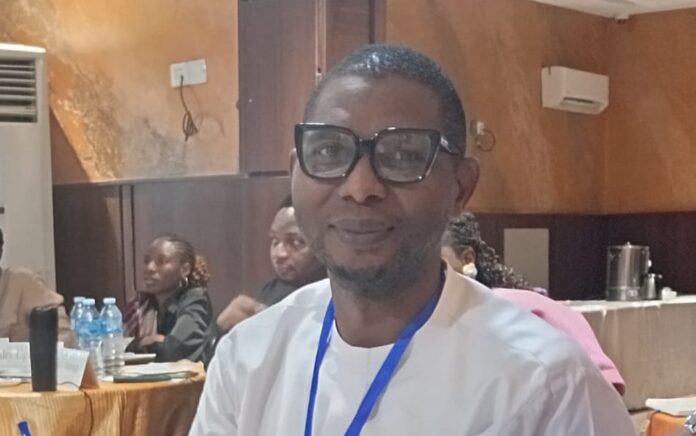
Rights advocate and Executive Director, Centre for Human Rights Advocacy and Wholesome Society (CEHRAWS), Comrade Chuka Okoye has emphasized the need for Igbos to resist the dangerous inclination to define “Igboness” through the lens of political allegiance.
In recent months, Nigeria’s political landscape has witnessed the emergence of the “City Boys Movement,” a pro-government alignment visibly supported in the South-East by prominent businessmen such as Obinna Iyiegbu, known as Obi Cubana.
Their involvement has not merely sparked debate, but also provoked outrage, and even led to the rise of a counter-current known as the “Village Boys Movement.”
Considering the declaration of Mr. Peter Obi, a popular figure from the Southeast region for the Presidential race, and his bright chances at becoming the first Nigerian President of Igbo extraction, many have branded the Igbo billionaires involved in the City Boys Movement as saboteurs.
But in an exclusive chat with The News Chronicle, the CEHRAWS Executive Director, in an interview with a TNC correspondent, noted that every Nigerian citizen, including every Igbo man, possesses the constitutional right to political association.
He emphasized that supporting a government, opposing it, or remaining neutral is not an act of betrayal but rather the very essence of democracy.
“When an Igbo billionaire chooses to align with the ruling government, it may conflict with prevailing sentiments within the region, but disagreement should not be mistaken for disloyalty.
“No individual becomes less Igbo because he adopts a different political strategy. Identity is not validated by conformity, nor is it diminished by dissent,” he noted.
Okoye observed that the reasoning expressed by some of the businessmen suggests a pragmatic worldview, one in which influence is often better exercised from within the corridors of power than from the outside.
This perspective, he acknowledged, is neither novel nor peculiar, but is deeply rooted in political history, adding that in a system where policies can shape fortunes overnight, neutrality is often not a viable option but a costly risk.
He stressed that, because political power is being deployed to influence every other aspect of society in Nigeria, it has become a survival strategy for business owners to identify and endorse political affiliations they deem viable.
“In Nigeria, power extends far beyond governance; it permeates economic survival. Government decisions influence taxation, regulation, business operations, and access to opportunities.
A single adverse policy can dismantle years of hard work and investment. In such an environment, aligning with those in power may not necessarily signify loyalty, but rather a calculated effort at self-preservation.
“This raises a critical, often uncomfortable possibility: what if these actions are driven not solely by choice, but by pressure? What if behind public endorsements lie private realities: negotiations, constraints, and risks that remain invisible to the ordinary observer? It is easy to judge from a distance, but far more difficult to understand the weight of decisions made under circumstances we may never fully comprehend.
“The frustration among many Igbo people is neither baseless nor surprising. Historical grievances, perceptions of marginalisation, and longstanding political exclusion have created a fertile ground for suspicion and emotional reactions.
However, the question remains whether such frustration should be directed at individuals making strategic personal decisions, or at the broader structures that necessitate such decisions in the first place,” he observed.
Okoye warned against the hasty branding of the involvement of the Igbo billionaires in the City Boys Movement as betrayal, concluding that it may reflect a complex interplay of personal choice, strategic positioning, and systemic pressure.
“While disagreement with their actions is both natural and legitimate,” he noted, “it should not devolve into condemnation or vilification.
“In the intricate and often unforgiving terrain of Nigerian politics, today’s critic may well become tomorrow’s pragmatist. And perhaps, with time, we will come to appreciate that in such a system, power is not merely influential. It is, more often than not, indispensable.”


