

Nigeria’s journey to 66 is a story of diversity, endurance and nation-building. From the amalgamation of 1914 to independence in 1960, and through the difficult years of military intervention, civil war and constitutional transitions, Nigeria has remained a country of remarkable complexity. Its hundreds of ethnic groups, languages, cultures and religious traditions have made nation-building both challenging and uniquely Nigerian. The evolution from three regions at independence to today’s 36 states, Federal Capital Territory and 774 local governments reflects decades of attempts to manage this diversity within one federation.
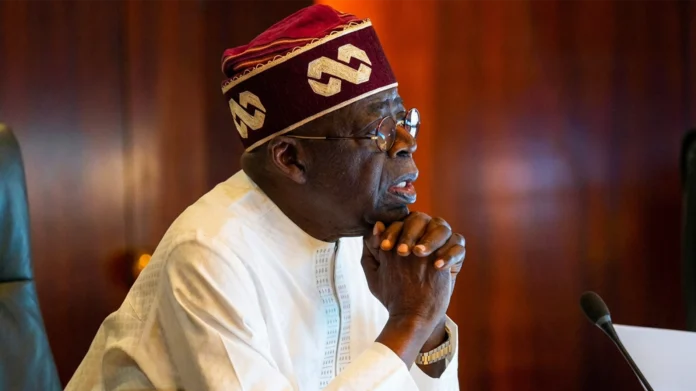
Long before he became President of Nigeria, Bola Ahmed Tinubu was among the political figures who confronted military rule and participated in the struggle that eventually restored democratic governance. Following the annulment of the June 12, 1993 presidential election and the repression that followed, Tinubu was detained, became involved in the National Democratic Coalition (NADECO), and subsequently lived in exile for several years while the pro-democracy struggle continued.
Contemporary accounts from the State House record that he and other activists in exile campaigned for the restoration of democratic rule, while the wider struggle exposed many Nigerians to detention, persecution and exile. His sacrifice should therefore be understood within the collective history of Nigeria’s pro-democracy movement not as a substitute for assessing his record in office, but as an important part of the democratic journey that produced the political system under which Nigerians exercise their rights today.
Compared with Sir Abubakar Tafawa Balewa, whose leadership belonged to the formative years of independence and parliamentary democracy, Tinubu governs a fundamentally different Nigeria. Balewa’s era was concerned with establishing the institutions of a newly independent state, while today’s challenge is to strengthen institutions that have survived repeated political transitions. Tinubu’s administration has framed its economic programme around structural reforms intended to create greater fiscal stability, while Nigeria’s 66-year experience demonstrates that every generation inherits unfinished national tasks. The contrast is therefore not simply between two leaders, but between two very different stages of nation-building.
The era of General Yakubu Gowon reminds Nigerians of the central importance of national unity. Gowon’s administration was dominated by the civil war and the subsequent task of reconstruction and reconciliation. Tinubu inherited no civil war, but he inherited a country confronting insecurity, economic pressures, regional concerns and social divisions. His administration has consequently placed emphasis on national integration alongside economic reform. The lesson from Gowon’s period is that economic development cannot be separated completely from the preservation of national cohesion; a diverse country must continuously find reasons for its citizens to remain committed to one national project.
General Murtala Mohammed represented a period of decisive state action, administrative restructuring and an assertive national outlook. His government reorganised the federation and created new states, helping shape the federal structure that Nigerians know today. Tinubu’s approach similarly places considerable emphasis on decisions that his administration regards as necessary even when they are politically difficult. The removal of the petrol subsidy and the reform of the foreign-exchange regime are examples. The World Bank has described the post-2023 reforms as far-reaching measures aimed at restoring macroeconomic stability, while also acknowledging their substantial short-term cost to households.
With General Olusegun Obasanjo, Nigeria experienced two very different reform periods: first as a military ruler and later as an elected civilian president. His civilian administration pursued banking-sector consolidation, telecommunications expansion, debt relief and institutional reforms. Tinubu’s economic programme similarly seeks to address structural weaknesses rather than simply manage them from year to year. The important difference is that Tinubu is operating within an economy facing a much more constrained fiscal environment and a population demanding faster relief from the consequences of reform. The comparison shows that major reforms in Nigeria have rarely been painless, but their long-term value depends heavily on implementation and how their benefits reach ordinary citizens.
The Shehu Shagari era provides another important comparison because it demonstrates the difficulty of governing an oil-dependent economy when public expectations rise rapidly. Shagari’s government pursued agricultural and infrastructural initiatives, including the Green Revolution, but the collapse in oil prices and fiscal pressures contributed to severe economic difficulties before the 1983 military takeover. Tinubu’s decision to reduce the fiscal burden associated with petrol subsidy and reform the exchange-rate system can therefore be viewed within Nigeria’s longer struggle to manage oil dependence. The World Bank estimates that petrol subsidies cost Nigeria more than ₦8.6 trillion between 2019 and 2022 alone.
The General Muhammadu Buhari military era also offers a useful contrast. That government emphasised discipline, anti-corruption and national restructuring, but operated under military rule and therefore outside the democratic framework Nigerians now defend. Tinubu’s administration, by contrast, must pursue difficult reforms through elected institutions, constitutional processes and political negotiation. That distinction matters because democratic legitimacy requires not only making decisions but also defending them before citizens, legislators, courts, civil society and the electorate. Nigeria’s return to civilian rule in 1999 remains the longest continuous democratic period in its constitutional history.
The Ibrahim Babangida years demonstrate how economic reforms can become inseparable from political consequences. His administration introduced the Structural Adjustment Programme, liberalisation measures and major institutional changes, but the political transition ultimately became one of the most controversial chapters in Nigeria’s history. Tinubu’s reforms similarly demonstrate that economic policy is never merely technical: changes in fuel pricing, currency management, taxation and public finance immediately affect households and businesses. The difference today is that the reforms are being undertaken within an elected constitutional order where citizens can scrutinise, contest and ultimately judge their consequences.
The experience of General Sani Abacha presents perhaps the clearest reminder of what Nigerians should never take for granted: democratic freedom. The repression of political opposition during that period, followed by the transition initiated under General Abdulsalami Abubakar, ultimately preceded the restoration of civilian rule in 1999. Tinubu was among the political figures associated with the pro-democracy struggle and later became a beneficiary of the democratic order that struggle helped restore. That history strengthens the argument that the defence of democratic institutions must remain greater than the interests of any individual political party or administration.
The return to civilian government under President Umaru Musa Yar’Adua placed emphasis on the rule of law, electoral reform and the Niger Delta peace process, while his administration also inherited the consequences of years of instability. Tinubu’s administration has similarly presented institutional stability as a prerequisite for economic progress. One important difference is that today’s government is pursuing reforms at a time when Nigeria has a larger population, more complex economic expectations and significantly greater pressure for social protection. The World Bank’s 2026 assessment says Nigeria has made progress in macroeconomic stability, but also stresses that household incomes have not fully recovered and poverty remains high.
Under President Goodluck Jonathan, Nigeria witnessed important developments in power-sector reform, telecommunications, agriculture and electoral administration, alongside the 2015 democratic transfer of power from one governing party to another. Tinubu’s administration is building on a democratic culture in which political power can change hands through elections rather than military intervention. His reforms, particularly in energy and foreign exchange, represent another attempt to confront structural economic problems that previous administrations also recognised. The broader lesson from Jonathan’s period is that reforms should not be judged only by announcements; institutional continuity and measurable outcomes matter.
President Muhammadu Buhari’s elected administration from 2015 to 2023 pursued infrastructure development, agricultural programmes, anti-corruption measures and efforts to diversify the economy away from excessive dependence on oil. Tinubu inherited many of the same structural challenges, but chose a more abrupt reform path on fuel subsidy and foreign-exchange policy. The World Bank has noted that these measures created significant short-term pressures while also rebuilding fiscal space and improving macroeconomic indicators. This comparison underlines an important point: Nigeria’s economic problems did not begin in 2023, and no administration can reasonably be expected to resolve every structural weakness within a single term.
The question of Nigeria’s governors as pillars of the federation therefore deserves serious attention. Governors are constitutionally central actors in Nigeria’s federal system and are members of the Council of State alongside the President and other senior constitutional figures. Since subsidy reform, states have generally received substantially larger Federation Account allocations, although the exact amount varies by state and month. The official FAAC records maintained by the Office of the Accountant-General and reported through the National Bureau of Statistics provide the appropriate basis for examining those changes. Governors should therefore have the courage to publicly explain, with figures and accountability, what additional resources their states have received, how those resources compare with previous periods, and how much has been devoted to salaries, infrastructure, healthcare, education and social protection. That is not merely a defence of the Federal Government; it is an obligation of transparent federalism.
Nigeria @66 should be a celebration of survival as much as a debate about shortcomings. We have survived colonial rule, military coups, a civil war, economic crises, political transitions and repeated periods of national uncertainty, yet Nigeria remains one country, one federation and one of Africa’s most consequential democracies. The Tinubu era is now another chapter in that much longer national story one defined by difficult reforms, economic pressures, institutional debates and the continuing search for prosperity.
Nigerians can acknowledge the hardship that accompanies reform without denying the progress that has been made, just as they can celebrate the nation without pretending its challenges have disappeared. At 66, Nigeria has earned the right to beat the drums, raise the national flag and celebrate its resilience while demanding that every government, federal and state alike, convert national resources into tangible improvements in the lives of its citizens.
As Nigeria marks 66 years of independence, the question of continuity beyond 2027 must also be viewed through the history of political relationships that have shaped our democracy. Asiwaju Bola Ahmed Tinubu’s political journey has been marked by moments when he extended his political platform and influence beyond his immediate political circle. In 2007, he backed Atiku Abubakar; in 2011, he supported Mallam Nuhu Ribadu, who today serves as National Security Adviser; and in 2015 and 2019, he stood firmly with the late President Muhammadu Buhari.
These were not merely electoral moments but part of a political history that demonstrated the importance of alliances, accommodation and the willingness to work across political and regional boundaries. In this context, continuity beyond 2027 can be presented as part of a wider conversation about political reciprocity, unfinished reforms and the responsibility of citizens to consider the direction in which the country is moving.
Sixty years after the death of Sir Abubakar Tafawa Balewa, Nigeria must also reflect on the values that defined one of the most important figures in the country’s early political history. The late Prime Minister represented a period when national leadership required the delicate management of a country characterised by enormous ethnic, religious and regional diversity. His legacy reminds us that Nigeria has always required leaders capable of accommodating differences and building bridges across communities. That same principle remains relevant today.
President Tinubu has governed a country whose diversity demands continuous accommodation, consultation and fairness, and his administration’s reform agenda has unfolded within that complicated national reality. As Nigeria looks beyond 2027, the broader challenge is therefore not merely about political succession, but about preserving national cohesion, sustaining democratic institutions and ensuring that every region continues to see itself as an important stakeholder in the Nigerian project.
To crown it all, As Nigeria celebrates 66 years of independence, let the Green-White-Green fly higher than our differences, higher than our politics and higher than every challenge confronting our nation. Let the green remind us of the richness of our land, the white of the peace and unity we must continue to pursue, and the flag itself of the indivisible nation we all call home.
From the North to the South, from the East to the West, our diversity remains our strength and our shared destiny remains Nigeria. One Nation, One People, One Destiny. Nigeria First. Nigeria Always. Renewed Hope, United Nigeria.
Danaudi, Writes From Bauchi Via danaudicomrade@gmail.com


