

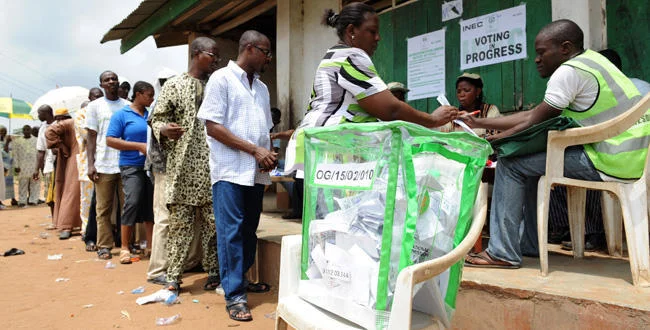
For decades, the balance of power in Kwara state has tilted in favor of certain regions, leaving others, particularly Kwara North, feeling politically marginalized. The question of who should produce the next governor of Kwara State should no longer be a matter of political rotation; rather, it should be seen as a test of fairness, inclusion, and long-term stability. As the 2027 governorship race approaches, there is a compelling moral, political, and strategic case for Kwara North to produce the next governor.
First, equity and justice demand it. Kwara State is broadly divided into three senatorial districts: Kwara Central, Kwara South, and Kwara North. Since the creation of the state in 1967, Kwara North has had the least opportunity to hold the governorship. Kwara Central, largely dominated by Ilorin Emirate politics, has produced the majority of governors, while Kwara South has also had its fair share of representation. In contrast, Kwara North has largely remained on the sidelines of executive power. This imbalance undermines the principle of fairness in a plural society. For a state that prides itself on unity and harmony, rotating power to Kwara North would signal a commitment to justice and inclusiveness.
Beyond fairness, there is also the issue of political stability. When certain regions feel perpetually excluded from power, it breeds resentment, apathy, and sometimes outright political rebellion. Kwara has historically enjoyed relative peace compared to other states in Nigeria, and one of the reasons for this is its unwritten understanding of power-sharing. However, this delicate balance risks being disrupted if Kwara North continues to be overlooked. Allowing the district to produce the next governor would reinforce a sense of belonging among its people and strengthen the bonds that hold the state together.
Another critical argument is the need for broader development. Kwara North, comprising local government areas such as Baruten, Kaiama, and Patigi, remains one of the most underdeveloped parts of the state. Infrastructure deficits, limited access to quality education and healthcare, and economic stagnation are more pronounced in this region than in others. While governance should ideally be impartial and development evenly distributed, the reality in Nigerian politics is that regions with greater political power often attract more attention and resources.
Furthermore, Kwara North is not lacking in capable and competent individuals who can lead the state effectively. Over the years, the district has produced seasoned administrators, technocrats, and politicians who have excelled in various capacities at both state and national levels. The argument that leadership should be based solely on competence rather than zoning is often raised in opposition to rotational arrangements. However, this argument falls flat when there is clear evidence that competence exists across all regions. The real issue, therefore, is not the absence of qualified candidates from Kwara North but the lack of opportunity for them to lead.
It is also important to consider the political dynamics within the state. The current political structure in Kwara State has been significantly shaped and perpetuated by the influence of dominant political figures. While these leaders have contributed to the state’s political evolution, the concentration of power within a particular axis has often sidelined other regions. For democracy to thrive, power must not only change hands but also rotate across different segments of society. This ensures that governance reflects the diverse interests within the state.
Moreover, giving Kwara North the governorship ticket could have strategic electoral benefits for political parties. In an era where voter awareness and demand for equity are increasing, parties that embrace inclusiveness are more likely to gain widespread support. A candidate from Kwara North could galvanize voters from the district, who may feel more motivated to participate in the electoral process when they see one of their own on the ballot. At the same time, such a move could appeal to voters in other districts who value fairness and are willing to support a just cause.
Critics may argue that zoning the governorship to Kwara North could limit the choices available to voters and undermine meritocracy. However, zoning and merit are not mutually exclusive. Rather, zoning can be seen as a framework that ensures equitable access to leadership positions, while still allowing merit to be the deciding factor. In other words, political parties can zone the governorship to Kwara North while still selecting the most competent candidate from the district through transparent and democratic processes.
Additionally, the call for Kwara North to produce the next governor aligns with broader national conversations about equity and federal character in Nigeria. Just as the country seeks to balance power among its diverse regions, states must also reflect this principle internally. Kwara State has an opportunity to set an example by demonstrating that fairness is not just a national ideal but a local practice.
Another point worth noting is the symbolic importance of such a decision. Politics is not only about policies and governance; it is also about perception and identity. For the people of Kwara North, producing the next governor would be a powerful affirmation of their place within the state. It would send a message that they are not second-class citizens but equal stakeholders in the Kwara project. This sense of inclusion can have far-reaching effects, from increased civic engagement to stronger loyalty to the state.
Essentially, the case for Kwara North to produce the next governor of Kwara State is both compelling and timely. It is rooted in principles of equity, justice, and inclusiveness, and supported by considerations of political stability, development, and democratic growth. While competence and vision must remain central to leadership selection, these qualities are not exclusive to any one region. Kwara North has capable individuals who can lead the state effectively, and what they need is the opportunity to do so.
As Kwara looks to the future, embracing a rotational approach that gives Kwara North its due turn would not only correct historical imbalances but also lay the foundation for a more united and prosperous state.
Magaji <magaji778@gmail.com> writes from Abuja


