

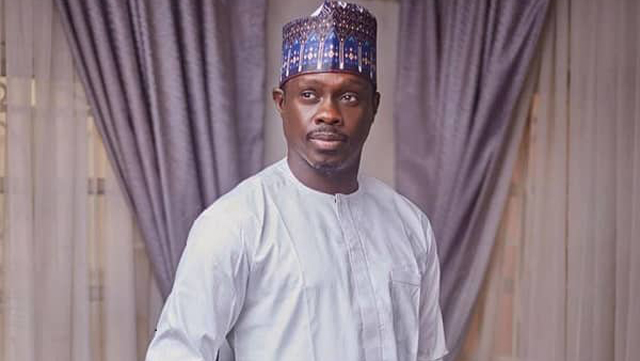
To imagine that Ali Nuhu, the towering icon of Kannywood could harbor a quiet anxiety beneath his calm, measured persona is to confront a profound truth: even legends are not immune to the tremors of doubt. Greatness, it seems, does not erase vulnerability; it merely conceals it behind applause, admiration, and the illusion of perfection. What appears from afar as an unshakable empire of fame may, on closer reflection, be a delicate balance between public adoration and private unease.
I once found myself asking, almost rhetorically, whether Kannywood itself revolves around Ali Nuhu. His presence feels omnipresent, almost indispensable, as though any film seeking legitimacy, visibility, or commercial success must, at some point, pass through him. He has played fathers, elders, lovers, and sages with an effortless fluidity, his ageless charm and “baby face” allowing him to transcend generational boundaries. Yet beyond the screen lies an even more compelling reputation: a man of restraint in an industry often defined by excess, a figure associated with discipline, modesty, and an almost deliberate avoidance of scandal. In a media ecosystem where controversy fuels relevance, his quiet consistency stands out as both rare and instructive.
And yet, as scholars of human behavior such as Erving Goffman would argue, every public figure performs a role not just on screen but in society, a careful curation of self designed to meet audience expectations. Goffman’s dramaturgical theory reminds us that the “front stage” of public life often conceals a “backstage” where uncertainties, fears, and contradictions reside.
Ali Nuhu’s recent confession, delivered in an interview with Chude Jideonwo, offers a rare backstage glimpse.
He spoke candidly about the backlash he received after a romantic scene with Rahama Sadau, a moment that, in many cinematic traditions, would pass without controversy, yet in his cultural context became a lightning rod for criticism. More striking was his reflection that even his earlier work with Jackie Appiah could be resurrected and weaponized against him, particularly in the realm of politics. In that single admission lies the weight of what communication scholars describe as the “persistence of digital identity”, the idea that past actions, once recorded, never truly disappear but instead linger, waiting to be reinterpreted under new moral or political lenses.
This moment is not surprising, yet it is deeply revealing. It exposes the enduring paradox within society, one that Leon Festinger might describe as cognitive dissonance. We celebrate artists, elevate them, invest in their talent, and depend on their creativity to shape our cultural imagination. Yet, at the same time, we hesitate to grant them moral legitimacy or leadership credibility. We consume their art passionately but judge their humanity harshly. We build them into icons, only to remind them, at critical moments, that they are unworthy of the very influence we bestowed upon them.
Who, then, truly made Ali Nuhu what he is? It is the collective will of the people, the audience that watched, admired, shared, and amplified his work. Without that patronage, his stardom would remain an unrealized possibility. Yet the same public that elevates him becomes the tribunal that scrutinizes him, embodying what social psychologists call “normative social influence,” in which communities enforce conformity by rewarding alignment and punishing deviation.
The irony deepens when we turn to politics. Figures like Muhammadu Buhari, like many politicians, have relied on entertainers to amplify their campaigns, to humanize their messages, and to connect with the masses. Music, film, and celebrity endorsement become tools of political persuasion. And yet, while politicians draw legitimacy from these creative forces, society often ranks them as morally superior to the very artists who helped construct their popularity. This hierarchy is less about evidence and more about perception, reflecting deeply embedded cultural narratives about respectability and power.
French sociologist Pierre Bourdieu would interpret this as a struggle over “symbolic capital”, the intangible value assigned to different professions and identities. In this hierarchy, political authority is often granted higher moral weight than artistic expression, even when both operate within the same social ecosystem of influence and persuasion.
Yet, it would be incomplete to absolve the entertainment industry entirely. There are moments when actors themselves contribute to the stereotypes that haunt their profession, through choices that prioritize spectacle over substance, or through personal lives that appear to contradict the values they portray on screen. This creates a paradox: individuals capable of embodying wisdom and moral clarity in film sometimes struggle to reflect the same coherence in their private lives. It is a tension between performance and authenticity, between narrative and reality.
Still, to dwell excessively on the fear of criticism is to misunderstand the nature of public life. Strength does not lie in achieving universal approval; that is an impossible standard, but in navigating disapproval with clarity and purpose. Even political figures such as Atiku Abubakar, Rabiu Kwankwaso, Peter Obi, and Nasir El-Rufai step into the arena not because they are flawless, but because they accept that imperfection is not disqualification. The real question, then, is not whether society will criticize, but whether individuals will allow that criticism to define the limits of their ambition.
And perhaps that is the quiet burden behind Ali Nuhu’s words: not the criticism itself, but the realization that admiration is conditional, that the same society that laughs, celebrates, and finds meaning in one’s work can, in another moment, draw sharp boundaries of acceptance. It is the uneasy awareness that influence does not always translate into trust, and that popularity does not guarantee legitimacy.
In the end, his story is less about a single actor and more about a society in negotiation with itself, caught between tradition and modernity, admiration and judgment, freedom and control. It is a reminder that behind every legend is not just a story of triumph, but also a silent dialogue with expectation, contradiction, and the enduring human desire to belong.
Bagudu can be reached via bagudumohammed15197@gmail.com or 07034943575.


