

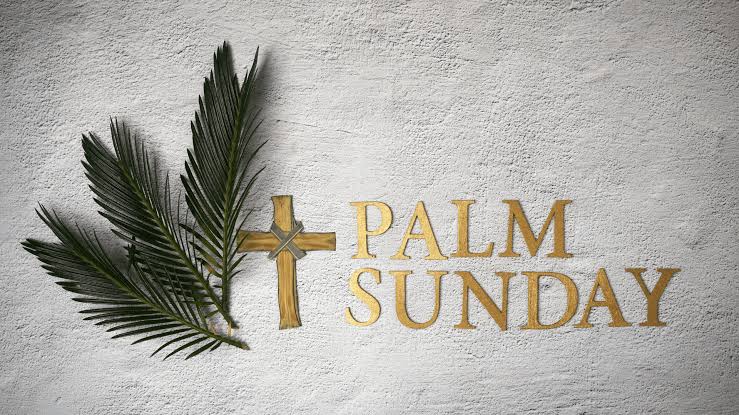
Palm Sunday is not just a date on the calendar. It is a scene, a tension, a beginning that carries its ending within it. The streets of Jerusalem are alive with expectation. The air hums with movement. People push, climb, lean forward, eager to see, to be seen, to touch what they hope will save them. The city is not quiet. It is urgent.
Jesus Christ walks in, not on a war horse, not with banners or armies. He comes on a donkey. Quiet. Deliberate. Almost unsettling in its simplicity. The crowd sees a king, yet this king does not match their imagination. He moves steadily through a tide of pressing bodies, ordinary and calm in a city that has already written its own story about who he should be.
Palm branches are cut and laid across the road. Clothes follow. Whatever they have, they put it down. It looks like honor. It sounds like belief. But beneath it all, there is desperation.
Hosanna.
Save us now.
Those words are not gentle. Not decorative. They are demand carried on the shoulders of hope. Fix this. Change this. Do something.
The crowd believes in him, but only in the shape they understand. They want a king who will take power, confront oppressors, overturn systems overnight. They are tired, and tired people do not wait for slow answers. But he does not come like that. No force. No spectacle. Just a donkey, moving quietly through streets already shouting for conquest. That choice says everything. It signals humility, patience, and peace in a world that expects violence. It fulfills prophecy written long before, words people knew but barely believed: the king would come gently. But gentleness is hard to recognize when all you crave is power.
The branches keep waving. The voices keep rising. The gap between expectation and reality widens. If the story ended there, it would be perfect. A crowd that understood. But it does not end there. A few days later, the voices will change. Not because he failed. Not because he betrayed. But because he refused to become what the crowd had already decided he should be. He does not seize power. He does not overturn the system overnight. He does not give them the ending they celebrated in advance. Slowly, almost imperceptibly, the shift begins.
Hope bends into confusion. Confusion hardens into disappointment. Disappointment finds its voice. The same mouths that shouted Hosanna will shout something else. Nothing about him changes. The change happens in the crowd.
It is easy to judge them until you recognize yourself in them: how quickly belief tightens when it comes with expectation, how easily devotion becomes conditional. Do this, and I will stay. Fix this, and I will believe. Show up the way I expect, and I will follow.
Palm Sunday does not argue. It reveals. And in the middle of it all, Jesus Christ keeps moving. Not toward a throne, but toward what he already knows is waiting. The noise does not distract him. The misunderstanding does not stop him. He walks in anyway. That is what carries weight. Not the branches. Not the shouting. The decision to keep moving, knowing exactly where the road leads.
Palm Sunday is not soft. It is not simply a celebration. It is the beginning of something costly. It looks like victory but is the road to sacrifice. It sounds like certainty but is full of misunderstanding. It exposes the human heart and asks a question that does not go away: what do you do when what you believed would happen does not happen, not later, but now? That was the demand in the street that day, and it is still the demand people carry, whether they voice it or not.
Fix this. Change this. Do something. There is nothing wrong with that cry. It is human. But Palm Sunday does not bend to it. It does not offer a quick answer. It does not follow the script the crowd has already written. It simply shows something harder: that it is possible to be close to something true, to speak all the right words, to be fully present, and still not understand what is right in front of you.
It is not just history. It is a mirror. It is a reflection of our own impatience, our assumptions, and our desire for immediate answers. It asks us if we can follow even when the path is unclear, even when it is quiet, even when it does not match the story we already imagined.
Palm Sunday is beautiful, but it is not soft. It is celebration wrapped around warning. It reminds us that noise is not the same as conviction, that hope can be demanding, and that courage is not measured by volume but by the willingness to keep moving forward, steadily, even when misunderstanding surrounds you.
It is the story of hope and expectation colliding. Of patience tested and courage revealed. Of faith stretched to its limits and yet not broken. And in that tension, Palm Sunday still speaks. It speaks to then and it speaks to now. It reminds us that real change rarely arrives the way crowds expect it, that transformation is often quiet, and that the path worth walking is never the one that satisfies immediate desire.
Stephanie Shaakaa
08034861434


