

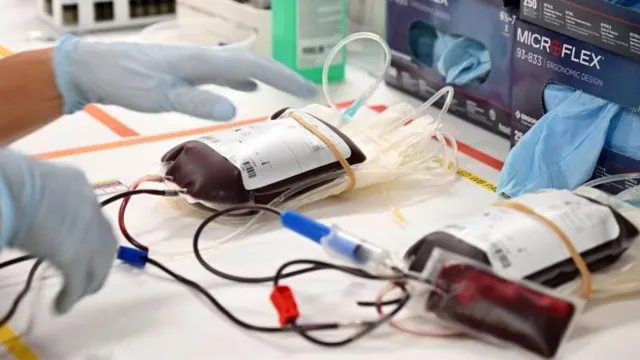
The leadership of Jehovah’s Witnesses has announced a change to its long-standing position on blood transfusion, allowing members to decide whether their own blood may be removed, stored, and returned during medical treatment.
The announcement was made through a video statement by Gerrit Lösch, a member of the group’s Governing Body.
“Each Christian must decide for himself how his own blood will be used in all medical and surgical care,” he said, adding that this includes “whether to allow his own blood to be removed, stored, and then given back to him.”
Jehovah’s Witnesses, a Christian-based religious movement known for its door-to-door evangelism, reports about 144,000 members in the United Kingdom and approximately nine million worldwide.
Under the updated position, members may now choose to undergo procedures involving their own blood, including pre-surgical storage for later use. However, the group maintains its prohibition on receiving blood from another person.
A spokesperson stated that “our core belief regarding the sanctity of blood remains unchanged.”
The leadership described the development as a clarification rather than a reversal of doctrine. Lösch said the decision followed “much prayer and consideration of the Scriptures,” noting that “the Bible does not comment on the use of a person’s own blood in medical and surgical care.”
Since 1945, Jehovah’s Witnesses have taught that blood transfusions are not acceptable, based on their interpretation of biblical instructions to abstain from blood. The prohibition applied not only to donor blood but also to the storage of one’s own blood.
A 2000 publication by the group stated that blood “is not to be stored” and should be “poured out,” rejecting preoperative autologous blood donation.
Members who accepted transfusions in violation of the rule risked disciplinary action, including expulsion from the religious community.
The issue has led to legal and medical disputes in several countries. In December 2025, a court in Edinburgh ruled that doctors could administer a blood transfusion to a 14-year-old Jehovah’s Witness if necessary following surgery, despite her stated refusal. Judge Lady Tait said the decision was in the child’s best interests while giving appropriate weight to her views.
One former member, Mitch Melon, said the change “does not grant them complete freedom of conscience to accept potentially life-saving interventions involving donated blood.”
Jehovah’s Witnesses continue to teach that biblical commands to abstain from blood apply to transfusions from others. At the same time, the leadership now states that decisions involving the use of a person’s own blood are a matter of individual conscience.
The clarification takes immediate effect.


