

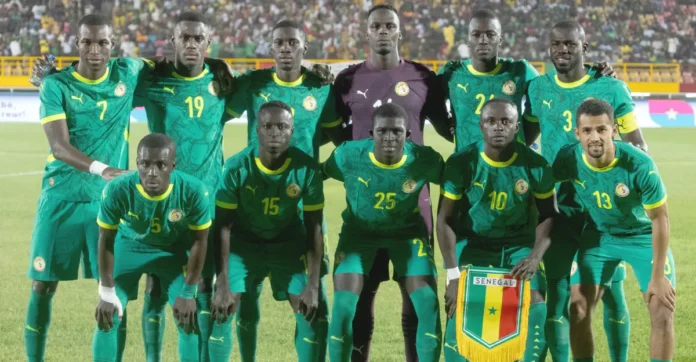
Senegal’s recent dominance in African football carries a lesson that goes far beyond trophies. They have won the Africa Cup of Nations through local leadership, disciplined administration, and a clearly defined national football philosophy. This success was not accidental and it was not driven by sentiment. It was built deliberately through patience, institutional coherence, and sustained trust in indigenous competence.
For Nigeria, the real question is not whether we can replicate Senegal’s model, but whether we are willing to build the conditions that made it possible.
Aliou Cissé did not simply guide Senegal to glory. He defined an era. He was the architect of a footballing identity that turned potential into certainty and ambition into routine success. Under his leadership, Senegal evolved from a talented but erratic side into a nation that expected to win and prepared accordingly. His authority was absolute because it was earned through vision, discipline, and results.
What makes Senegal’s example even more instructive is what happened after his era formally ended. The 2025 Africa Cup of Nations was won under another indigenous Senegalese head coach who emerged from the same football ecosystem. There was no crisis, no ideological confusion, and no desperate turn to foreign validation. The philosophy held, the standards remained, and the results followed.
That victory confirmed something crucial. Senegal is no longer dependent on personalities. It is governed by process. Leadership transitions do not disrupt momentum because the system is stronger than the individual. Authority passes internally with confidence rather than anxiety.
This is where Nigeria continues to struggle.
In Nigeria, coaching appointments are often treated as emergency measures rather than long-term projects. A local coach is rarely trusted as a builder of systems. Instead, he is positioned as a placeholder, one bad result away from public trial and dismissal. Failure is framed as proof of incapacity rather than part of growth. In such an environment, continuity becomes impossible.
The conversation around players suffers from the same weakness. Senegal does not frame its success as a choice between home-based and foreign-based players. It blends both within a coherent structure supported by a domestic league that is respected by its own federation. Local players are not treated as symbolic inclusions. They are professionals produced by a functioning system.
Nigeria’s domestic league has not been afforded the same seriousness. Poor governance, inconsistent scheduling, inadequate player welfare, and weak commercial planning have undermined its credibility. Yet we continue to speak of relying on local players without confronting the reality that elite players cannot emerge consistently from a neglected environment.
Beyond structure and leadership, there is a quieter but equally damaging problem within the Super Eagles ecosystem itself. An unspoken hierarchy has taken root, where players are informally grouped into circles and casually labelled as the “init”boys, often on the basis of accent, foreign exposure, or perceived sophistication. Fluency in the oyibo tongue becomes currency, while competence, discipline, and football intelligence are quietly downgraded. This is not harmless banter. It is discrimination wearing the mask of familiarity. A national team cannot afford internal class systems that elevate polish over performance. Senegal’s strength lies partly in the absence of such artificial divides. Selection is not cultural theatre, it is merit. Nigeria must confront this bias honestly, because no team truly becomes national when belonging is filtered through language, background, or perceived social rank.
This is not harmless banter. It is discrimination dressed as familiarity, and it corrodes team cohesion from within. Matches are not lost only to tactics and opponents. They are also lost when a dressing room quietly decides who belongs before a ball is kicked.
None of this means Nigeria lacks the capacity to succeed under local leadership. On the contrary, our talent base is deeper, our football history richer, and our potential greater. What we lack is alignment. Vision is often sacrificed to politics, patience to pressure, and long term planning to short term survival.
Senegal’s lesson is not that foreign coaches are the problem. It is that belief without structure leads nowhere, and structure without belief collapses under pressure. Senegal combined both and refused to abandon either.
Nigeria can win the Africa Cup of Nations with a local coach and strong domestic representation. But it will not happen through slogans or sentiment. It will require investment in coaching education, protection of technical decisions from interference, serious rebuilding of the domestic league, and the discipline to allow football plans to outlive administrators.
Senegal has shown that football success is not magic and it is not imported. It is built patiently, protected fiercely, and renewed deliberately. Nigeria does not lack talent, intelligence, or history. What we lack is the courage to commit to a system long enough for it to mature. Until we learn to trust our own structures, respect merit over polish, and allow football ideas to outlive the men in charge, we will continue to admire other nations for doing what we insist on sabotaging at home.


